
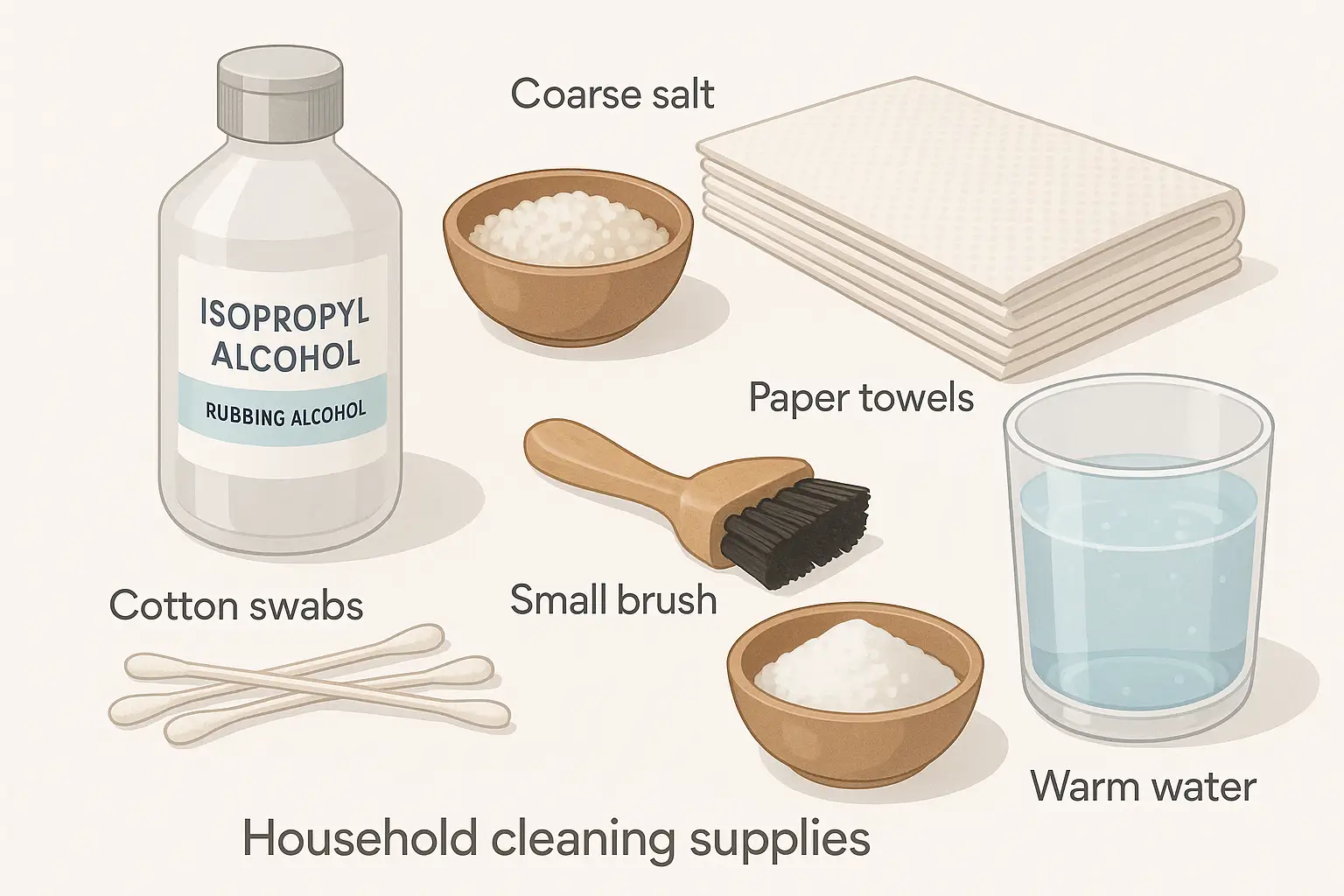
If you own a glass bong it is likely your best friend, but don’t you hate how they get so dirty after a few uses, and they also smell like a bog (swamp)?!?! Good news, you don’t need to buy any fancy solutions because you can make them. A very basic cleaning kit is all you need: isopropyl alcohol (70–91%), coarse salt (rock salt also works) warm water, bottle brush or pipe cleaners, paper towels, and plastic bag will break down any resin accumulation.
Here’s a simple process: first, rinse the bong in hot water. Then pour in the rubbing alcohol and salt (it’s a light abrasive). Close the holes, and give the bong a good shake. Once finished, pour the water out of the bong and give it a good soak to ensure all the flavours of your bong water are washed away.
Supplies You Already Own
For a homemade bong cleaning solution: isopropyl (rubbing) alcohol, coarse salt (or Epsom salt), baking soda, white vinegar, liquid dish soap, lemon juice, cotton swabs (Q-tips), cotton balls, pipe cleaners for harder-to-reach spots, a small brush, and rubber bands, along with plastic bags for storing bong parts.
Why they work: Salt and baking soda are mild abrasives, while alcohol and vinegar dissolve sticky resin. Also, a bit of dish soap helps break up oils, which can improve the cleaning process.
Material tips: use ISO + salt for glass pipe/water pipe and ceramic bong. Be careful with acrylic bong bodies—high heat and strong solvents can negatively affect plastics.
Safety First
A dirty bong is gross; an unsafe cleanup is worse. Work in fresh air and wear gloves. Isopropyl alcohol vapors ignite easily—NIOSH flags it as flammable; keep it away from lighters, pilot lights, and candles.
Don’t mix random cleaners: bleach + vinegar or bleach + ammonia can create dangerous gases; the CDC warns to stick to simple combinations and rinse well. Avoid boiling water on cold glass—rapid swings cause thermal stress.
Dispose of alcohol responsibly; many cities treat used ISO as household hazardous waste—check the EPA HHW overview. And please, never try to “burn off” residue; that bakes toxins and can crack percs. A few minutes of smart prep keeps your bong cleaning safe and drama-free.
Step-By-Step Guide
- Rinse with hot water. Empty bong water, swish warm water to loosen leftover residue.
- Bag the parts. Put the bowl and downstem in separate plastic bags with half a cup of ISO + 2 tbsp salt.
- Fill the base. In the bong, pour isopropyl alcohol (1–2 cups) and add salt (2–4 tbsp). Plug openings with paper towels and rubber bands.
- Shake hard. Give it a good shake for 60–90 seconds. Salt scrubs while ISO dissolves sticky resin.
- Soak, then shake again. For stubborn residue, let sit 10–20 minutes; shake once more.
- Rinse until neutral. Flush with hot water (or distilled water to avoid spots) until no alcohol smell remains.
- Detail clean. Use pipe cleaners, bottle brush, and q-tips for tight corners and percs.
Alcohol-Free Methods
No ISO? You can still clean a bong with pantry staples:
- Baking soda + white vinegar. Fill with warm water, add baking soda (2–3 tbsp), then white vinegar (½ cup). Let the fizz attack tough stains 10–15 minutes, brush, rinse. It’s slower than ISO but solid for maintenance.
- Dish soap + hot water. A few drops of liquid dish soap and a bottle brush break down light films; choose low-residue soaps from the EPA Safer Choice list.
- Lemon juice rinse. A teaspoon in warm water helps deodorize funky smells after the scrub.
- Denture tabs or 3% hydrogen peroxide. For parts only—soak 15–30 minutes, then rinse thoroughly.
Deep-Clean Tricks for Percs & Tough Stains
When a dirty bong laughs at normal shaking, level up—with stuff already at home.
First, a freezer pre-treat: 15 minutes in the freezer stiffens sticky resin, so it cracks loose during the ISO shake.
No coarse salt left? Use rice or Epsom salt as a gentle abrasive agent for thin glass. Wrap a microfiber around a chopstick with rubber bands to make a “blind-spot wand” for beaker corners and matrix percs.
For stubborn downstems, drop them in a plastic bag with half a cup of isopropyl alcohol and a tablespoon of salt; massage the bag so you don’t bang glass on the sink.
Still cloudy? Soak parts in baking soda + white vinegar for 20 minutes, then scrub with a bottle brush. Finish with a deodorizing rinse (warm water + a teaspoon of lemon juice).
Drying, Reassembly & Fresh Water
After the final rinse with warm water, shake out moisture and air-dry on a clean towel—don’t use ovens or heat guns. Wick remaining droplets from percs with cotton swabs or a q-tip.
Reinstall bong parts only when fully dry so you don’t trap stagnant water. Add fresh bong water just above the downstem slits; using distilled keeps glass clearer longer.
What NOT to Use
Skip harsh chemicals like bleach, ammonia, or oven cleaner—fumes and residues are unsafe to inhale, and mixing cleaners can create dangerous gases. Avoid boiling water in a cold glass bong; rapid thermal shock can crack percs. Use hot water, warmed gradually, instead.
Be careful with plastics: high heat and strong solvents can negatively affect an acrylic bong or low-grade parts.
Finally, respect flammability: rubbing alcohol (ISO) vapors ignite easily—keep it far from open flames and pilot lights. Smart choices keep your cleaning process safe.
Make Your Bong Easier to Keep Clean
The best bong cleaning hack is prevention. Empty dirty bong water after each session—don’t let leftover residue stew overnight. Store a glass pipe or water pipe disassembled in a padded case; keep proper storage away from sun and heat to reduce hard water rings. Toss a tiny pack of baking soda or charcoal in the case to absorb funky smell. Before sessions, do a 5-second swirl with warm water to soften any film. After sessions, a quick rinse + q-tip swipe of the bowl keeps resin from turning into thick grime. For long gaps between use, leave pieces bone-dry and uncapped so moisture can’t linger. These tiny habits take less time than a single good shake—and they keep your glass camera-ready for the next bowl.
FAQs
What is the best homemade bong cleaner?
For heavy grime, isopropyl alcohol + coarse (or rock) salt wins. Alcohol dissolves tar while salt scrubs, leaving a clean bong in minutes. Rinse with hot water until scent-free. For lighter jobs, baking soda + white vinegar also works—just allow more soak time.
What can I use to clean my bong without bong cleaner?
Use household items: rubbing alcohol, coarse salt, baking soda, white vinegar, liquid dish soap, pipe cleaners, bottle brush, cotton swabs, and plastic bags for parts.
Does baking soda and vinegar clean bongs?
Yes. The fizz helps lift stubborn resin and neutralize odors. It’s slower than ISO, so plan for a 15–30-minute soak plus brushing. Finish with a warm-water rinse and a splash of lemon juice for freshness.
Will Dawn dish soap clean my bong?
It handles light films and keeps sessions smooth when used with hot water and a small brush. For thick grime, pair dish soap with ISO + salt or a baking soda pre-soak.
Conclusion
A shiny glass bong isn’t just a spot of good fortune; it’s the reward of regular maintenance. To clean a bong with household supplies, rinse it with hot water. For more stubborn residue, mix isopropyl (rubbing) alcohol with coarse or rock salt and shake the mixture in the bong. Or, if you do not have isopropyl alcohol, you can cover the surface with a mixture of baking soda and white vinegar, and add a touch of dish soap. Use pipe cleaners and a bottle brush to get to hard-to-reach spots, and finish by filling the bong with fresh water.