
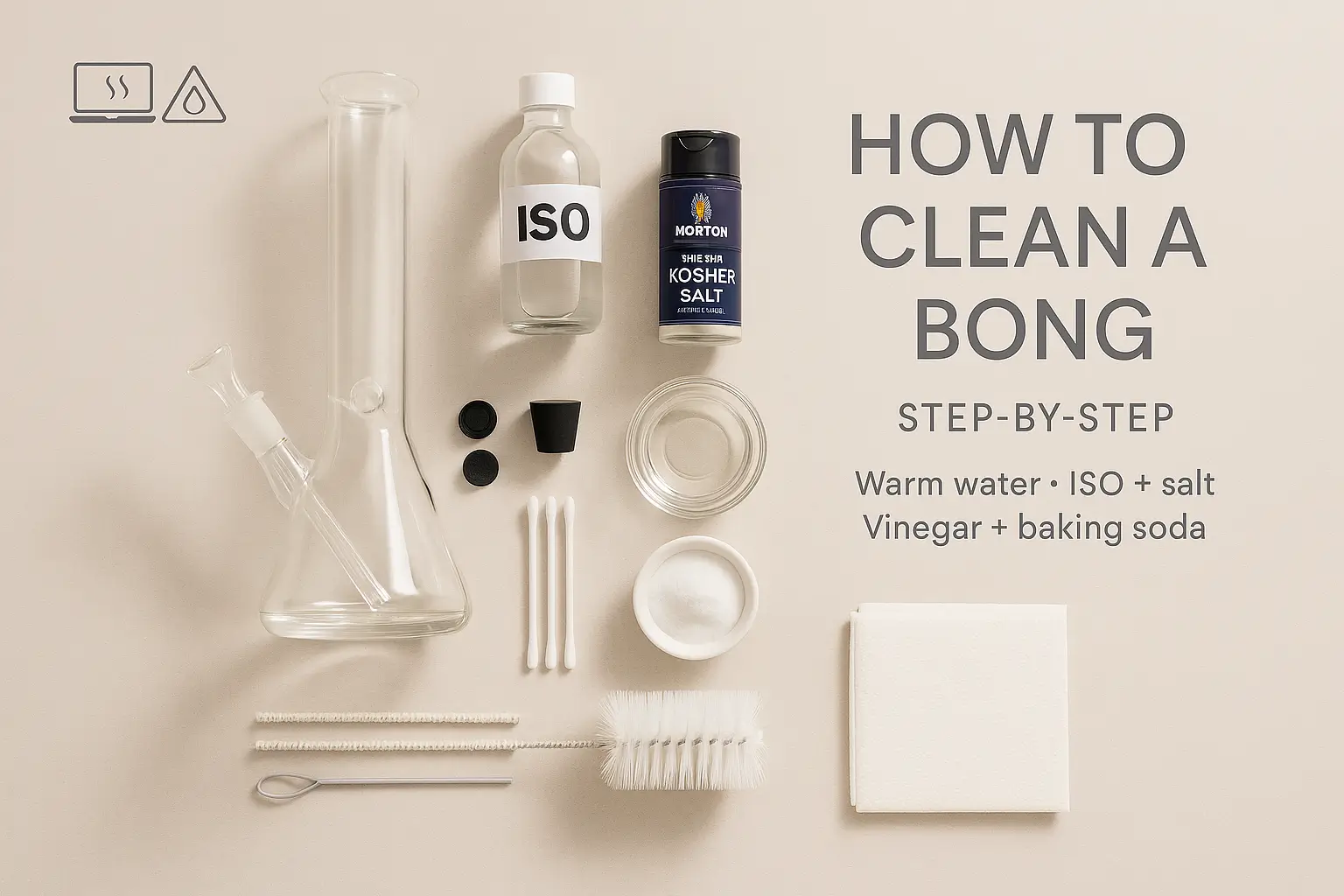
If your glass bong is tasting funky or looks cloudy, it’s time to clean this bad boy. The following is a step-by-step guide to cleaning your bong with warm water, isopropyl alcohol, and coarse salt. We will also look at non-alcoholic options like white vinegar and baking soda. We have made our way to a simple guide that allows you to clean resin effectively, maintain the surface of glass, and improve your smoke out of it today.
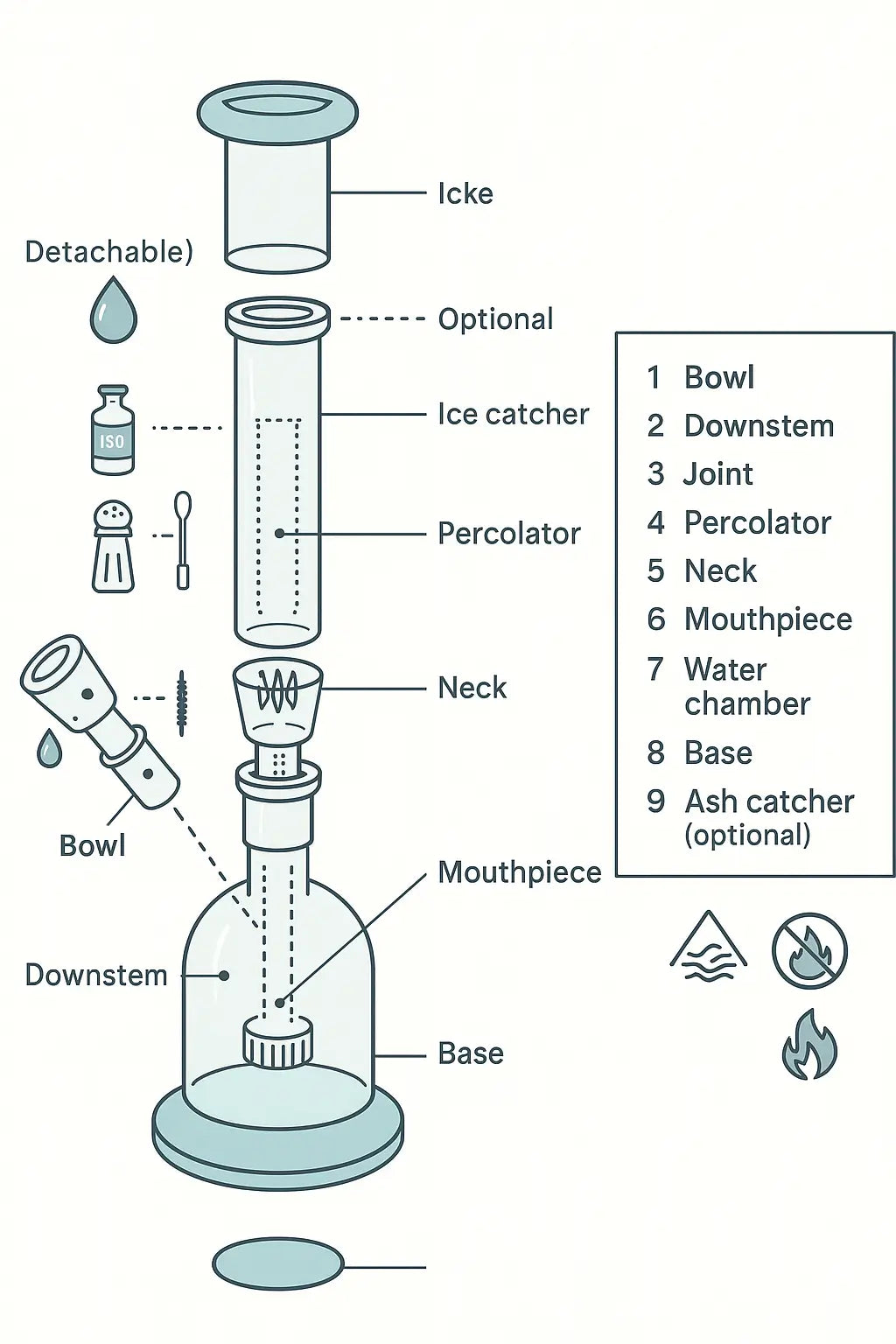
Why a Clean Bong Matters
A dirty one will take away from the flavor in your hits, make them harsher and smell much worse. Over time, tar builds up in the dirty bong water and affects the quality of each experience ruining your glass. Furthermore, when water is allowed to stagnate within a surface, particularly in a region that stays humid; it makes the place damp — the very thing that molds need for their growth. Hence it is very important to change the water regularly so that not only your setup stays fresh, but also you live better.
It is crucial to take care of the glass components. If subjected to rapid temperature fluctuations the glass can develop cracks or in severe cases shatter due to thermal shock. The transition should not be done immediately from cold to hot, nor does one pour boiling water on a cooler piece. If you use warm water, it still keeps that desired result for bong cleaning but is safer for the glass than boiling water.
What You Need
Basic kit:
- Isopropyl alcohol (rubbing alcohol) 70–99% (enough to coat the base) + coarse/kosher salt (abrasive)
- Warm water / distilled water for rinsing
- Pipe cleaner, cotton swab/Q-tip, bottle brush, paper towels
- Optional: white vinegar or baking soda for a no-alcohol method; both are common in Extension “green cleaning” recipes.
Safety first: Isopropyl alcohol is flammable (flash point ~53°F/11.7°C). Keep it away from flames, torches, hot surfaces, and sparks, and ventilate while cleaning. (Source: CDC).
Never mix bleach with other cleaners (including acids like vinegar or ammonia)—it can create toxic gases. If you disinfect anything separately, follow label directions and never combine products. (Source: Washington State Department of Health).
Disposal: Don’t pour large amounts of alcohol down drains or toss half-full bottles in the trash; use local Household Hazardous Waste programs.
How to Clean a Bong
- Empty the bong water; a short warm-water rinse loosens resin buildup and loose debris.
- Add alcohol and salt. Use a few tablespoons of coarse salt and enough isopropyl alcohol to cover resin lines. Cap openings with your hands, stoppers, or rubber bands + plastic wrap.
- Good shake. Shake 30–60 seconds so salt scrubs the base, neck, and percs.
- Rinse thoroughly with warm water until there’s no alcohol smell; air dry on a towel (avoid direct sunlight heat shocks).
This “alcohol and salt” method is standard in industry how-tos (70% works; 90% often works faster). Keep ventilation in mind because IPA vapors are flammable and heavier than air. (Source: CAMEO Chemicals).
Thermal-shock warning: don’t flush a cold piece with boiling water; use warm water instead.
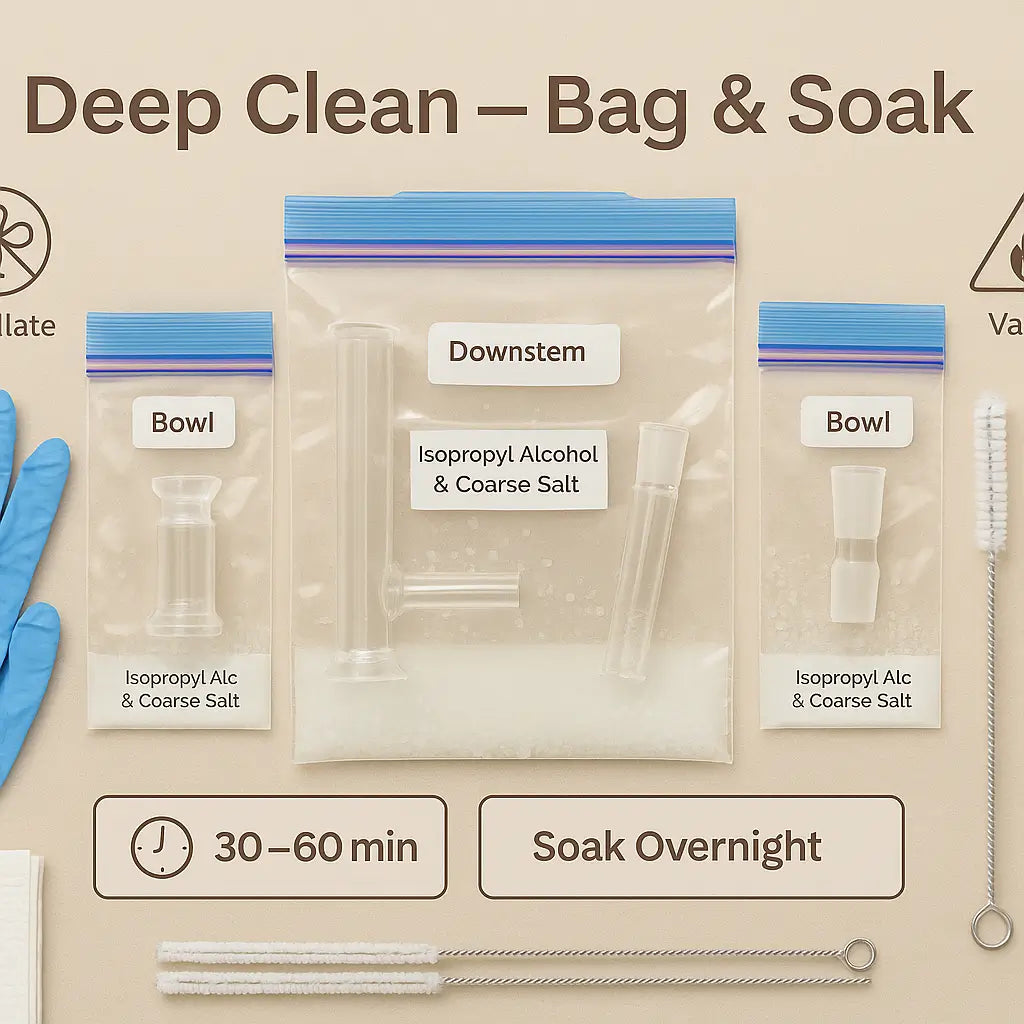
How to Deep Clean
When you’ve got stubborn spots, tar rings, or a long-neglected piece:
- Disassemble the bowl, downstem, and any removable bong pieces.
- Soak small parts in separate bags (Ziploc bag) with IPA + salt; the base can be filled and plugged. Soak 30–60 minutes (or soak overnight for tough stains).
- Good scrub: use a bottle brush for the base and pipe cleaner/cotton swab for narrow paths.
- Rinse thoroughly with warm water until no chemical odor remains; air dry fully before storage.
Throughout, keep ISO far from heat and flames;
Prefer an alcohol-free route? Try white vinegar soaks for mineral haze and baking soda as a mild abrasive.
Percs & Downstems
Percolators and downstems trap sticky resin where brushes can’t reach.
- Percs: pre-rinse with warm water, then add a small amount of ISO + fine salt; rock, don’t slam, so salt moves through the slits. Rinse until the smell is gone; let it air dry.
- Downstems/bowls: bag-soak with IPA + salt or a vinegar soak (for mineral buildup), then q-tip or pipe cleaner any remaining gunk.
- Fit check: once dry, reassemble and draw plain air; if you smell solvent, rinse again.
If you see dark or black mildew in a neglected piece, remember the mold rule: moisture control is key—clean, dry, and keep water fresh so biofilm doesn’t return.
Odor Removal & Stain Rescue
If you’d rather skip isopropyl alcohol, use white vinegar to cut mineral haze and baking soda as a gentle scrub. Pour in warm water + vinegar, let it sit 10–15 minutes, then add a spoon of baking soda and give it a good scrub with a bottle brush. Rinse thoroughly with warm water so no smell sticks to the glass surface. University Extension “green cleaning” recipes frequently use vinegar and baking soda for safe home cleaning solutions—cheap and effective for most stains.
Important: do not mix vinegar with bleach (or ammonia). That combo can create toxic gases.
What Should Do After Clean
After you clean a bong, let parts air dry on paper towels until there’s zero alcohol or vinegar odor. Dry glass matters: standing moisture invites mold, which is why the EPA’s mold guidance keeps repeating the same rule—control moisture to control mold.
Protect the glass, too. Avoid boiling water rinses and direct sunlight heat spikes. Refill with fresh alcohol-free water (distilled water if you want fewer water spots) and you’re ready for your next smoking session.
Disposal & Environmental Care
Leftover isopropyl alcohol or bags of dirty rubbing alcohol after a heavy cleaning? Many household chemicals are considered Household Hazardous Waste (HHW) by the U.S. Environmental Protection Agency and should not be disposed of in drains or regular garbage. Use your city’s HHW drop-off instead; doing so is safe for workers, plumbing and the water system near your home.
In most instances, used alcohol should be stored in a clearly marked sealed container and brought to the HHW facility on the next visit. Empty small amounts from a Ziploc bag in a well-ventilated area far away from flames and follow local HHW disposal instructions. (Always check your city’s website for hours you can put compost out for pickup or drop off.)
How often should you clean?
If you use your bong often, a regular cleaning schedule is vital to keep the flavor and beauty of the glass. For the daily smoker, we recommend changing bong water daily (unless you can finish the entire bowl in one sitting), a quick clean every few days and at least once per week to give it a thorough deep cleaning. Following this schedule also helps prevent odors, resin buildup and the obviously-degree spaces that lead to form.
Pro tip– rinse with distilled water if your tap water leaves spots on the glass, you will need to do this properly to avoid streaks. Also,storing your bong in a case calls for putting it safely between safes to keep away from unintended knocks and protects it from abrupt temperatures.
Common mistakes to avoid
- Pouring boiling water into a cool bong → thermal shock and cracks. Use warm water, not hot.
- Cleaning near open flames (torches, stoves) with iso alcohol → fire risk. IPA’s flash point is about 53°F (11.7°C); ventilate and keep it far from heat.
- Mixing chemicals (bleach + vinegar/ammonia) → dangerous gases. Stick to single-product steps.
- Not drying parts → lingering moisture = mold potential; dry completely before reassembly.
What’s Actually Worth Buying
Must-haves: coarse salt/kosher salt, isopropyl alcohol, pipe cleaner, cotton swab/Q-tip, bottle brush, paper towels, rubber bands or caps for sealing. That’s enough for 95% of jobs.
Nice-to-haves: dish soap for a final neutral rinse, white vinegar/baking soda when you’re avoiding alcohol, and a small protective case for storage. Whatever you choose, keep safety in mind—IPA is flammable, and moisture control prevents mold and odors.
FAQs
What is the best way to clean a glass bong?
Use alcohol and salt: rinse with warm water, add isopropyl alcohol + coarse salt, good shake, then rinse thoroughly with warm water and air dry.
How to clean a very dirty bong without alcohol?
Soak with white vinegar, then baking soda as a mild abrasive. Scrub with a bottle brush and rinse well.
Related: How To Clean a Glass Bong Without Alcohol
What is the best way to clean resin out of a bong?
For heavy resin build, separate detachable parts into bags with IPA + salt and soak overnight; then pipe cleaner/cotton swab any remaining gunk and rinse clean.
Can I pour boiling water into my bong to clean it?
No. Boiling water in a cool piece can crack glass. Stick to warm water and avoid sudden temperature swings.
Conclusion
Now that you can follow a step by step guide on how to clean a bong, protect the glass from cracked and keep the flavor fresh. Just make sure to change the water periodically, and dry everything out entirely between bakes, and use simple ingredients that work. You will thank yourself for the trouble next time you do a hit.