
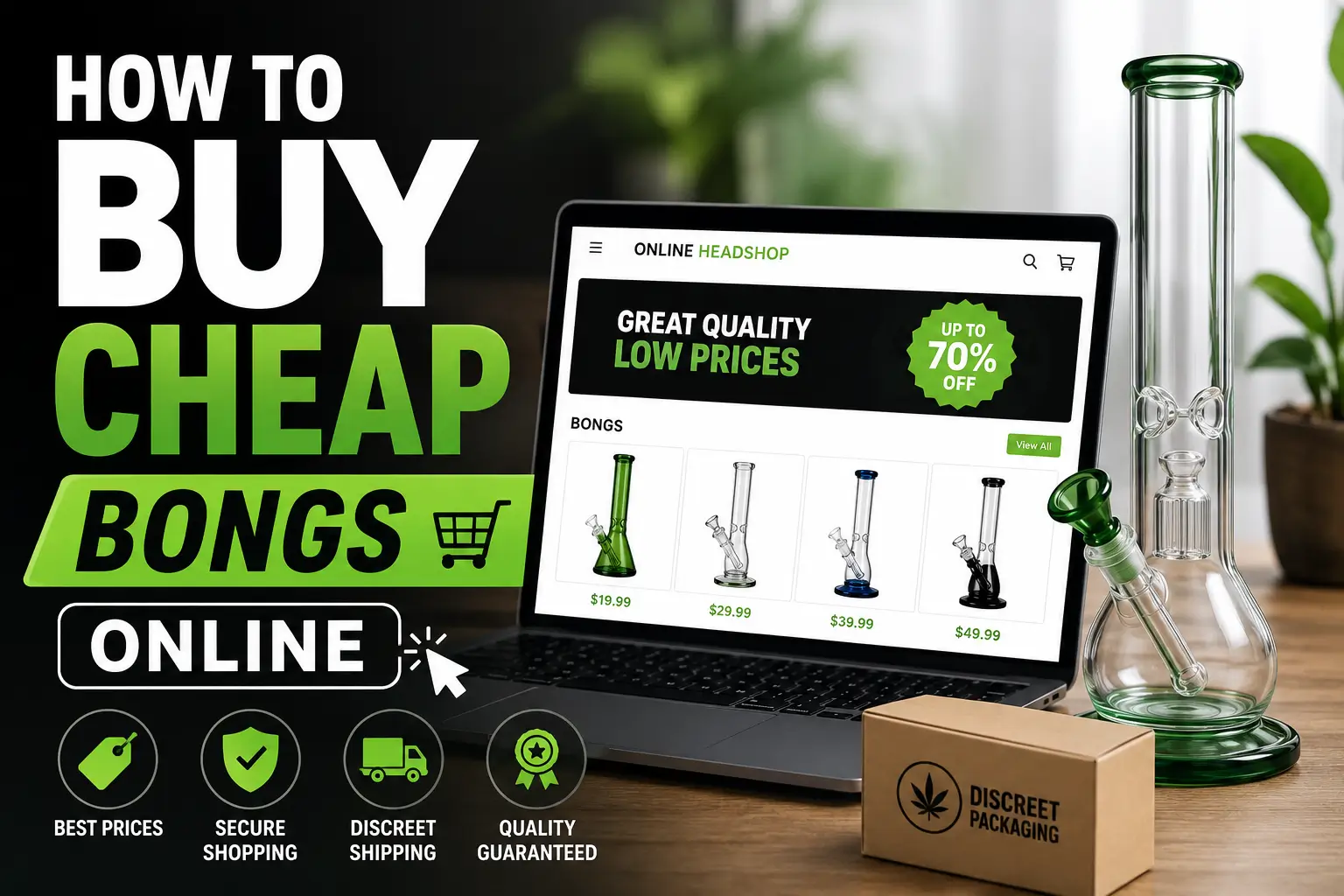
Buying a cheap bong online feels like a gamble. One shop sends you thick, solid glass that hits like a dream. Another ships a flimsy tube that cracks the second time you set it down.
I’ve been on both sides. I’ve scored $30 beakers that became my daily driver for two straight years. I’ve also wasted money on pieces that looked great in photos and arrived thin enough to see through. The difference between a smart buy and a regrettable one usually comes down to knowing what to check before you click “add to cart.”
This guide walks you through exactly how to buy cheap bongs online without getting burned — what quality signals to look for, which shapes and materials deliver the best smoking experience on a budget, and which red flags mean you should close the tab and keep scrolling.
Why Buying Cheap Bongs Online Beats the Local Smoke Shop
Your local shop has maybe 15–30 bongs on the shelf. Half are marked up 40–60% to cover rent, staffing, and retail overhead. Online? You’re comparing hundreds of options across dozens of stores — and the price gap is real.
Here’s why online wins for budget buyers:
- Bigger selection. Online shops carry everything from mini bongs and beaker bases to themed pieces and silicone travelers. Your local store stocks whatever fits on two shelves.
- Lower prices. Without storefront costs, online shops offer the same glass for less. A glass bong that costs $60 at a brick-and-mortar often goes for $35–$45 online.
- Price comparison is instant. Open three tabs, compare the same type of bong, and buy from whoever has the best deal. Try doing that driving between smoke shops.
- Free shipping thresholds. Most reputable online shops include free shipping on orders over $25–$50. That’s a $5–$10 savings baked in.
- Customer reviews are visible. You can read what other buyers experienced with the exact product — glass thickness, packaging quality, shipping speed. No guesswork.
The one honest downside: you can’t hold the piece before you buy it. But that’s exactly why knowing what to look for in online listings matters — which is what the next section covers.
What to Look for in a Quality Cheap Bong
Not every cheap bong is junk. And not every expensive bong is worth the markup. The trick is knowing which features signal real quality — regardless of price.
Here’s the checklist I use every time I shop. If a piece checks at least 5 of these boxes, it’s a buy:
- Borosilicate glass — This is lab-grade glass that resists heat and impacts far better than soda-lime (the cheap stuff). Borosilicate glass is specifically designed for thermal shock resistance, which is why it’s used in lab equipment and high-end cookware. If a listing doesn’t specify glass type, that’s a yellow flag.
- 3mm+ wall thickness — Under 3mm feels flimsy and cracks easily. 3–5mm is the sweet spot for budget bongs. Pick it up (or check specs) — if it has weight to it, the walls are solid.
- Ground glass joint — Not a rubber grommet. Ground glass creates an airtight seal between the bowl, downstem, and body. It delivers better suction, cleaner taste, and lets you swap parts. Standard sizes are 14mm and 18mm.
- Removable downstem — A downstem you can pull out makes cleaning dramatically easier. Fixed downstems are harder to reach and build up residue faster.
- Stable base — A wide beaker base is the most tip-resistant shape. Straight tube bongs are sleek but less stable on surfaces. If you’re clumsy (be honest), go beaker.
- Ice catcher — Notches in the neck that hold ice cubes above the water line. Cools the smoke before it reaches your throat. Many cheap bongs in the $35–$55 range include this.
- Percolator (bonus) — A built-in percolator breaks smoke into smaller bubbles for extra filtration. Not essential at the budget tier, but if you find one under $50, it’s a standout deal.
For a full breakdown of what each part does, our guide on parts of a bong covers every component from bowl to mouthpiece.
Best Types of Cheap Bongs by Shape
Shape isn’t just aesthetics — it affects stability, airflow, cleaning ease, and how the hit feels. Here’s what’s available in the budget range and who each one is best for:
| Shape | Price Range | Stability | Cleaning Ease | Best For |
|---|---|---|---|---|
| Beaker Bong | $25–$60 | ⭐⭐⭐⭐⭐ | Easy | Beginners, clumsy smokers, daily use |
| Straight Tube | $25–$55 | ⭐⭐⭐ | Very Easy | Clean aesthetic lovers, quick sessions |
| Mini Bong | $15–$40 | ⭐⭐⭐⭐ | Very Easy | Travel, stealth, small spaces |
| Bubbler | $20–$50 | ⭐⭐⭐ | Moderate | Pipe-to-bong transition, portability |
Beaker bongs are the default recommendation for a reason. The wide base holds more water, sits flat on uneven surfaces, and almost never tips over. They’re the Toyota Corolla of bongs — reliable, affordable, and they just work. Browse Beaker Bongs to see what’s available.
Straight tubes deliver a faster, more direct hit. Less water volume means less filtration but quicker clearing. They’re the easiest shape to clean because there are no curves or chambers for resin to hide in. If low maintenance is your priority, check out Straight Tube Bongs.
Mini bongs (under 8 inches) are the budget king. Smaller size = less glass = lower price. They’re surprisingly effective for solo sessions, easy to stash, and nearly impossible to break if you store them properly. The trade-off is smaller hits and more frequent water changes.
Bubblers bridge the gap between pipes and bongs. They use water filtration like a bong but in a handheld, pipe-sized package. Great if you want smoother hits than a dry pipe without committing to a full bong setup.
For a deeper comparison of each style, types of bongs covers every variation in detail.
What Size Bong Should I Buy?
Size affects portability, hit size, filtration, and price. Here’s the framework:
- Under 8 inches — Ultra-portable, easy to store, lowest price point. Best for solo sessions, travel, or first-time buyers who want to test the waters without spending much.
- 8–12 inches — The sweet spot. Enough height for decent smoke path and filtration, room for an ice catcher, and still manageable to move and store. This is where most budget daily drivers live.
- 12+ inches — Home setup only. Bigger hits, longer smoke path, better cooling. But they’re harder to hide, harder to clean, and more expensive even in the cheap range.
My advice for budget buyers: start at 8–10 inches. It’s the Goldilocks zone for price, function, and practicality.
Cheap Bong Materials Compared
The material your bong is made from affects everything — taste, durability, cleaning, and how long it lasts. Here’s the honest comparison:
| Feature | Glass | Silicone | Acrylic |
|---|---|---|---|
| Taste | Best — completely neutral | Slight rubbery note (fades over time) | Worst — plastic undertone |
| Durability | Fragile (drops = death) | Nearly unbreakable | Very durable, but scratches easily |
| Cleaning | Easy with iso + salt | Dishwasher safe | Difficult — iso damages acrylic |
| Price Range | $25–$200+ | $15–$60 | $8–$30 |
| Heat Resistance | High (borosilicate) | High (food-grade silicone is heat safe) | Low — can warp near heat |
| Best For | Taste-first smokers, home use | Travel, clumsy smokers, outdoors | Emergency backup only |
Glass is the standard for a reason. Borosilicate glass bongs don’t leach flavors, handle heat without issue, and look the best. The only downside is fragility — but that’s manageable with basic care.
Silicone bongs are the go-to for travel and accident-prone setups. They fold flat into a backpack, survive concrete drops, and are safe when made from food-grade silicone. The slight rubbery taste on the first few uses fades after a week of regular sessions. I keep one in my camping gear year-round.
Acrylic bongs are the cheapest option, and honestly, you get what you pay for. The plastic taste is noticeable, they can’t handle hot water for cleaning (isopropyl alcohol warps acrylic), and they yellow over time. Fine as a $10 backup you don’t care about. Not something you want to use daily.
My recommendation: spend the extra $10–$15 for glass over acrylic. The taste difference alone is worth it. For travel, grab a silicone backup and keep your glass at home.
Where to Buy Cheap Bongs Online
Knowing what to buy is half the battle. Knowing where to buy it is the other half.
Not every online bong shop is worth your trust. Some are legitimate operations with careful packaging, real customer support, and honest product photos. Others are dropshippers reselling $3 Chinese glass with a 10x markup and stock photos that look nothing like what arrives.
Here’s how I evaluate a shop before buying:
5 signs an online bong shop is legit:
- Glass type is listed in product specs. “Borosilicate glass” or “scientific glass” should appear in the description. If the listing says “glass” with no further detail, proceed with caution.
- Real customer reviews with photos. Review text is easy to fake. Customer photos of the actual product they received are much harder to game. Look for those.
- Clear return/replacement policy. A shop confident in its packaging and quality posts its return policy prominently. If you can’t find one, that’s a red flag.
- Dedicated bong/accessories focus. Shops that specialize in smoking accessories tend to know their products better than generic “everything stores” that happen to sell bongs.
- Responsive customer support. Send a quick question before buying. If they reply within 24 hours with a helpful answer, they’ll probably handle issues well too.
BongHaus checks all five — cheap bongs start under $30 with borosilicate glass, free shipping, and real product photos on every listing. But regardless of where you shop, run this checklist first.
For more on finding the right piece for your needs, our post on cheap bongs under $50 walks through the best affordable options in detail.
Mistakes to Avoid When Buying Cheap Bongs Online
Here’s the section nobody else writes — because most “cheap bong” pages are trying to sell you something, not protect you from a bad purchase. But getting burned online is real, and knowing what to avoid saves more money than finding the best deal.
7 red flags that mean “skip this shop”:
- No glass type listed. If the product description says “glass” without specifying borosilicate, soda-lime, or any specific type — assume it’s the lowest grade available. Reputable sellers are proud of their glass and list it clearly.
- Stock photos only. Real product photos (slightly imperfect lighting, natural angles) are a trust signal. Perfectly rendered images with white backgrounds that look like 3D renders? The actual product probably looks nothing like that.
- No return or breakage policy. If a shop won’t stand behind its packaging, that tells you everything about how much they care about your order arriving intact.
- Prices that seem impossibly low. A $5 “glass bong” is either acrylic mislabeled as glass, or so thin it’ll crack during your first session. The floor for real borosilicate glass is around $15–$20 for the simplest mini bongs.
- Zero customer reviews. No reviews at all — not even negative ones — usually means the site is brand new, a dropshipper, or actively deleting feedback. Look for shops with at least 50+ reviews across their products.
- Generic marketplace sellers. Random sellers on massive platforms often list bongs with inflated specs and no accountability. Dedicated head shops have reputations to maintain. Random pop-up sellers don’t.
- No contact information. A legit business has an email, a phone number, or at least a live chat. If the only way to reach them is a generic contact form with no response guarantee, be cautious.
I learned #4 the hard way. I once ordered a “12-inch glass beaker” for $8 from a marketplace seller. What arrived was a 9-inch acrylic tube with a metal downstem that tasted like burnt pennies. The listing has since been removed — but my $8 is still gone.
The FTC recommends verifying a seller’s legitimacy before purchasing — checking for physical address, return policy, and secure checkout (look for HTTPS in the URL bar).
How Much Does a Good Bong Actually Cost?
Real numbers, no fluff:
- $10–$25 — Risky territory. You can find a decent mini glass bong in this range, but you need to verify the glass type carefully. Most pieces here are acrylic or thin soda-lime glass. Proceed only if the listing explicitly says borosilicate and has real reviews.
- $25–$50 — The sweet spot for budget buyers. This is where you get borosilicate glass, ground glass joints, removable downstems, and sometimes ice catchers. Enough to build a legitimately good setup without overspending.
- $50–$80 — Premium for the price. Percolator bongs, thick glass (5mm+), splash guards, and nicer aesthetics. Worth it if you want features that genuinely improve your smoking experience.
For most first-time online buyers, $30–$45 is the Goldilocks range. Enough to get real quality without the sting of regret if you discover bongs aren’t your preferred method.
Check out how much is a bong for a deeper breakdown of what each price tier actually gets you.
How to Take Care of Your Cheap Bong
A $30 bong cleaned regularly will outlast a $100 bong that never gets touched with isopropyl alcohol. Maintenance is the real difference between a piece that lasts six months and one that lasts three years.
Here’s the care routine that keeps my budget glass in rotation for years:
- Change the water after every session. Takes 30 seconds. Old water breeds bacteria, makes hits taste stale, and stains the glass over time. Fresh water = fresh taste.
- Quick rinse every 2–3 sessions. Run hot water through the bong for 30 seconds. This melts loose resin before it hardens — and significantly extends how long you can go between deep cleans.
- Deep clean weekly. Isopropyl alcohol (90%+) and coarse salt. Pour both in, cover the openings, shake for 60 seconds, rinse thoroughly. For a full walkthrough, how to clean a bong covers every method including alcohol-free options.
- Clean the bowl and downstem separately. Pull them out and soak in iso for 10 minutes. Resin builds up fastest in the downstem connection and bowl screen. A pipe cleaner handles the inside of the downstem perfectly.
- Store upright on a stable surface. Most bong breaks happen during storage — knocked off a shelf, bumped on a desk, or rolled off a couch. A corner of a counter or a designated shelf spot prevents 90% of accidental breaks.
One thing I’ve learned the hard way: never pour boiling water into cold glass or cold water into hot glass. Thermal shock cracks even borosilicate if the temperature difference is extreme. Stick to warm water for rinsing — not boiling.
FAQs
Are cheap glass bongs actually good quality?
Yes — if they’re made from borosilicate glass with 3mm+ wall thickness. Price differences between cheap and expensive bongs usually reflect design complexity, brand markup, and extra features like percolators — not glass grade. A $35 borosilicate beaker bong uses the same type of glass as many $100+ pieces.
How much does a good bong cost?
For most smokers, $30–$50 hits the sweet spot — borosilicate glass, ground glass joint, and a removable downstem. Spending $50–$80 adds percolators, ice catchers, and thicker glass. Above $80, you’re primarily paying for artistic designs, brand prestige, or collector-grade craftsmanship.
Is it safe to buy bongs online?
Yes — reputable online shops package glass carefully with bubble wrap, foam inserts, and sturdy outer boxes. Look for stores that explicitly offer a breakage replacement policy and discreet shipping. Most dedicated bong shops have this dialed in far better than generic marketplaces.