
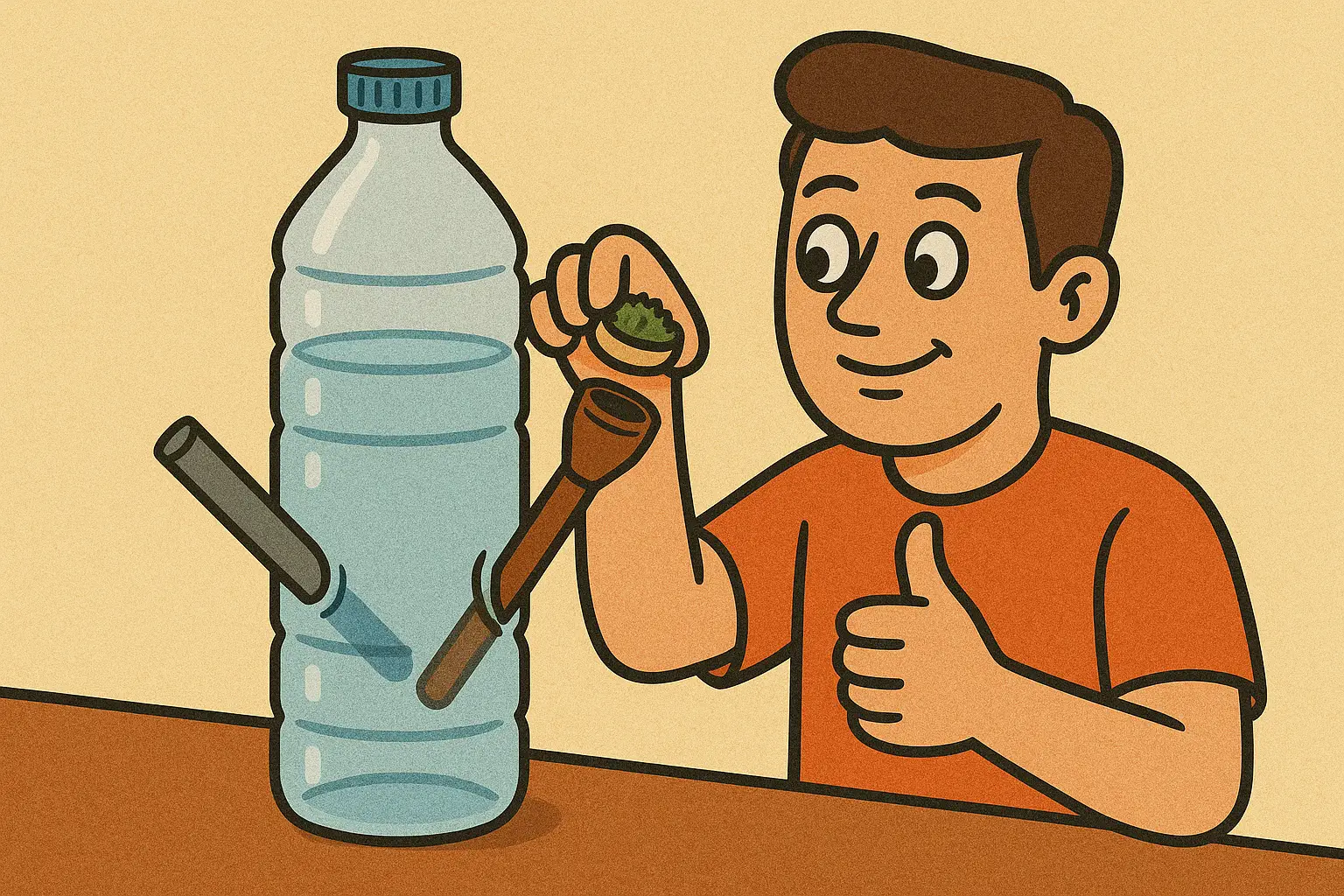
If you’re stuck without a piece, learning how to make a water bong can be a quick, low-cost fix. A homemade uses simple household items—a clean mason jar bong or a water bottle bong—to cool and filter smoke so hits feel smoother than a dry pipe.
Understanding How a Bong Works
The basics: Fire heats the smoking material . Smoke travels down a stem into the water chamber and breaks into small bubbles. The water cools and filters some particles; then the smoke rises and you inhale slowly. A carb hole or a slide-out bowl lets remaining smoke clear fast.
Safety notes: Avoid aluminum foil bowls and foil screens; research shows aluminum can migrate under heat and pose exposure risks.
Also keep heated plastic away from the flame: Poison Control warns that fumes from burning plastic can irritate airways and cause flu-like symptoms. Remember, water cools but bong filters are limited—smoke still contains irritants (see American Lung Association
Materials You’ll Need
Safe materials:
- Glass bottle (wine or liquor bottle is ideal for a water chamber)
- Food-grade silicone grommets to make an airtight seal
- Stainless steel or brass stem/bowl (no mixed mystery metals)
- Clean, warm water
Tools:
- Diamond/glass drill bit or hole saw for the small hole
- Safety goggles and gloves
- Tape measure/marker to place your first hole and second holes
- Scissors/knife for grommets/tubing
For tool handling and glass-work basics, review the relevant guidance at OSHA’s glass safety pages. Working slowly prevents cracks and tiny shards/residue. Keep your workspace bright and clean. Never rush with glass—watch your fingers and eyes.
Step-by-Step Instructions
Method 1: Safer Glass Bottle Bong
- Choose the bottle: A sturdy glass wine bottle with a smooth neck works well as the water chamber and mouthpiece.
- Mark holes: Measure and mark a small hole 2–3 inches above the base for the stem. Mark a carb hole (optional) higher up where your finger can cover it.
- Drill slowly: Using the diamond bit, mist with water and drill at low speed. Let the tool do the work. Avoid pushing—tiny holes first, then widen.
- Insert stem & seal: Slide in the metal stem with food-grade grommet/tubing until it fits securely and airtight. Attach your bowl.
- Fill & test: Fill with warm water to cover the stem tip by about 1–2 cm. Check for leaks; add or adjust the seal if needed.
- Pack & use: Pack a small amount in the bowl, light gently, inhale through the mouth/mouthpiece, and release the carb hole to clear.
Why it works: Water cools the smoke, reduces harshness, and can trap some particles before you inhale.
Method 2: Short-Term Emergency Options
If you’re stuck, consider fruit like an apple or carrot. Core a hollow channel for airflow and a side tube for the bowl; add tiny holes carefully to shape airflow. These are disposable and for short-term use only.
Avoid: Plastic bottle builds (heated plastic), tin foil/aluminum foil bowl hacks, off-gassing tape, and painted parts. If you must improvise a water bottle rig, never heat the plastic and never use it more than once. Safety first.
Making a Gravity Bong
A gravity bong uses water and air pressure—not just your lungs—to draw smoke. You’ll need a larger container (bucket or sink), a water bottle (try different bottle sizes), a bottle cap, and a real glass or stainless bowl that threads into the cap. Avoid an aluminum foil bowl; heated foil and plastic bottles can release harmful fumes.
Step-by-step guide:
- Cut the bottom off the bottle. Fill the bucket with water. Screw the cap fitted with a bowl onto the top of the bottle.
- Pack a small bowl with smoking material. Light the bowl and slowly lift the bottle—rising water pulls smoke into the chamber.
- Unscrew the cap, place your mouth over the opening, and inhale slowly as you push the bottle down to clear remaining smoke.
This design keeps the flame away from the plastic, protects flavor, and hits far harder than most traditional bongs—so go easy.
Assembling the Bong
No matter the build—bottle bong, mason jar bong, or DIY bongs—airtight seals make or break the session.
Fit the tube or downstem through a small hole in the lid (or side), then seat it with a food-grade silicone grommet. Wrap loose joints with plumber’s tape. Test with a dry pull: cover any carb hole, inhale deeply, and listen. A clean “blub-blub” means you’re sealed; a hiss means air leaks. Keep holes tidy—jagged cuts from a sharp tool or scissors can shred grommets.
Avoid a pen tube near heat; many pens use plastics that can off-gas. Use enough water to cover the downstem small holes by about ½ inch. Too high splashes; too low feels harsh. This simple check locks in how the bong works and gives that fresh taste you want from a clean, cool pull.
Using Your Homemade Bong
- Pack the bowl loosely with a small piece of smoking substance (rice-grain size).
- Place lips on the opening and inhale slowly while you light the edge—don’t torch the whole top.
- When the chamber turns milky, lift the bowl or uncover the carb hole to inhale deeply and clear it.
- New to gravity setups? Half-fills and shorter lifts soften the hit. If the throat burn surprises you, add ice (glass-only builds) or lower the flame and try again.
Remember: bong filters cool and moisten smoke but do not remove most harmful chemicals. The American Lung Association and CDC both warn that smoked cannabis can irritate and injure airways; keep sessions short and rooms aired out.
Tips for a Better Experience
- Keep hot zones glass or steel. Skip the foil bowl and heated plastics to avoid harmful fumes.
- Right water line. Cover diffuser small holes by ~½ inch for smoother pulls.
- Fix flavor. Stale water ruins taste; swap it every session for that fresh taste.
- Control the pace. For gravity bongs, slowly lift the bottle; pushing down too fast makes harsh clouds.
- Size smart. Larger bottle sizes create denser smoke. Beginners should start small.
- Clean as you go. A quick ISO swab while warm keeps residue loose and your homemade bong clean.
- Ventilate. Secondhand cannabis smoke contains many of the same toxic and cancer-causing chemicals as tobacco smoke; crack a window.
Advanced DIY Bong Techniques
Want more performance without buying a full rig? Try a glass downstem with diffuser small holes (“perc-style”) for cooler bubbles, or insert a stainless screen instead of a foil one. Build an “ice pinch” by shaping a cold-safe insert at the top of the bottle (glass builds only). For gravity gongs, thread a standard 14 mm bowl into the bottle cap so the flame stays on the metal or glass—far from any plastic.
When to Buy Instead of DIY (safety, cost, quality)
DIY is fun and low-cost, but not always the best choice. Consider buying a purpose-built glass bong if:
- You struggle to get an airtight seal or your build leaks from the first hole/second hole.
- Your materials are questionable (painted parts, unknown metals, tin foil/aluminum foil, or thin plastic).
- You want predictable airflow, durable glass, and easy cleaning.
In the long run, a well-made device often saves time and reduces frustration. If you do buy, look for thick borosilicate glass, a solid base, a removable downstem that fits securely, and standardized joint sizes. Avoid anything with chipped glass or wobbly parts. Your lungs and peace of mind matter more than a quick hack.
How to Clean & Maintain Your DIY Water Bong
A dirty bottle bong breeds mold and smells like a campfire. After every few sessions, pour out the murky water and rinse the bottom of the bottle. Next, drop in two spoonfuls of coarse salt, add 3‑4 oz of 91 % isopropyl alcohol, cap the top, and shake for 30 seconds. The salt scours the smoke shaft while the alcohol dissolves tar. EPA notes that high‑proof alcohol is an ignitable hazardous waste, so drain it down a well‑ventilated sink with hot water, not the yard.
For stubborn buildup, plug the carb hole with a pencil eraser, fill the chamber, and let it soak 15 minutes. Rinse three times to make sure no alcohol fumes remain—those can flare when you relight. If you prefer a greener option, the EPA’s List N shows hydrogen‑peroxide‑based disinfectants that kill 99 % of bacteria without harsh scents.
Finally, dry upside down so droplets don’t collect and grow mildew, a risk the CDC links to lung irritation.
FAQs
How do you do a water bong?
To make a water bong from household items, fill a clean plastic bottle about one‑third with warm water. Use a heated nail or knife to poke a small hole just above the water line—this becomes your carb.
Is a bong better for your lungs?
A bong can feel gentler because water cools the smoke and traps some ash and tar, giving a fresher taste. But it doesn’t remove every toxin.
What makes a good water bong?
A quality bong combines effective filtration with durability. Look for thick borosilicate glass, a leak‑proof stem sealed by a rubber gasket, and a bowl that’s easy to remove or clear.
How to bong without a bong?
No gear handy? Make a quick DIY bong or gravity bong. For a gravity setup, cut the bottom off a soda bottle, submerge it in a bucket of water, and cap it with a sturdy foil bowl.
Conclusion
Learning how to make a bong at home can be simple when you respect the basics: legal checks, safe materials, and regular cleaning. Choose glass, aim for an airtight seal, place each hole with care, and use warm water to smooth your hit. Avoid aluminum foil, heated plastic, and anything that could break or off-gas.