
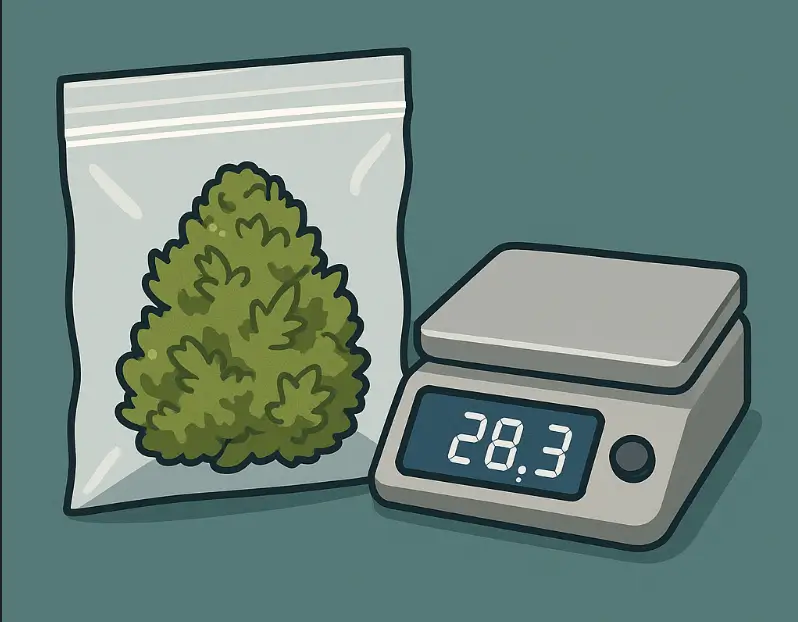
How much is an ounce of weed? — It’s the first question many new buyers ask, yet the answer shifts with state laws, quality, and taxes.
This guide clears the fog. You’ll see simple charts on marijuana measurements, price‑per‑gram math, state‑by‑state averages, and smart ways to save money without skimping on top‑shelf cannabis flower. By the end, you’ll know the real going rate—and how to stretch every gram.
Average Ounce Weed Price in 2026
Across the country, the national average for an ounce sits between $100 and $400. Mature, competitive markets like California list ounces for as low as $74; newer states like Illinois and Connecticut often post $250–$320 for the same weight. Consumer surveys show dispensary flower now beats many black‑market prices in Michigan, while legacy states without stores still pay significantly higher street rates. High‑quality marijuana from indoor, craft growers commands the highest price, but shake or outdoor flower can undercut it by half. (Source: Cannabis Business Times)
Weed Measurements Cheat‑Sheet
| Slang term | Metric weight | Fraction of an ounce | Typical cost* |
|---|---|---|---|
| Gram / “single gram” | 1 g | 1/28 oz | $10 – $25 |
| Dime bag | ≈ 1 g | 1/28 oz | $10 |
| Eighth / “one eighth” | 3.5 g | 1/8 oz | $30 – $60 |
| Quarter ounce / “one quarter” | 7 g | 1/4 oz | $55 – $120 |
| Half ounce / “half‑O” | 14 g | 1/2 oz | $90 – $180 |
| Ounce / “zip” | 28 g | 1 oz | $100 – $320 |
Cannabis is usually sold in common measurements: one gram, an eighth (3.5 g), a quarter (7 g), a half ounce (14 g), and a full ounce of weed (28 g). Those 28 grams equal eight eighths or four quarters, enough to roll most blunts, share with friends, or craft concentrates.
U.S. adult‑use states let adults legally possess up to one ounce in public; going over that can trigger fines or even jail time. Check your state laws before buying larger quantities, and remember federal property such as national parks still bans any amount of marijuana. (Source: National Park Service)
Why Ounce Costs Vary by State
Several factors push ounce costs up or down:
- Excise and sales taxes. Washington tags recreational weed with a 37 % excise, while Michigan adds just 10 %, creating huge price gaps. (Source: Tax Foundation)
- Wholesale supply. Colorado’s latest Average Market Rate lists retail bud at $655 per pound—about $41 per ounce before taxes, showing how harvest gluts can cut shelf prices. (Source: Colorado Department of Revenue)
- Market age and licensing. Newer states issue fewer retail licenses, limiting competition and keeping prices high.
- Strain quality and cultivation method. Indoor, terp‑rich premium strains cost more than greenhouse or outdoor “value” flower.
- Geographic location. Alaska’s remote stores and North Dakota’s limited supply chain often mean higher transport costs and fewer bulk deals.
Price Breakdowns
When you see a $150 ounce on the menu, final checkout can shock you. Here’s why:
| Cost Layer | Example Rate | Adds to Ounce Price |
|---|---|---|
| State Excise Tax | 15 % in Colorado | + $22.50 |
| Local Option Tax | 5 % in many cities | + $7.50 |
| State Sales Tax | 4–7 % | + $6–10 |
| Cannabis Program Fee | Flat $3–5 bag fee (some states) | + $3–5 |
A $150 shelf price in Denver can jump to about $185 out‑the‑door after all add‑ons. In Washington, the same ounce could run near $205 because of that higher 37 % excise. Tip: ask your marijuana dispensary shopper to quote out‑the‑door totals or watch for daily “tax‑included” specials to sidestep sticker shock.
Top‑Shelf vs. Budget Bud
Not every ounce of cannabis costs the same. In legal states, high‑quality marijuana grown indoors with tight climate control often lists for 25 %–40 % more than greenhouse or outdoor “value” flower. Leafly’s buyer guides show sungrown eighths selling at $20–$25, while indoor craft strains from the same region top $35–$40. (Source: Leafly)
The extra price covers energy bills, small‑batch curing, and higher strain quality (think frosty trichomes, strong terpene profiles). If you vape or press rosin, top‑shelf can be worth it. But if you roll most blunts or cook edibles, a well‑cured “budget” ounce may give the same buzz for half the cash. Check lab labels: you want clean tests and solid THC percentage, even on bargain buds.
Cost‑per‑Sesh Calculator
Bulk buying only helps if you know the true cost per smoke. Here’s quick math:
Cost per gram = Ounce price ÷ 28
Cost per joint (0.35 g) = Cost per gram × 0.35
Example: A Colorado shop lists an ounce at $120. $120 ÷ 28 = $4.29 per gram. $4.29 × 0.35 ≈ $1.50 per joint—far below the $5–$7 pre‑roll price on the same menu. Add a humidity control pack and a glass jar to store weed correctly, and that ounce can last months without losing flavor. Using this “Cost‑per‑Sesh” lens lets both recreational buyers and medical marijuana patients see if a deal really helps them save money.
Medical vs. Recreational Pricing
Many states discount or waive excise taxes for registered medical cannabis users. Arizona and Illinois, for instance, cut the effective ounce cost by 10 %–15 % compared with adult‑use shelves. Mississippi’s new program adds only a 5 % cultivator tax to medical marijuana, far lower than recreational rates. (Source: NCSL)
Some dispensaries also give loyalty points or “compassion ounces” to patients with heavy monthly needs. If you hold a card and buy a half ounce or more each visit, these breaks can be the most cost‑effective route—even after renewal fees. Always bring your ID; state rules require clerks to scan it before ringing up the lower total.
Legal Buying Limits
Most adult‑use states let adults legally possess up to one ounce of flower in public. A few friendlier laws like Oregon allow two ounces, while stricter states such as North Dakota cap public carry at half ounce with stiff fines above that weight. (Source: NCSL)
Crossing state lines turns any amount into a federal offense, so plan to finish or gift leftovers before traveling. At home, many states let you keep larger quantities—Colorado allows whatever you harvest from six home plants, provided the flower inside stays out of public view. Store your stash in child‑proof jars and label dates; properly cured flower can keep potency for six months when stored below 62 % moisture content.
Money‑Saving Tips
- Watch daily ounce specials. Many licensed dispensaries drop prices mid‑week to clear inventory.
- Pool orders with friends. Split a “two‑for‑$220” deal into cheap quarter‑ounce bags.
- Use loyalty apps. Frequent‑buy programs often shave $10–$20 off after every five visits.
- Buy shake for edibles. Trim sells at 30–50 % less than A‑buds but still carries full‑spectrum cannabinoids.
- Compare neighboring states. Live near a border? Price‑check menus online; Illinois shoppers sometimes drive to Michigan for competitive pricing that saves $60 per ounce.
- Store it right. A $2 humidity pack protects terpene flavor and stops dry crumble, so you won’t toss stale grams later. Following these steps turns bulk buying into real savings without cutting quality.
FAQs
How much does 1 oz of weed sell for?
Anywhere from $100 to $320, depending on quality, taxes, and state supply. Outdoor flower in mature markets averages the low end; limited‑license states charge the high end.
Is a zip of weed 1 ounce?
Yes. “Zip,” “O‑zone,” and “lid” are all slang for one ounce (28 grams).
How much is $40 of bud?
At an average $10/gram retail, $40 buys roughly four grams—a little over one‑eighth of an ounce.
How many grams for $50?
In states like Colorado where grams run $9, fifty dollars gets about five to six grams. Always compare shelf price per gram to save money.
Conclusion
- Current U.S. weed prices range roughly $100–$300 per ounce, with the national average near $170.
- Taxes, market age, and geographic location explain most differences.
- Use the Cost‑per‑Sesh formula to judge real value and save money.
- Check local laws: most states cap public carry at up to one ounce.
- Proper storage—glass jar + humidity pack—keeps that substantial amount fresh for long periods.
With these facts, any marijuana dispensary shopper can navigate the ever‑changing cannabis market, buy the exact quantity they need, and stretch each dollar without skimping on quality.