
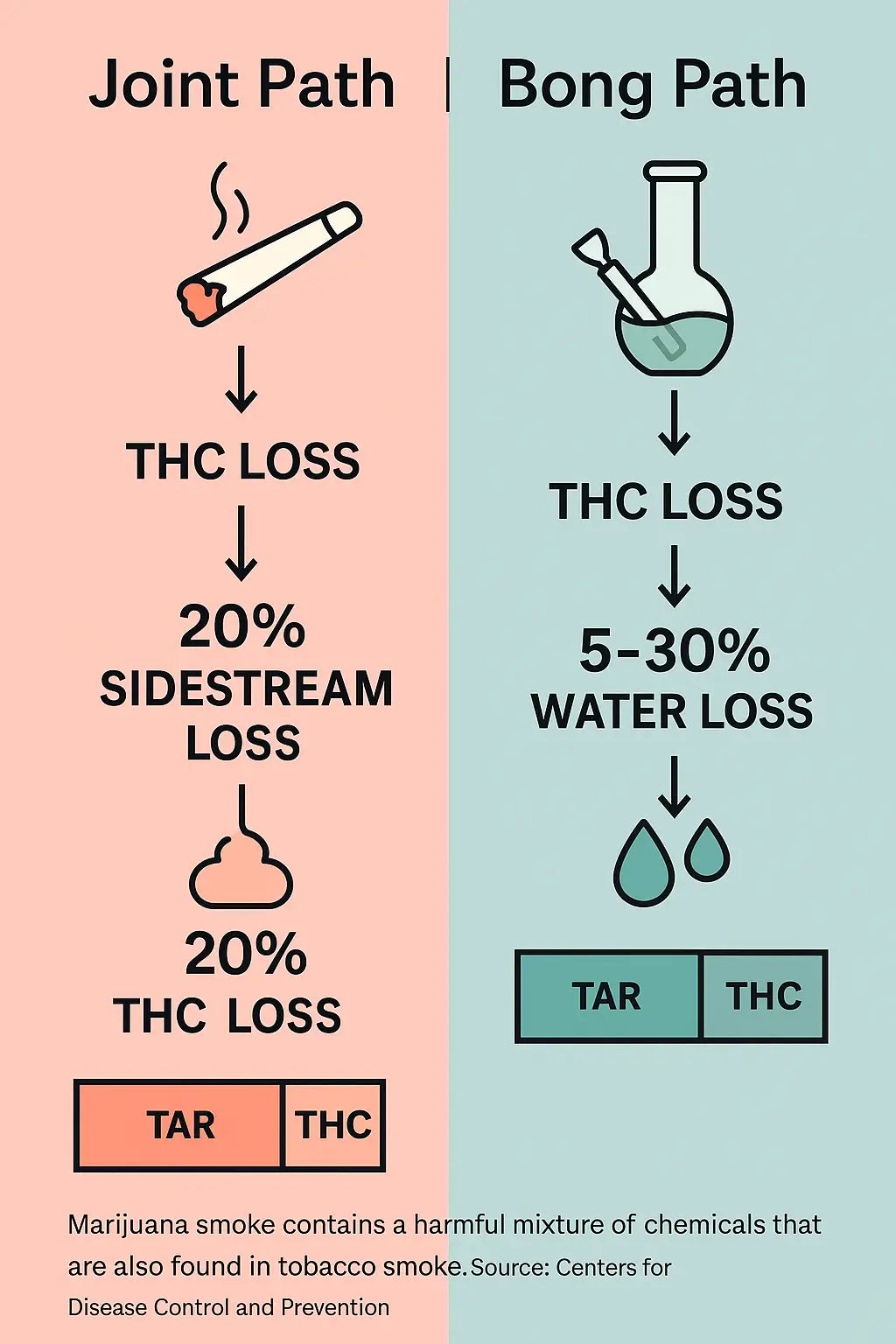
A bong hit often feels stronger than a joint because you pull a whole chamber of smoke at once, giving a fast head‑rush. But lab work from the NORML–MAPS water‑pipe study showed that water in glass bongs can trap 5 ‑ 30 % of Δ‑9‑THC while letting much of the tar through.
So you inhale more smoke in one breath but slightly less THC per puff. Joints burn flower all the way down; slip‑stream smoke is lost, yet each drag delivers close to the plant’s full potency.
How THC Potency
THC isn’t active until heat flips THCA at about 400 °F. The NIDA “Cannabis Basics” page explains that smoking cannabis—in any form—instantly decarboxylates and sends vapor into the lungs.
A joint gives dozens of 50‑75 mL puffs; a single bong clear can top 300 mL. That big inhale means more cannabinoids hit your lung tissue at once, so you may feel effects sooner. Still, THC percentage in the flower stays the same; switching devices doesn’t magically add “more THC,” it changes how quickly you deliver the dose.
Does a Bong Steal Your THC?
Water cools hot smoke and grabs heavier particles—but cannabinoids are oily and partly stick to the bubbles. In Donald Tashkin’s UCLA tests, water‑pipes removed extra tar and extra THC compared with dry pipes. Follow‑up work in Australia measured up to a 30 % THC loss after a hit passed through water.
This “cleaner but weaker” paradox explains why some people load larger bowls or add ice and percs: the hit stays smooth even when you burn more weed. Pro tip: use fresh water every session; dirty water can’t filter well and muddies taste.
Why Bongs Feel Stronger
A joint’s gentle draw keeps smoke velocity low. By contrast, clearing a beaker’s water chamber dumps a dense cloud straight into your lungs. A Colorado State airflow project found users reported a 45 % faster onset with bong clears than with steady joint drags.
Quick delivery floods blood‑rich lung tissue, so you label the effect “stronger,” even though some THC stayed behind in the water. If you’re new, take small bowl snaps and inhale lightly; seasoned consumers chasing an intense high often pack larger hits and rely on water cooling to keep the cough down.
Which Burns More Bud?
Joints keep burning between puffs—sidestream loss can waste 15‑25 % of the flower. A bong ember dies once you pull the slide, so combustion waste is lower. Yet part of that saved THC dissolves in the water, evening things out. University of Mississippi chemists estimated that joints deliver about 20 – 25 % of a gram’s THC to the smoker, while water pipes deliver 25 – 30 % after filtration loss.
In practice, loading 0.3 g in a bong bowl often equals the buzz of a 0.4 g joint—slightly thriftier, but not magic. To stretch stash further, pack smaller bowls, change water, and corner‑light instead of torching the whole surface.
Health Check
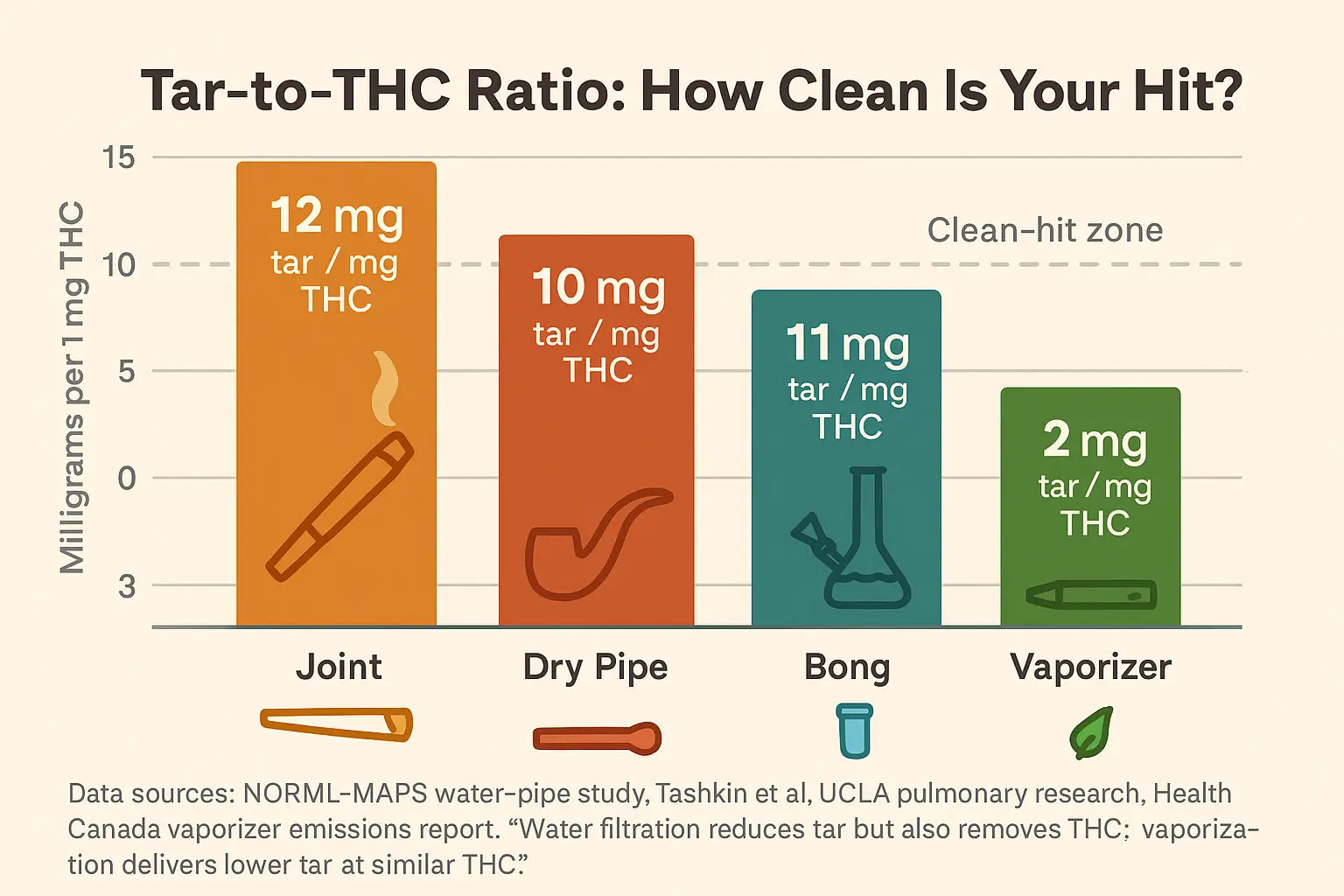
Water in beaker bongs traps heavier particles, so the smoke feels like cooler smoke on your throat. But research led by pulmonologist Dr. Donald Tashkin at UCLA showed that while water pipes reduce some tar, they also reduce cannabinoids, leaving the tar‑to‑THC ratio about the same as a joint .
Likewise, a 2000 NORML–MAPS study found 5‑30 % of THC stayed behind in the water . Cooling does spare your mouth from hot smoke, yet the adverse health effects of combustion—carbon monoxide, benzene, tiny tar droplets—still reach the lungs. The CDC reminds all cannabis users that any smoked plant material can damage lung tissue over time .
Translation: a bong gives smoother hits but not a “healthy” pass. Rotate in vapor or edibles on rest days, keep bowls small, and always use fresh water—dirty bong water grows mold and re‑heats toxins.
Related: How to Clean a Glass Bong Without Alcohol
When to Pick Which Device
| Scenario | Reach for a Bong | Reach for a Joint |
|---|---|---|
| Fast onset | Clear one packed chamber for immediate effects | Two or three quick drags work too, but onset is slower |
| Low tolerance / micro‑dose | Pack a small bowl and “corner hit” | Roll a mini‑cone with 0.25 g flower |
| Group share | Bowl swaps keep germs lower; cools more smoke | Social, pass‑around vibe; no water spill |
| On the go | Tough; glass breaks, plastic bongs taste bad | Discreet; toss the roach; no cleanup |
| No lighter wind‑block | Indoor clears easy | Pre‑roll works better on a windy trail |
| Legal concerns | Consult local laws; a big glass tube may draw eyes | Pre‑roll tubes look like cigarettes; easier to stash |
Key insight: choose device by environment, not just THC math. A trail break demands simplicity; couch night may reward the full bong experience with larger hits and an intense high.
Cost & Practical Tips
- Grind fine, pack light. A 0.25 g snap in a bong often equals a 0.4 g paper.
- Use a screen. Keeps shake from sucking into water and wasting potency.
- Change water daily. Old water raises smell and steals more THC.
- Ice vs no ice. Ice cools but condenses THC; chilled water alone gives cool vapor with less loss — try both and track how quickly you finish an ⅛‑ounce.
- Skip flavored papers. They add combustibles and mask terpene taste; if flavor matters, glass wins.
FAQs
Is smoking a bong better than joints?
“Better” depends on goals: bongs cool smoke and hit fast; joints need no gear and waste a bit more weed.
Can you get high from bong smoke?
Yes—one clear from a mid‑size bong (≈0.25 g flower) delivers enough THC for most users to feel effects within seconds.
How many joints is a bong hit?
Roughly ½–¾ of a typical 1‑gram joint in total THC, but delivered all at once.
Does a joint get you more high than a pipe?
Pipes give hotter, faster hits; joints emit sidestream smoke and take longer. Over several drags the end result can be similar.
Conclusion
So, do bongs get you more high than joints? They can feel that way because one bong hit delivers a dense, cooled cloud that races THC into your bloodstream. But remember: water also filters out a slice of that THC, and joints—even with more smoke lost to the air—can match the buzz after a few steady puffs.