
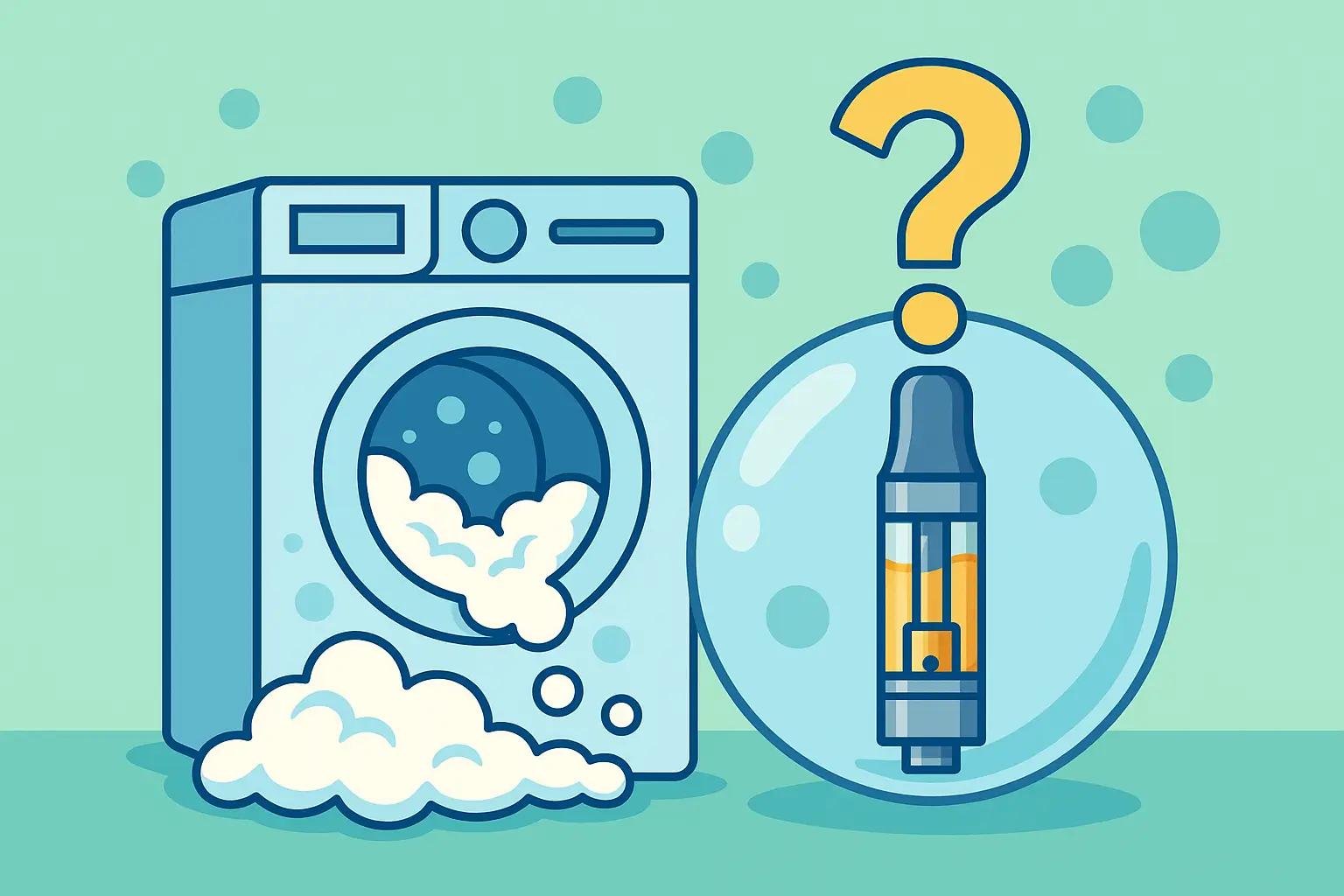
A vape cartridge functions as a dab cart or dab pen cartridge which serves as a small sealed tube that connects to a battery to heat thick cannabis oil until it becomes vapor. The fundamental components of every vape model include a battery pin and an oil chamber (tank) and a heating coil/atomizer and a mouthpiece with small air-intake holes. The coil reaches 350-400 °F when you activate the button or draw which transforms the oil into an aerosol that you can inhale.
The structure of Dab Cartridge
Picture a familiar slender tube:
- Mouthpiece & Air-intake holes – let vapor out, but also let water in.
- Oil chamber – holds thick cannabis oil; thin soaps can seep past seals.
- Ceramic coil & heating element – fragile; contact with liquid can cause short circuits.
- 510 threads & battery pin – corroded connectors lead to weak or no hits.
Can Water & Detergent Really Sneak In?
Yes. During a high-speed wash cycle, centrifugal force drives water and laundry soap through the cart’s air vents. Warm water also thins thick cannabis oil, so the liquid inside the chamber can “wick” outward while detergent moves in.
Because most laundry detergents are water-soluble surfactants, they break surface tension and creep into interior mechanisms faster than plain water. That means even a short accidental rinse leaves residue that is hard to spot but easy to taste. Routinely inspect pockets and keep vaping equipment in a zip case to avoid the mistake.
Health Risks of Inhaling Soap-Residue Aerosol
What happens if you heat a contaminated cart? Surfactant droplets can form fine mists that reach deep into the lungs. Animal research shows surfactant inhalation can trigger pulmonary edema — fluid buildup in the lungs — (see this PubMed study on smoke and surfactant).
Real-world data matter, too. The American Association of Poison Control Centers reports thousands of detergent-related calls each year; even small exposures cause coughing, vomiting, and airway irritation, especially in kids. When a heating element reaches 400 °F, leftover soap can break down into harsher chemicals that affect taste, throat feel, and possibly long-term lung health.
Bottom line: a sudsy dab cartridge isn’t just a flavor issue; it carries potential health risks that standard “burn off the gunk” fixes may not solve.
Five Telltale Signs Your Cart Is Contaminated
- Sudsy bubbles collect at the mouthpiece after a pull.
- Runny, streaked oil—a far cry from the usual thick amber.
- Soapy or bitter taste on a dry inhale.
- Cloudy condensate on the glass walls or machine walls of the cart.
- Visible water line above the coil or corroded connectors on the battery pin.
If you notice two or more of these, follow a safety flow: blot, dry 24 h, sniff, test at low wattage, then ditch if any soap smell remains. The Poison Control online tool can guide next steps if irritation or coughing starts.
Spotting the warning signs early saves your vape device, prevents waste, and protects your lungs—key goals for vape care under normal conditions.
Emergency Action Plan
Accidentally ran a dab cart through a full wash cycle? Act fast and smart. First, blot the outside with a lint-free towel—never shake; that can force liquid inside fragile internal components. Next, pull the battery and leave the cartridge mouth-down on a paper towel for 10 minutes so water can drain by gravity. Skip the “rice trick.” Repair pros at iFixit call rice a “do-nothing myth” that lets corrosion eat sensitive wiring while you wait. Instead, bathe the threaded end in 90 % isopropyl alcohol for 30 seconds to displace trapped water, then air-dry 24 hours in a ventilated area—no hair-dryers or other heat sources. After drying, re-attach the battery, set voltage low, and take a dry pull (no fire) to check flavor. If you still taste laundry detergent or spot suds, toss it. Better a lost cart than inhaling chemicals that ruin lungs and optimal performance alike.
When to Say “Good-bye” and Dispose Properly
If liquid reached the coil, if oil looks milky, or if you see corroded connectors, it’s time to trash the cart—safely. The U.S. EPA says e-cigarette waste belongs at a household hazardous-waste site, never in curbside bins, because leaking nicotine and lithium can spark fires or poison handlers. Wrap the cart in a zip bag, drop it at your county’s haz-waste depot or a vape-shop take-back box.
Preventing Future Laundry Accidents
Most mishaps start in a rush—carts left in pockets of dirty clothes. Build a “check before wash” habit: pat each vape pen slot like you pat for keys. Upgrade storage, too. A $10 silicone protective sleeve adds a water-tight skin over the familiar slender tube, shielding the air-intake holes from splashes. For travel or gym bags, a hard-shell Rover case holds two carts plus a battery in elastic bands so nothing rattles, even inside a spinning machine. Both options cost less than a wasted gram of cannabis oil. Finally, park your rig on a designated dresser tray—away from the hamper—so it never meets the washer door. A few low-cost habits today mean fewer moisture surprises, fewer short circuits, and no more “soapy vapor” jokes tomorrow.
FAQs
Will a cartridge work after it’s been through the dryer?
Heat can deform seals and boil any liquid inside. Test at low voltage; if vapor tastes burnt or bitter, retire it to hazardous-waste disposal.
Can detergent chemicals vaporize?
Yes. Residual surfactants can aerosolize at ~400 °F, creating lung irritants. The CDC lists detergent-related cough and airway distress cases every year, so don’t risk it.
Is an isopropyl bath safe for electronics?
A brief soak in 90 % IPA displaces water and evaporates cleanly; it’s standard practice in electronics repair guides (see iFixit).
Conclusion
Laundry rooms and vape gear don’t mix. A fast spin cycle can push laundry soap and water through the tiny vents of a dab cart, ruining flavor and risking lung irritation. If your vape cartridge ever takes that ride, follow the blot-dry, isopropyl rinse, and 24-hour air-dry routine—then test at low heat. Taste soap? See bubbles? Toss it and dispose of it at an EPA-approved drop-off.