
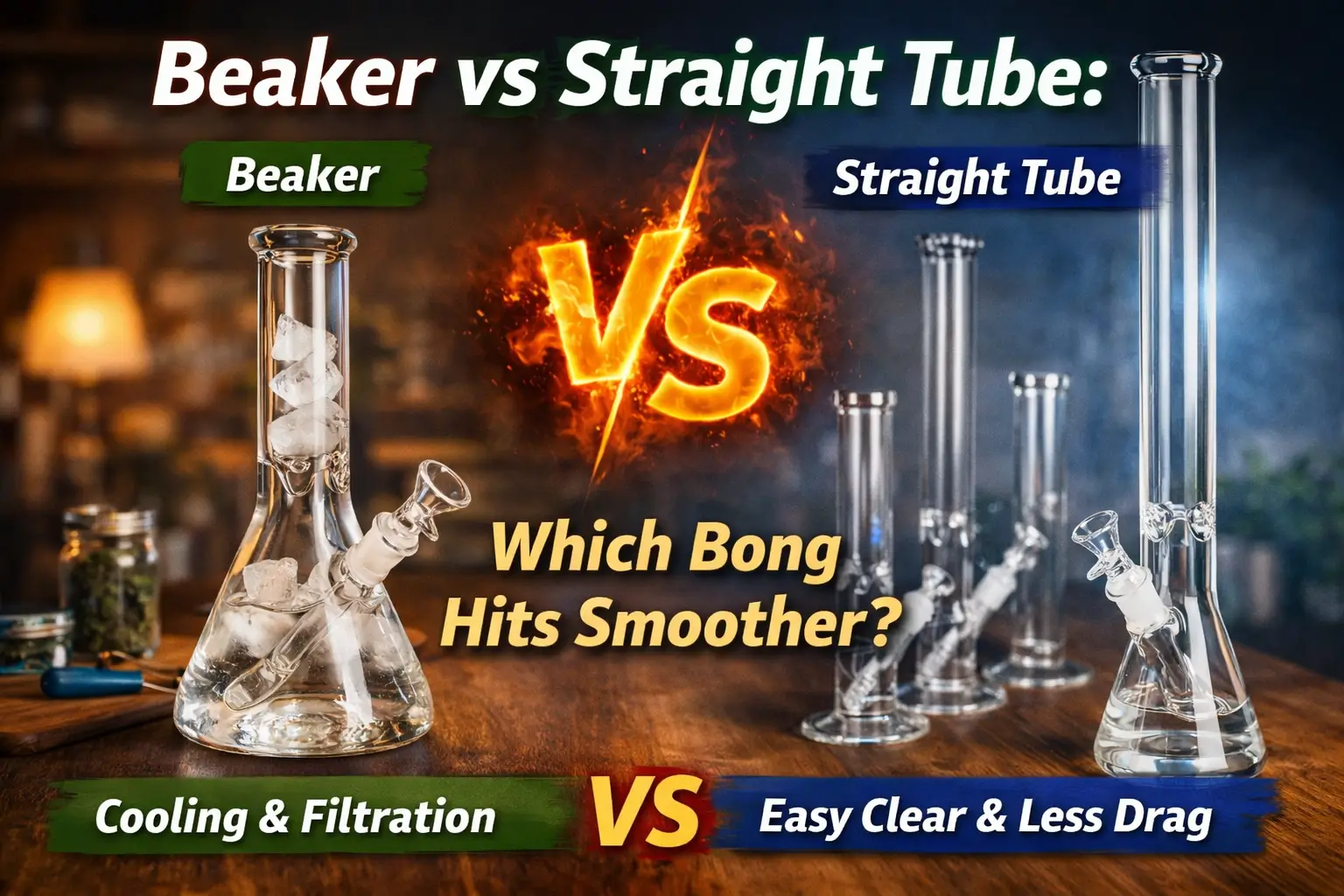
When I first started comparing beaker vs straight tube bong styles, I thought “smoother hits” was just about size. I was wrong. Smoothness is a feeling—how your throat reacts, how hard you have to pull, and whether the smoke feels cool or sharp. And once you notice it, you can’t un-notice it.
In this guide, I’m going to break down the real trade off between beaker bongs and a straight tube bong using plain language: how bong shape changes water volume, airflow, and less drag vs more cooling. I’ll also show you how to match the right bong style to your smoking style (short snaps, long pulls, solo nights, or group sessions), so you stop guessing and actually buy what fits your lungs.
What “Smoother” Really Means
When I say “smoother hits,” I’m not talking about one magic thing. For most of us, smooth = cooler smoke + less throat irritation + a pull that doesn’t feel like a workout. That’s why the bong shape matters. It changes your water volume, the size of the water chamber, and how the smoke travels before it reaches you.
Here’s the simple way I judge it:
- Cooling: does the smoke cools fast enough to feel gentle?
- Drag: do I get less drag / minimal resistance, or does it take more effort and more lung power?
- Splash + harshness: does water jump up, or does the hit feel “wet” or sharp?
One important myth to kill early: water cools smoke, but it does not “filter out” toxins like people think. That misconception shows up constantly in search.
The One-Sentence Answer
If your goal is the smoothest feel, many beaker bongs (and beaker style bongs) tend to win because they usually hold more water and give the smoke more space to chill out. If your goal is the easiest clear with less effort, a straight tube bong often feels better because it has a more direct path and a straight design that can mean minimal resistance.
But here’s the real truth: beaker vs straight tube is always a trade off. A beaker can give cooler hits and help with stability, but it can also create more drag depending on your setup and lung capacity. A straight tube bong can feel punchy—sometimes “efficient hits,” sometimes “harsher hits”—especially if you like big snaps and fast clears.
I’ve seen people switch teams after one session, not because one style is “better,” but because their smoking style is different. If you hate struggling for airflow, “team beaker” might not be your best bet. If you hate heat and throat bite, a straight tube might not be either.
Beaker Bong Basics
A beaker is easy to spot: wide base, conical base, and a lower center of weight. That wide, stable base is a big reason I recommend beaker bongs for group sessions or clumsy coffee-table setups. You get added stability, more “planted” weight, and usually a larger volume of water.
Why that matters for smoother hits: more water and more chamber space can help the smoke lose heat. In basic heat transfer terms, cooling improves when a hot gas contacts cooler surfaces and liquid—more contact and time can mean cooler smoke. That’s the whole “smoke cools” idea in plain language.
The downside is real though: extra water plus a larger chamber can create more drag, especially with add-ons like tree percs (more bubbles can also mean more resistance). For some people with lower lung capacity, that “smooth” beaker setup turns into “why am I working so hard?”
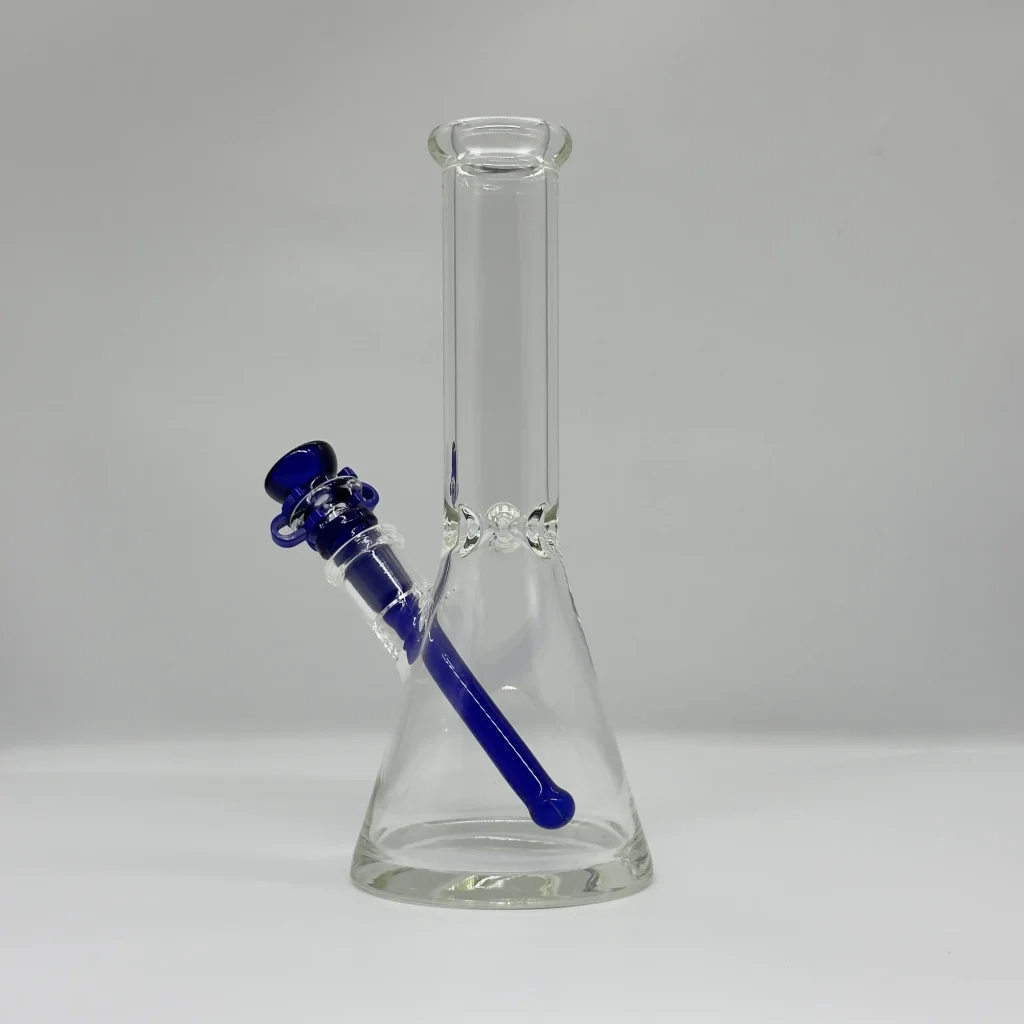
10-Inch Classic Cheap Beaker Bong
$42.00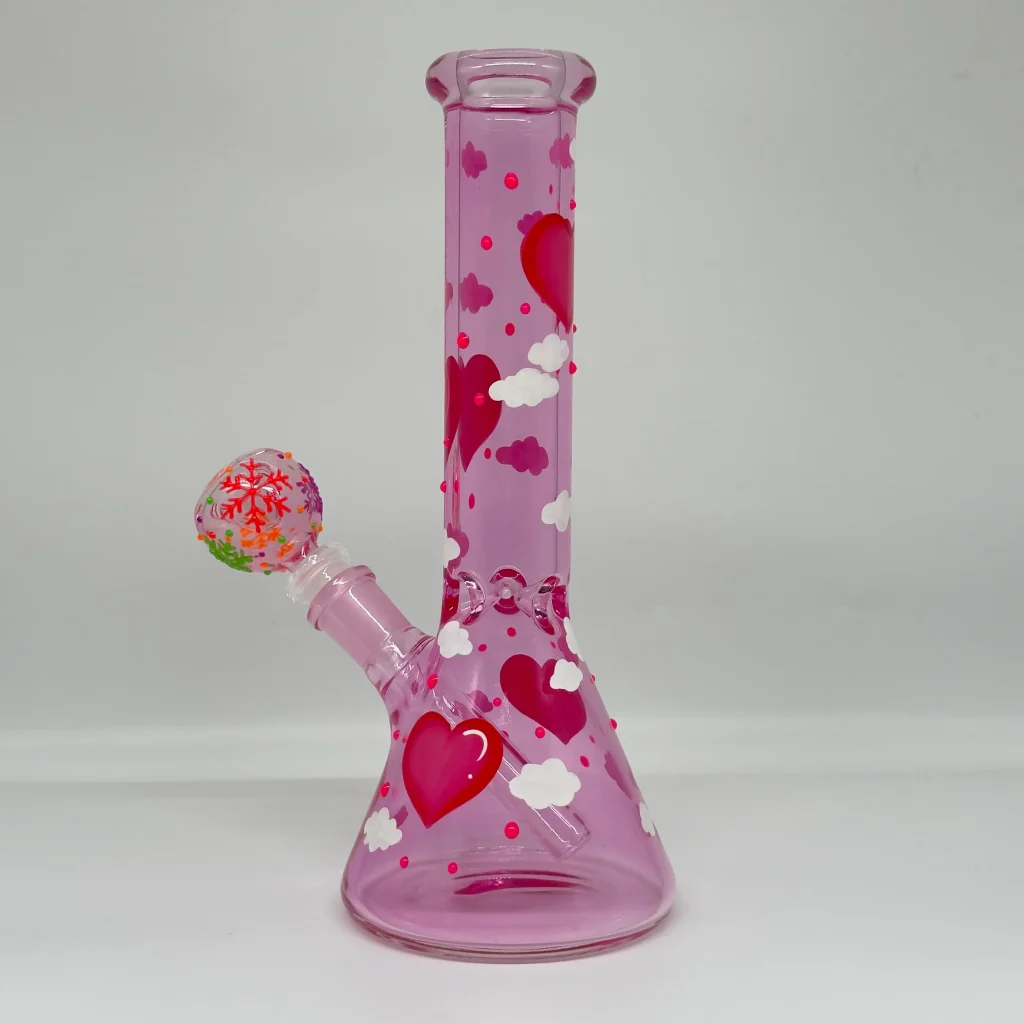
10.2-inch Pink Heart Glow Glass Beaker Bong
$62.00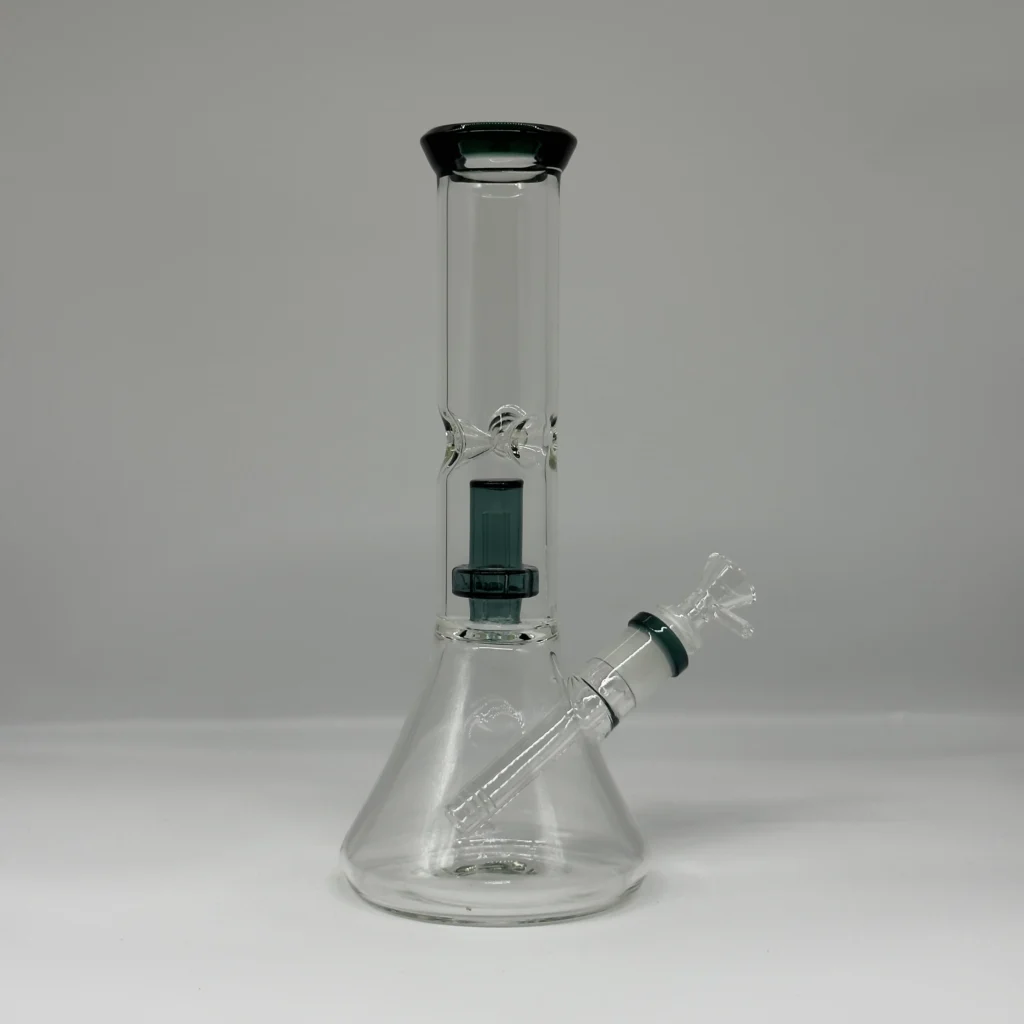
11″ Dark Green Cylindrical Perc Beaker Bong
$65.00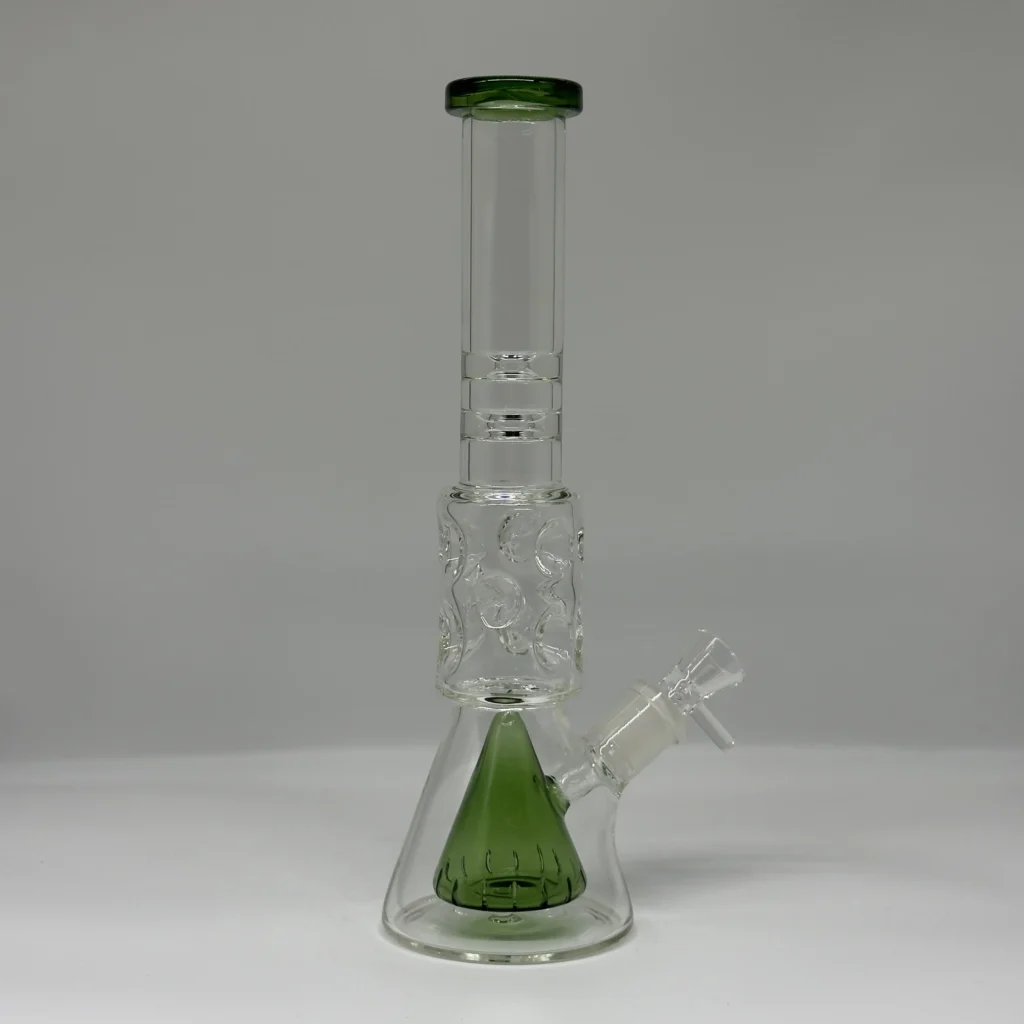
12-Inch Beaker Bong with a Green Cone Perc
$68.00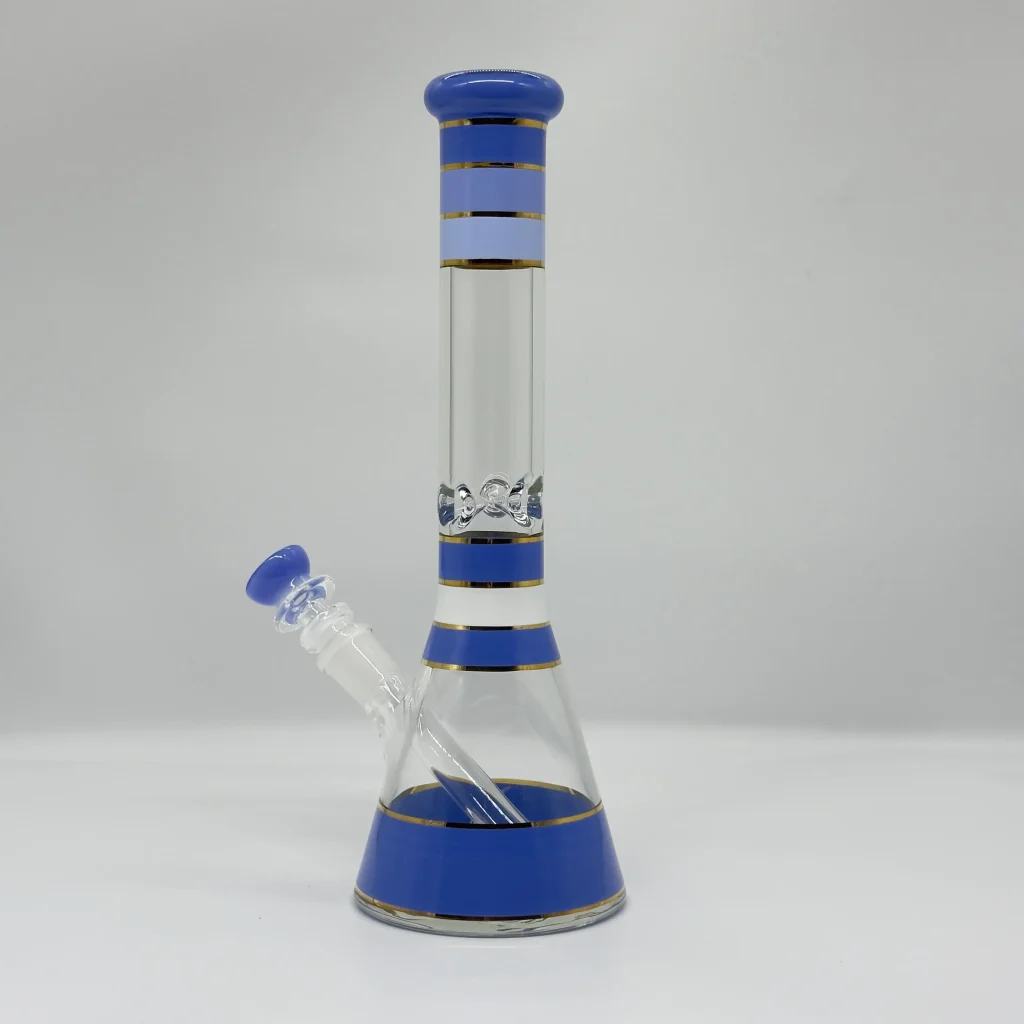
12-Inch Blue-&-Gold Stripe Cheap Glass Beaker Bong
$45.00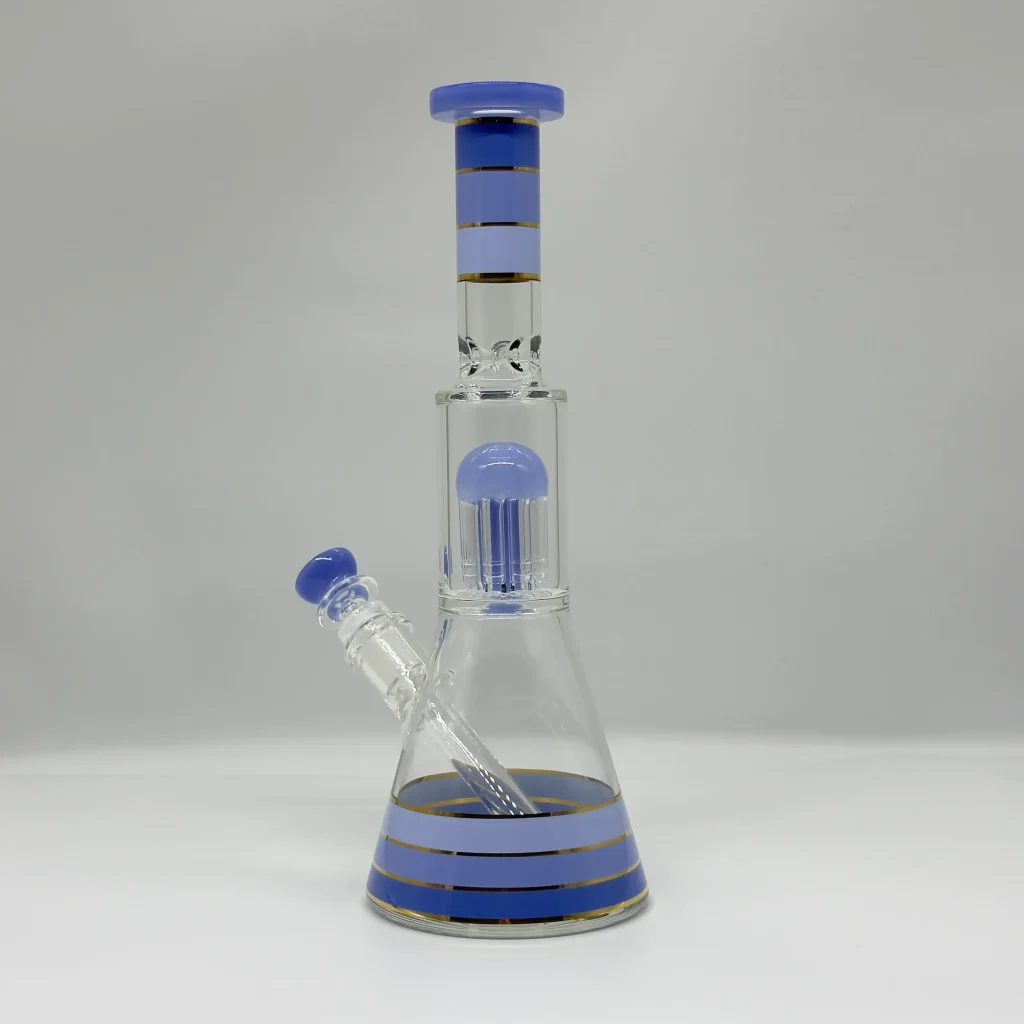
12-Inch Jelly Glass Beaker Bong with Percolator
$50.00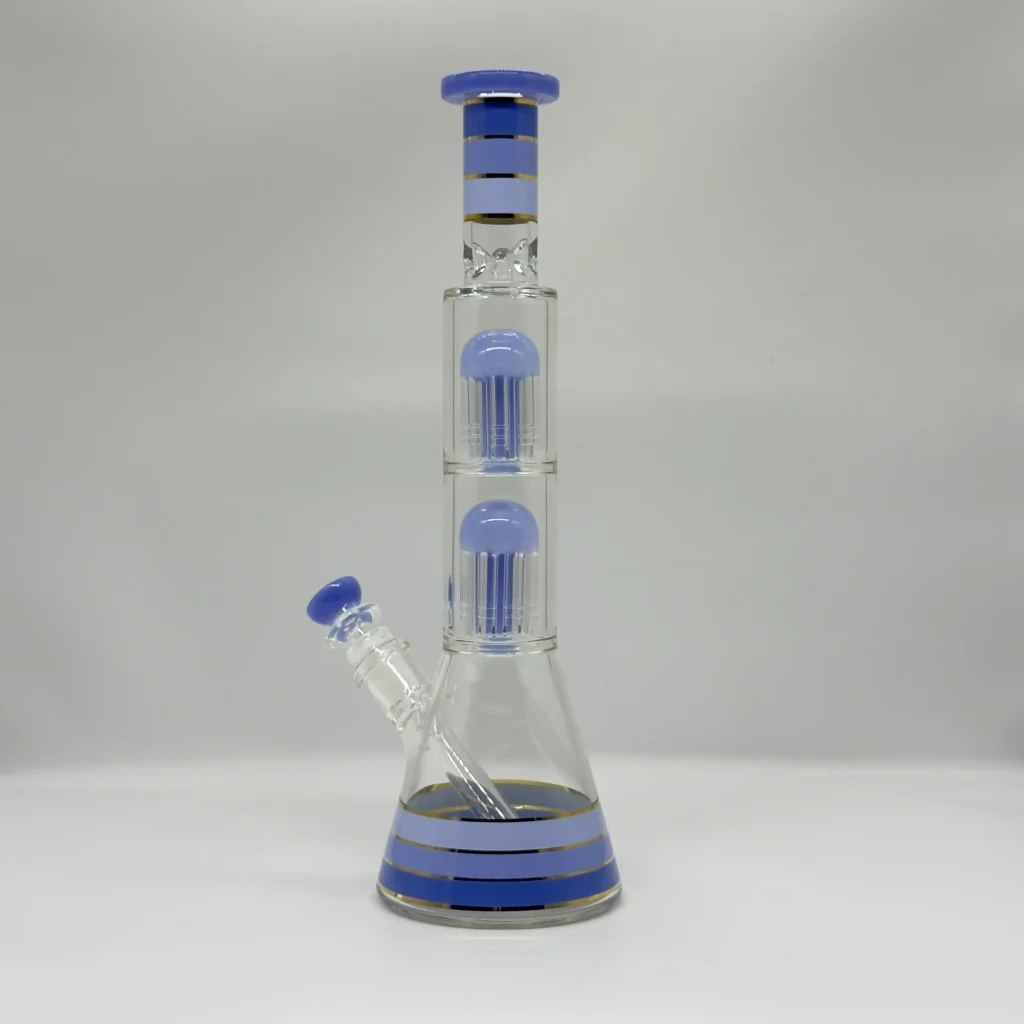
14-Inch Jelly Glass Beaker Bong with Double Percolator
$75.00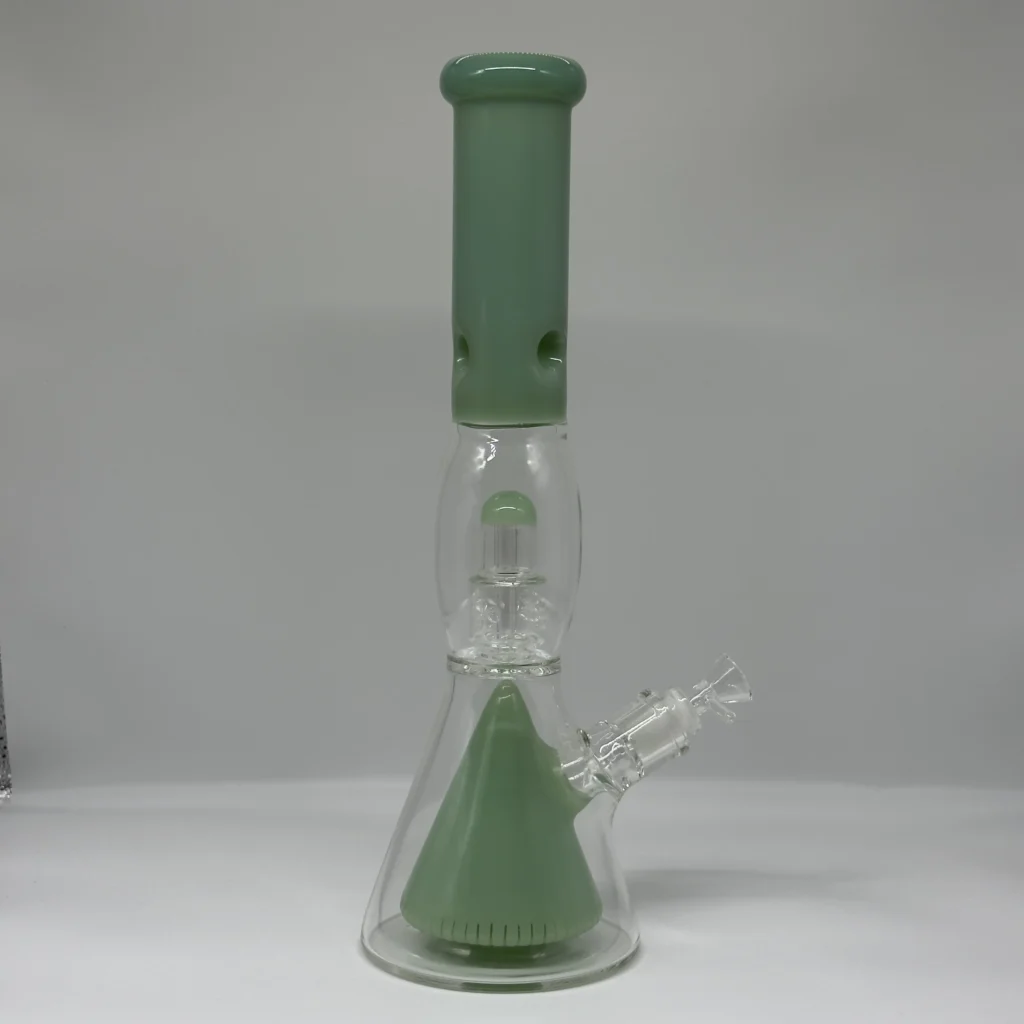
16″ Sage Green Dual Perc Beaker Bong
$107.99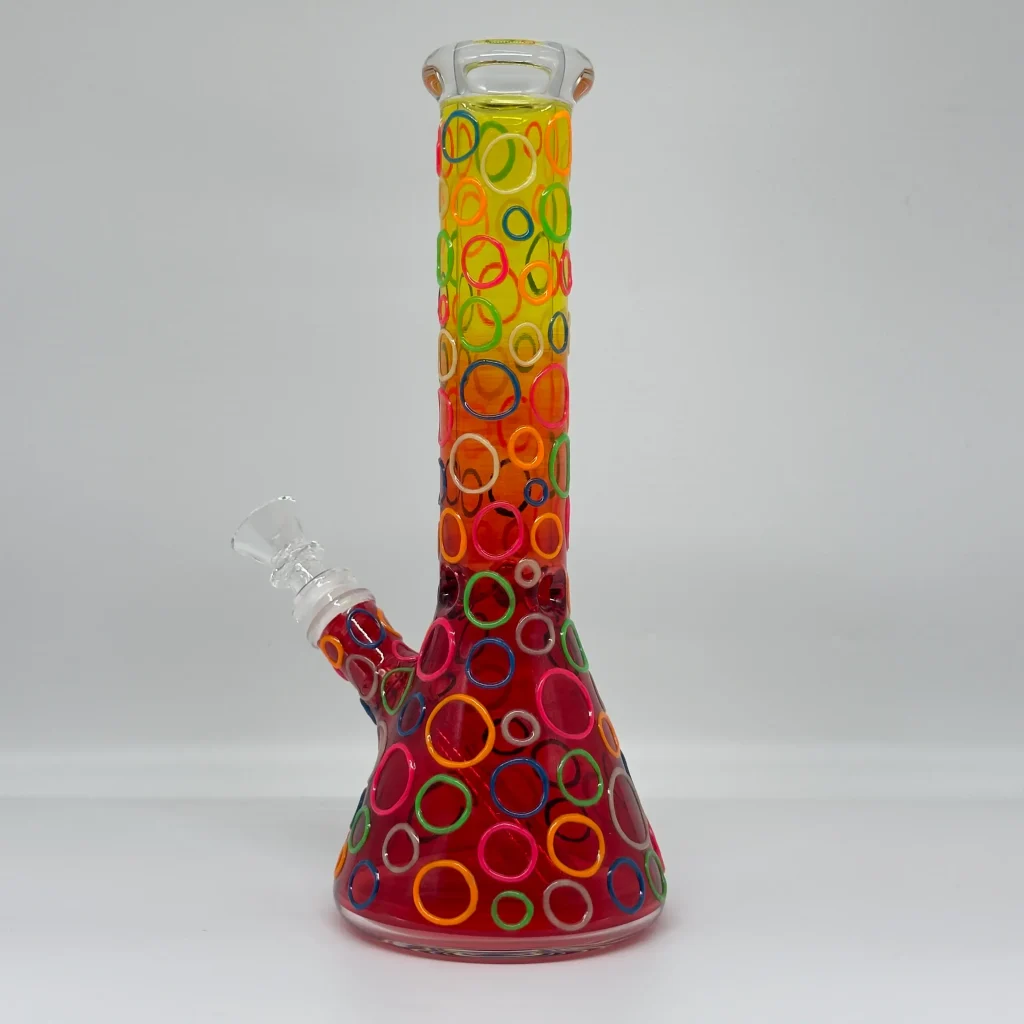
9.8″Glow Polka-Dot Glass Beaker Glow in The dark Bong
$60.00
Straight Tube Basics
A straight tube bong is the clean, no-drama option: a tall tube, a narrow chamber compared to many beakers, and a very direct path from bowl to mouth. That straight shot is why straight tubes can feel “snappy.” When I want a fast clear and less space holding stale smoke, I lean vs straight tube.
Smoothness can still happen here, but it’s a different kind. Straight tubes often give less drag and can feel easier on your breathing rhythm—especially if you don’t want to pull forever. That said, if you pack a big hit, the speed can concentrate the feel: more impact, more bite, sometimes harsher hits if you’re sensitive.
Straight tubes can also support comfort features like ice pinches / ice catchers, which can help deliver cooler hits without turning the whole setup into a high-drag machine.
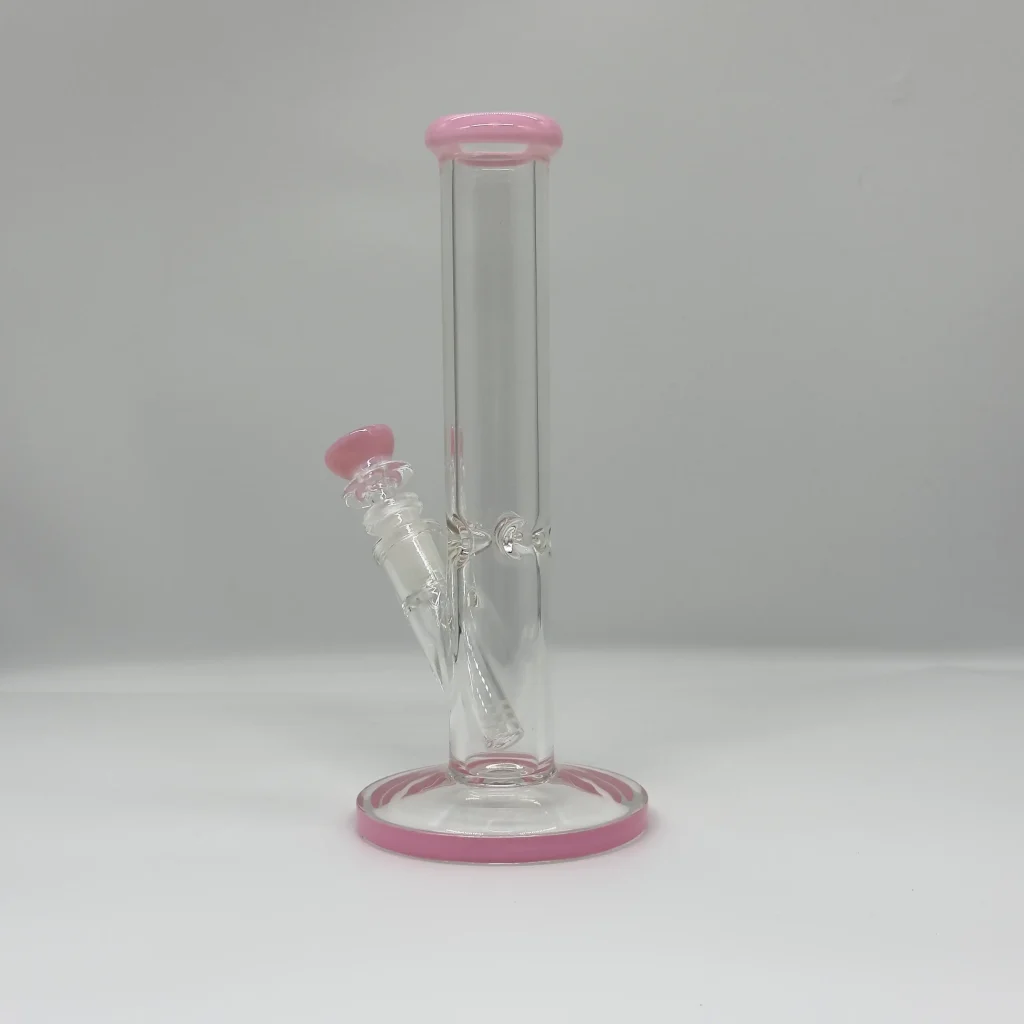
10-Inch Pink Straight Tube Cheap Glass Bong
$42.00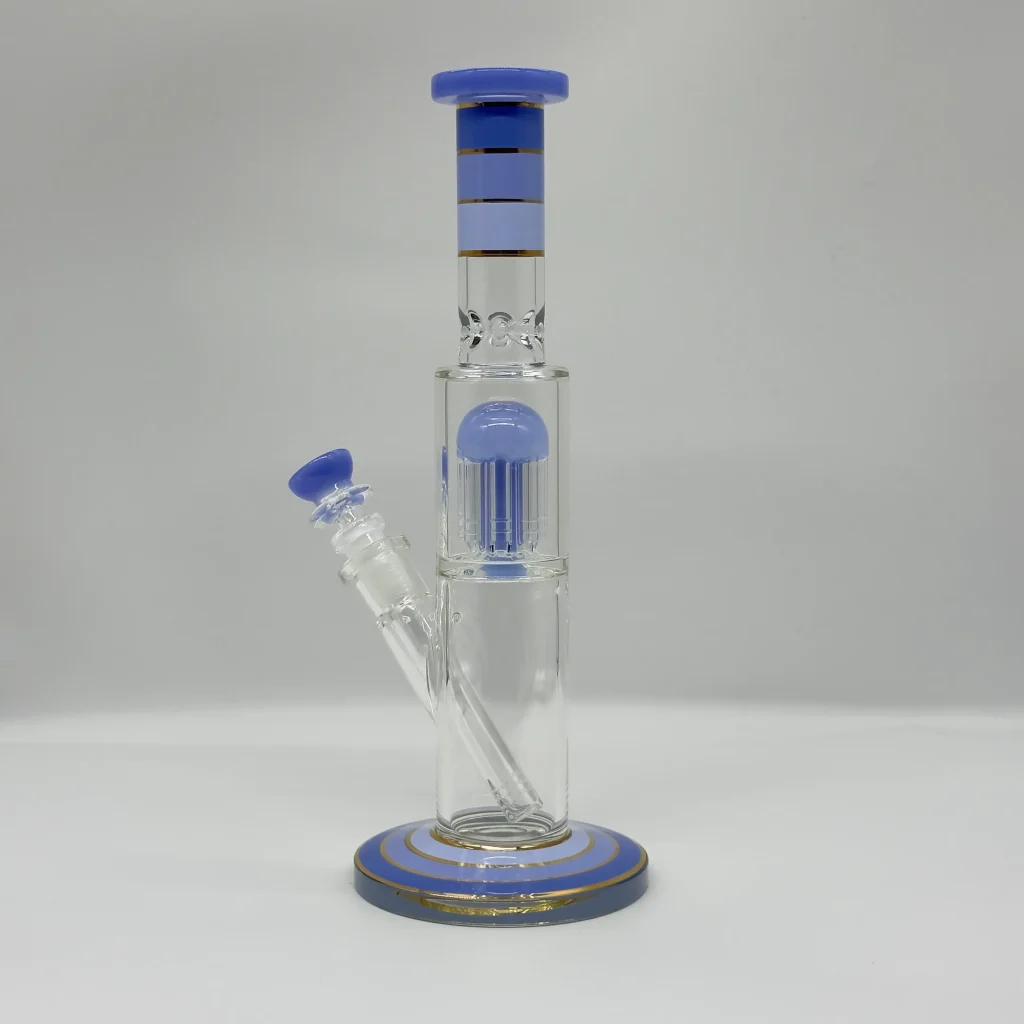
12-Inch Jelly Percolator Straight Tube Glass Bong
$65.00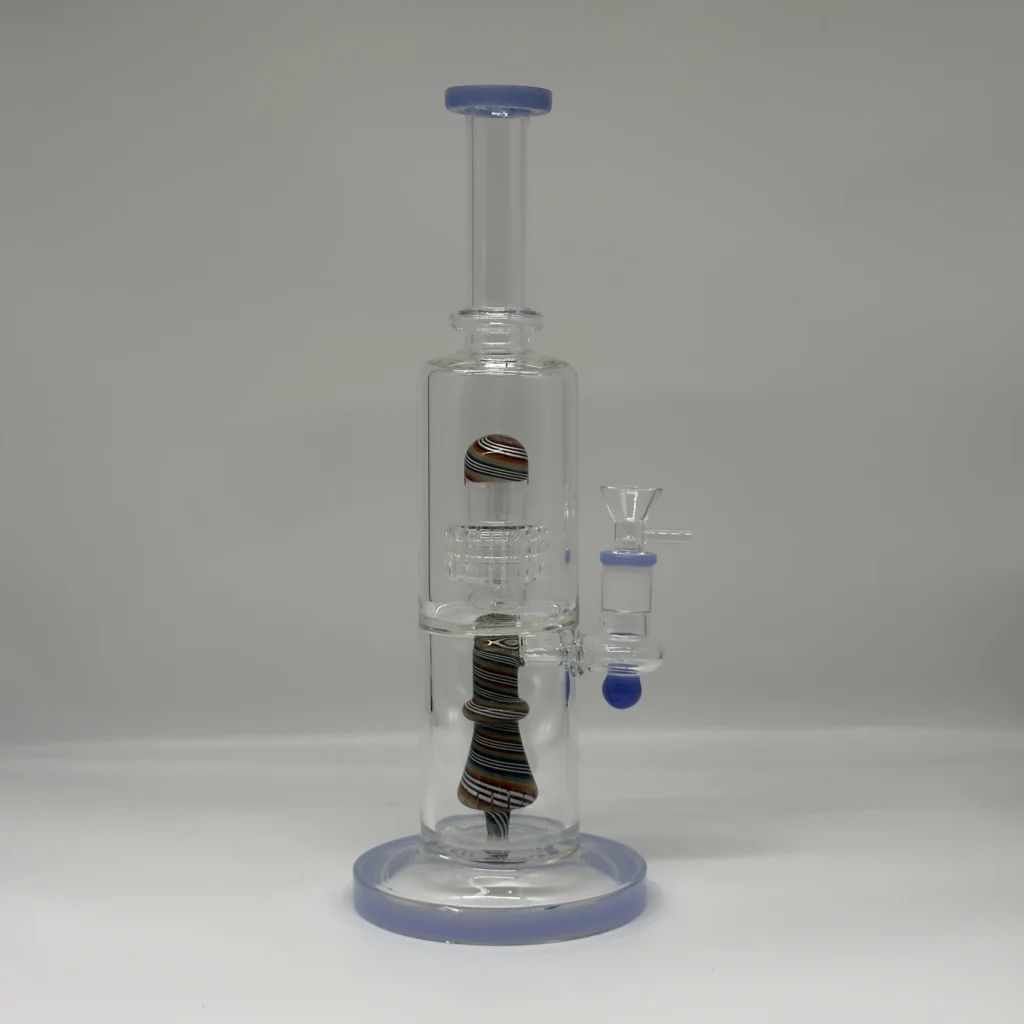
12″ Clear Glass Bong with Upper Perc Chamber
$84.99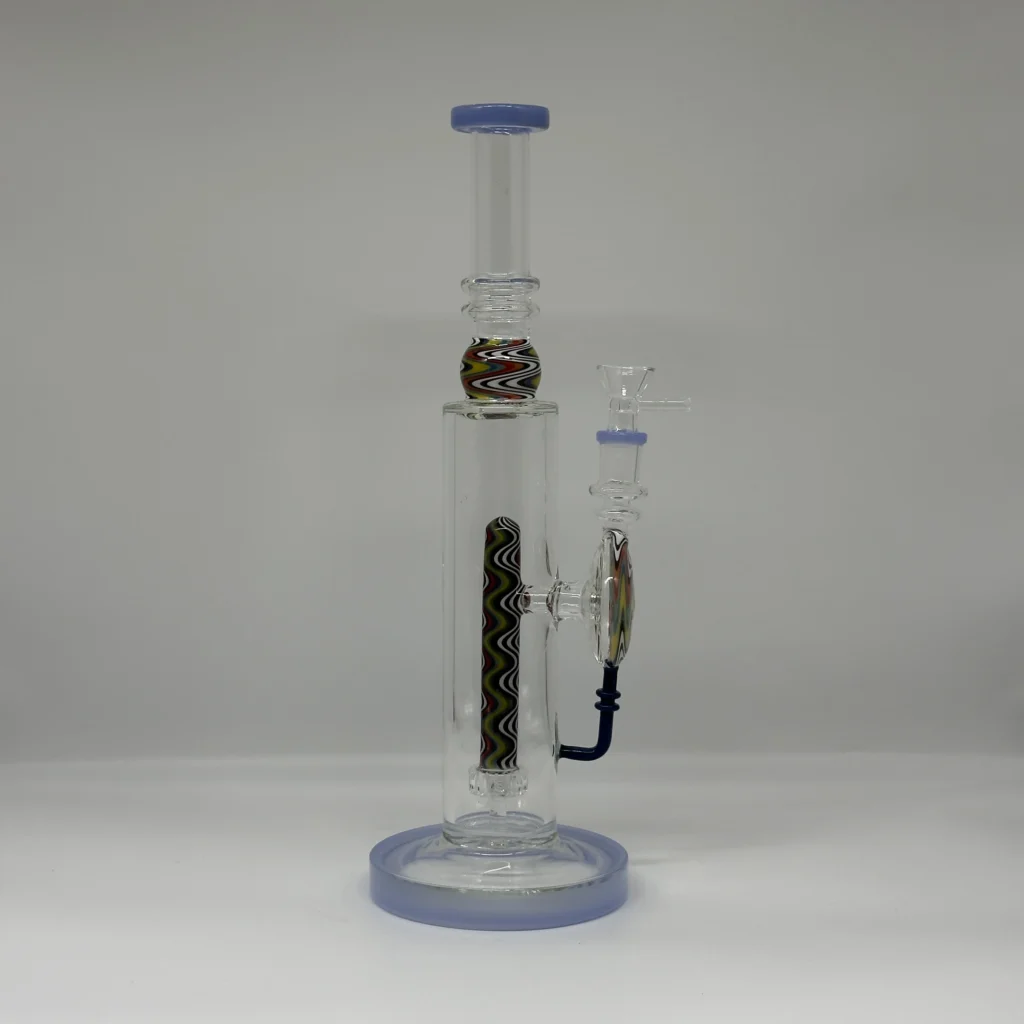
13.4″ Wig Wag Straight Tube Glass Bong
$89.99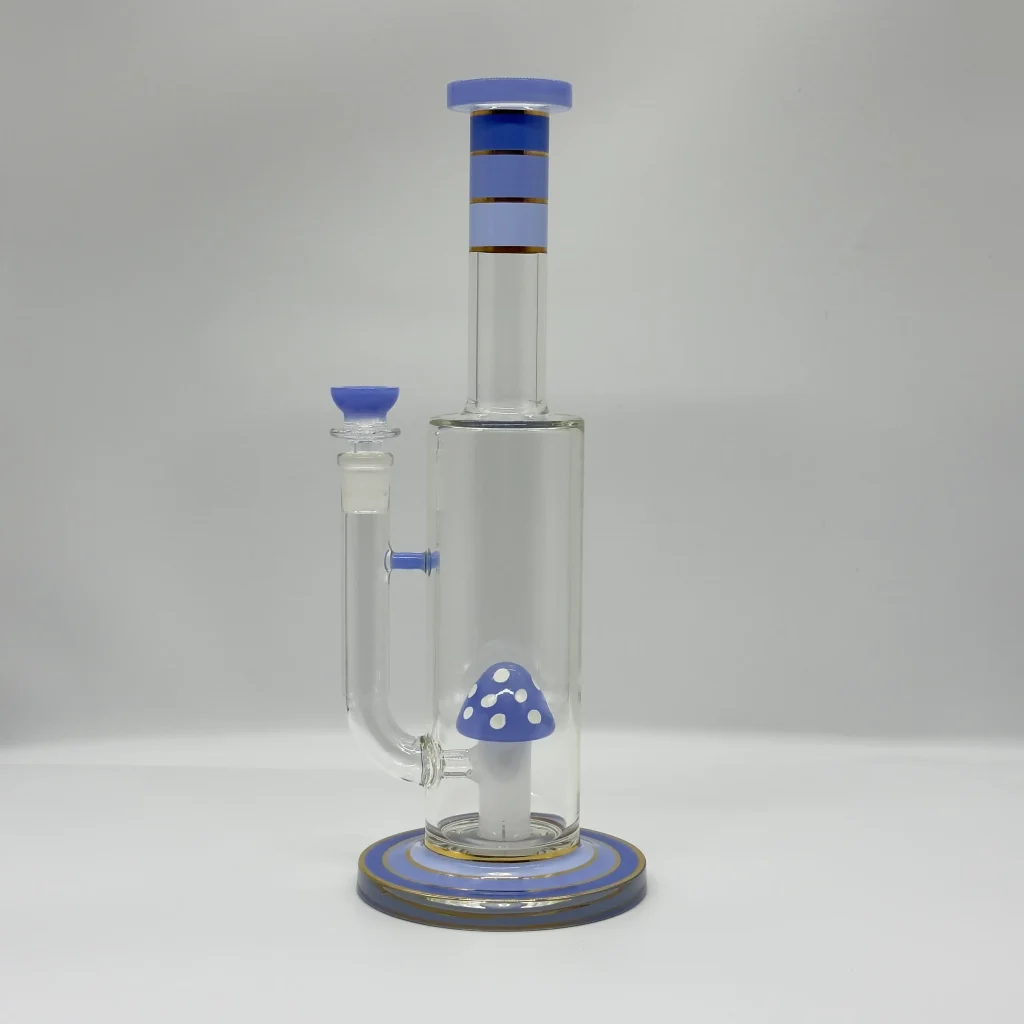
13.5-Inch Mushroom Perc Glass Bong
$65.00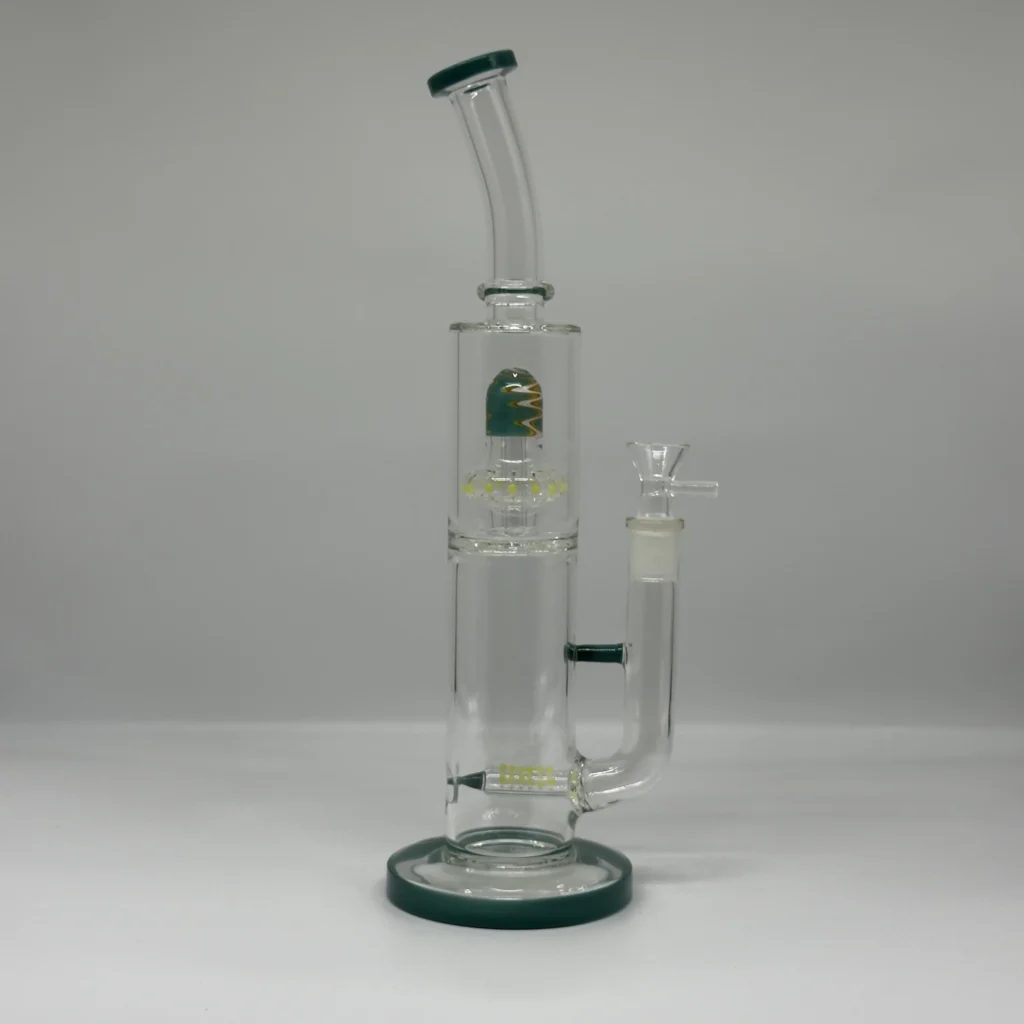
13″ Green Dual Perc Straight Tube Bong
$85.00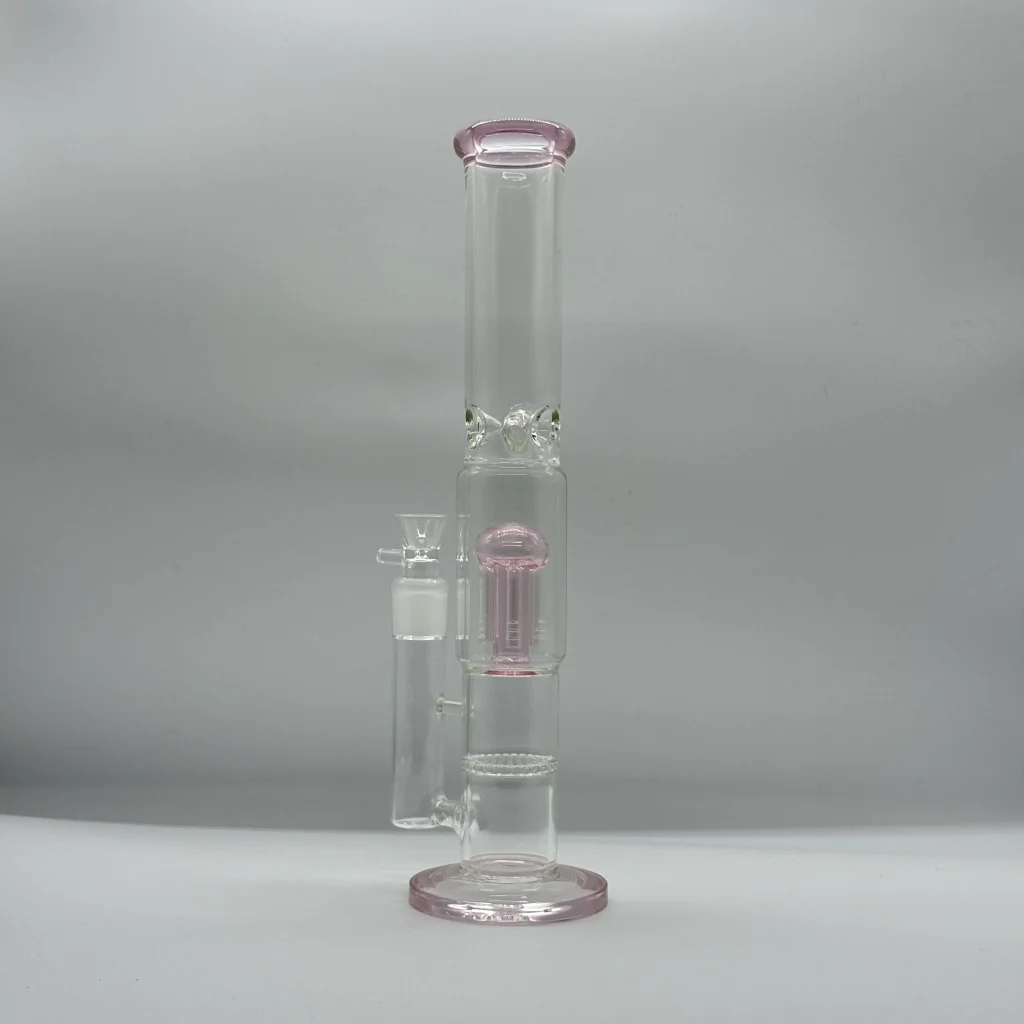
13” Pink Showerhead Honeycomb Percolator Glass Bong
$75.00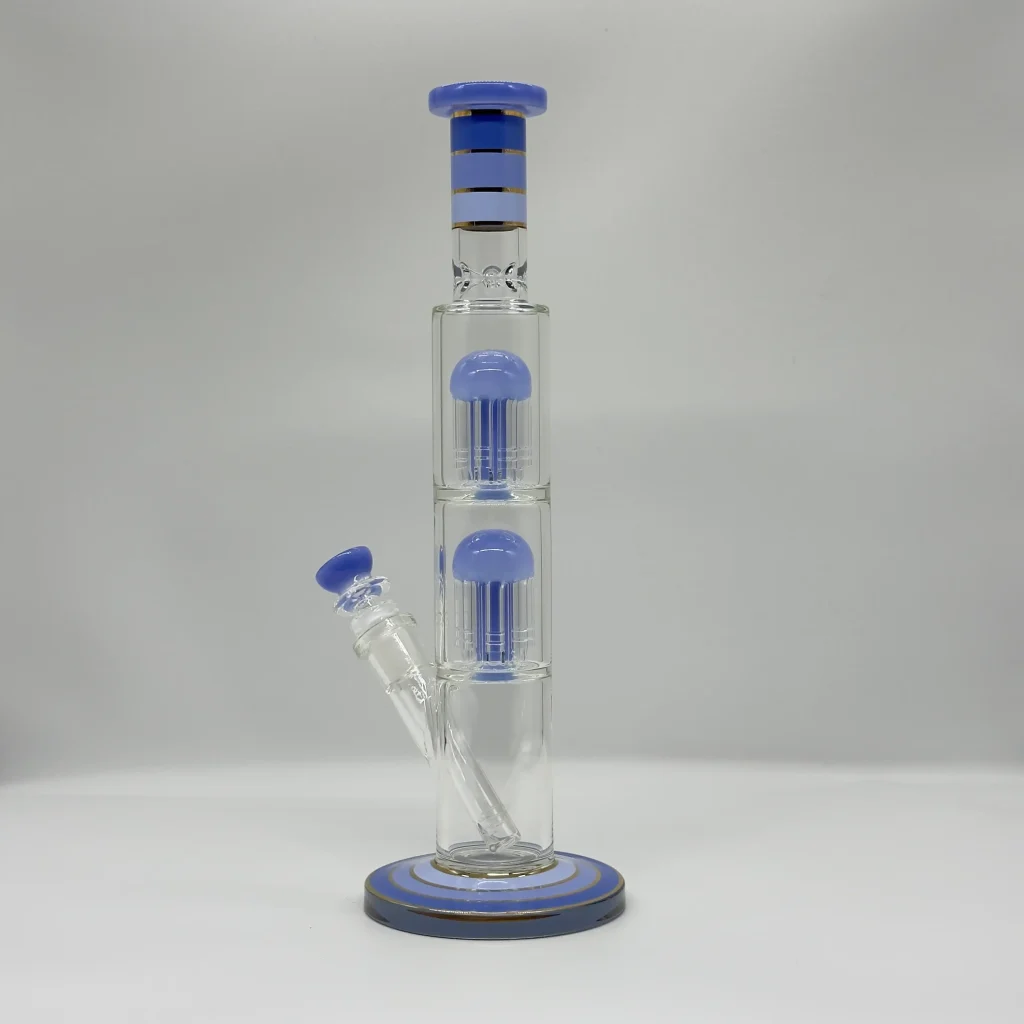
14-Inch Double Jelly Percolator Glass Tower Bong
$75.00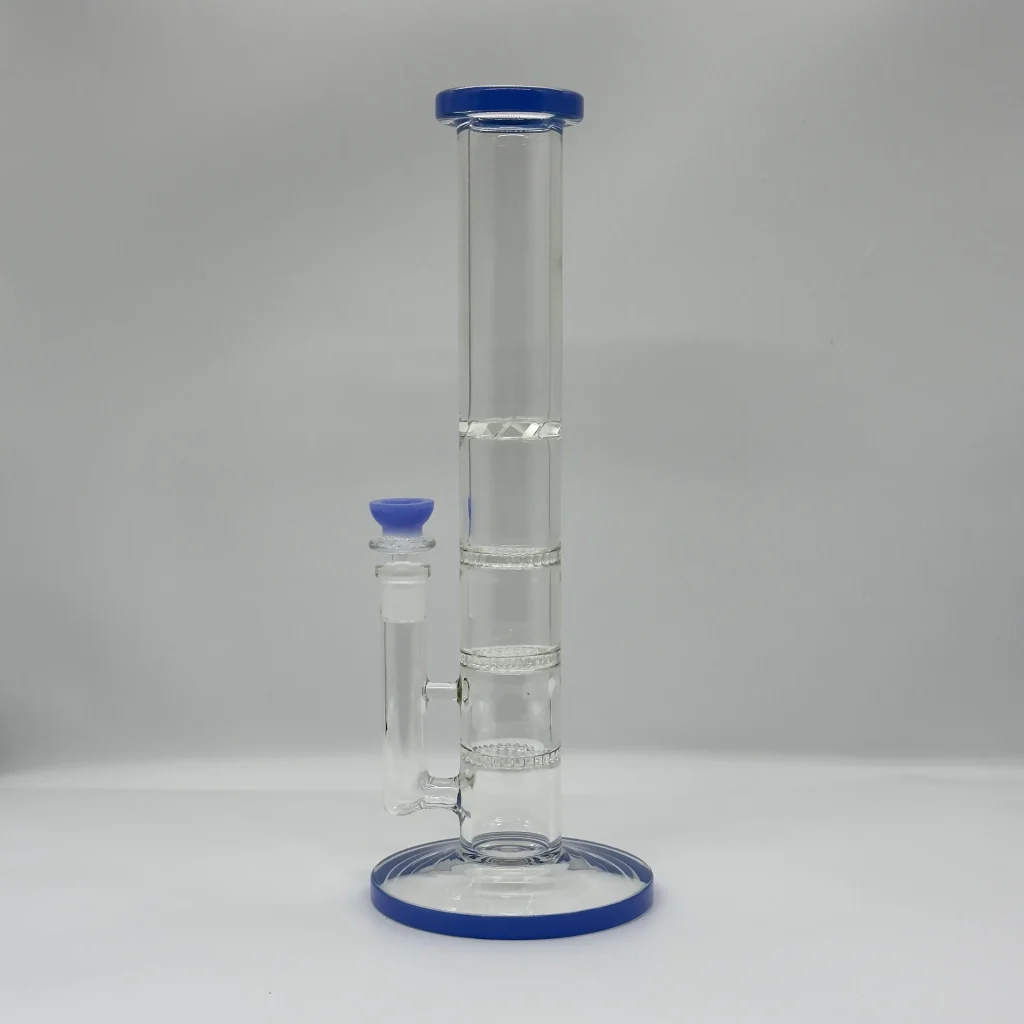
14-Inch Triple Honeycomb Percolator Glass Bong
$75.00
What “Smoother” Buyers Miss
When people search “beaker vs straight tube bong,” they usually want a simple winner. But the real answer comes down to two things: water volume and lung power.
- If you want better filtration feel and cooler smoke, you’ll usually add more water or more diffusion. But more water and more bubbles can mean more drag and more effort.
- If you want minimal resistance and less effort, you’ll keep airflow clean and water lower—yet that can mean warmer smoke and more throat irritation.
This is why I don’t treat beaker vs straight as a debate—I treat it like matching shoes to your feet. If you have strong lungs and love long pulls, you can handle a heavier-drag beaker. If you prefer quick clears, a straight tube might deliver more flavor (less time sitting) and a sharper, cleaner “all the smoke” moment.
The Physics of “Smooth”: Cooling vs Drag
When I compare beaker vs straight tube bong, I think about two forces fighting each other: smoke cools when it touches water and glass, but drag shows up when airflow gets choked.
Cooling is mostly about contact. More water and more glass surface can pull heat out of the smoke. That’s why beaker style bongs (with larger volume and extra water) often give cooler smoke and cooler hits. Heat moving through air and moving gases is basically convection, and the more contact you create, the more cooling you can get.
Drag is the “work” your lungs feel. When airflow meets friction, tight turns, or lots of bubbles, pressure drops and you need more effort. NASA’s simple Bernoulli principle explanation helps here: pressure and airflow speed are linked, and when you add resistance, the pull feels harder.
What Affects Smoothness More Than Shape
Here’s my honest take: bong shape matters, but your setup matters more.
- Diffusion / percs: More bubbles usually means more surface area, which can help cooling and “soften” the hit. But it can also add more drag. That’s why tree percs feel smooth to some people and annoying to others with lower lung capacity.
- Height: A taller tube bong gives smoke more travel time. Sometimes that means cooler smoke. Sometimes it means less flavor if the smoke sits too long (especially if you pause).
- Ice pinches / ice catchers: These can help with throat irritation for sensitive users, without forcing you to add tons of water.
So yes, beaker vs straight tube is real—but the “feel” often comes from the diffusion and how hard you like to pull.
Beaker vs Straight Tube Bong
If you’re trying to choose a bong style fast, this is the checklist I use:
- Smoothness feel: Many beaker bongs hold more water volume and a bigger water chamber, which often helps for smoother hits (cooler, less bite).
- Drag / pull: A straight tube bong has a direct path and often a narrow chamber with less space, which can feel like less drag and more “snap.”
- Stability: Beakers usually win. That wide base and low center are why I call them a stable piece for desks and group sessions.
- Cleaning: Straight tubes are usually easier because the body is simpler. A beaker can still be easy, but you’ll want a brush or cleaning solution to reach angles and the downstem.
That’s the core trade off: cooling and stability vs easier clears and simpler airflow.
Unique Angle: The “Dry Run” Test
When someone asks me “Which hits smoother?” I tell them: test airflow first. You can learn a lot without using anything.
- Water-only pull test: Fill to a normal level and pull air through it. If it feels like more effort, you’re feeling drag. If it feels easy, that’s closer to minimal resistance.
- Splash check: If water jumps up fast, that setup may feel harsh or annoying. This shows up more with certain heights and narrower base designs.
- Clear-speed check: If a piece clears fast, it often feels more “efficient hits.” If it lingers, it can feel stale.
This little test helps you match the bong to your smoking style and your lung power, instead of guessing online.
My “Best Bet” Picks
If you want my practical answer (the one that actually helps you choose):
- If you want cooler, gentler sessions: I lean team beaker. The conical base, extra space, and often more water usually support cooler smoke and more filtration feel. Great for group sessions and chill pulls.
- If you hate drag and want fast clears: Go vs straight tube. A straight design and direct path can feel like less effort and a cleaner snap, especially if you like a big hit and clearing “all the smoke” quickly.
- If you’re a beginner: Pick the one you’ll actually clean. A simple straight tube is easy, but a beaker’s added stability can save you from accidents.
- If you get throat irritation easily: prioritize cooling tools (like ice catchers) over fancy percs that add drag.
Your perfect answer isn’t universal—it’s personal preferences + physics.
FAQs
Are beaker bongs smoother than straight tubes?
Often, yes—because many beaker style bongs run more water volume and feel cooler.
Do straight tubes hit harder?
They can. The quicker clear and less space can feel more intense.
Which bong is easier to clean?
Usually a straight tube bong. Either way, use a brush or cleaning solution.
Does bong shape really matter?
Yes. It changes drag, stability, and how smoke travels.
Conclusion
If you remember one thing from this beaker vs straight guide, let it be this: smoothness is a balance between cooler smoke and less drag.
A beaker often wins on comfort, stability, and that mellow “ahhh” feeling—thanks to larger chamber, more water, and a wide base. A straight tube often wins on speed, simplicity, and easy clears—thanks to the direct path and fewer airflow obstacles.