
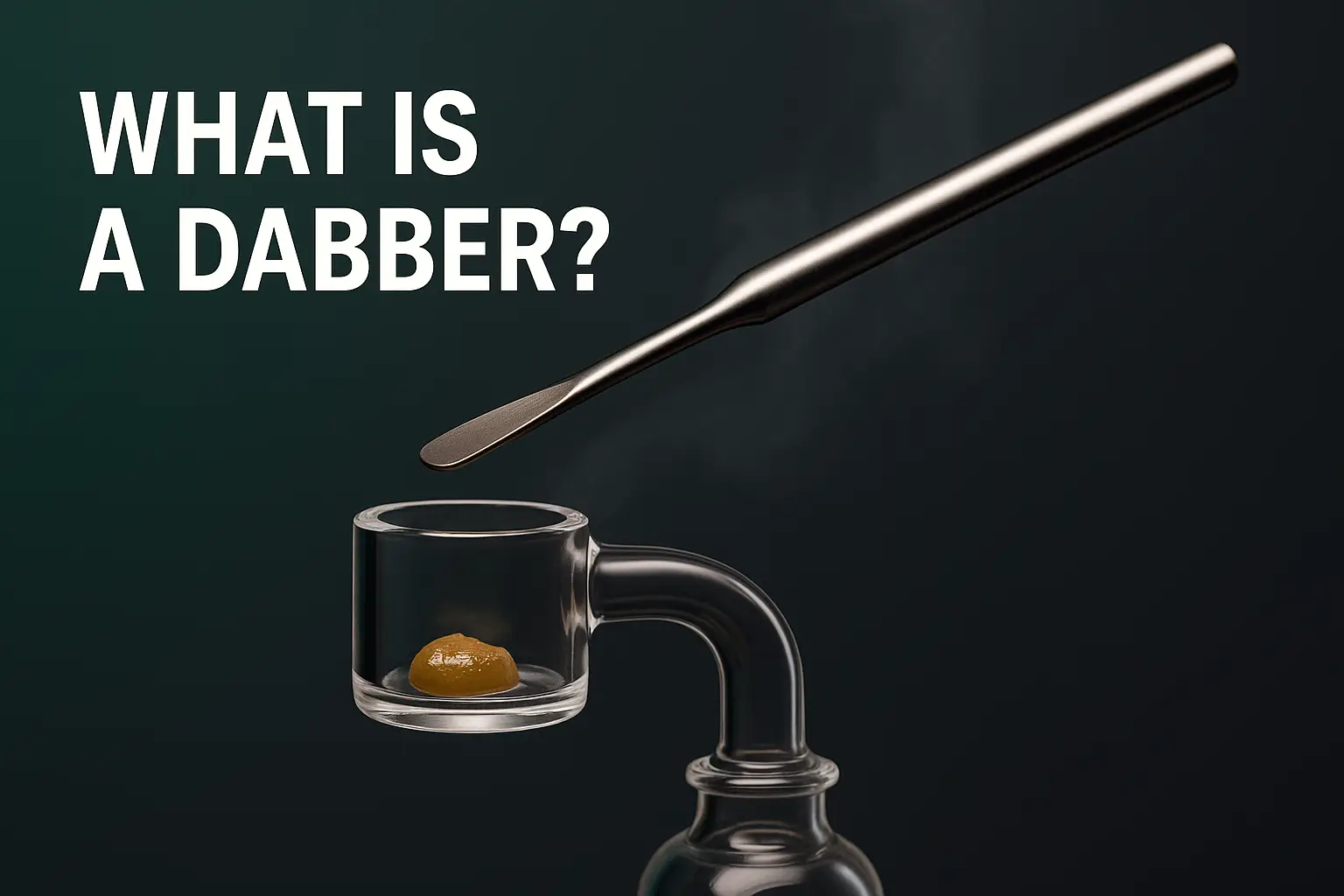
A dabber—often called a dab tool—is a small, heat-resistant utensil used for handling concentrates. You use it to lift sticky cannabis concentrates (wax, shatter, thick oil) and place them onto a heated surface (a dab nail/heated nail or quartz banger) on a dab rig (also known as an oil rig pipe). The tool gives you control in the dabbing process, helping you load a tiny concentrate safely and get a smooth, enjoyable experience.
Why You Actually Need a Dabber
Concentrates vaporize at 400 °F or higher; touching that temperature can lead to severe burns in seconds. The Occupational Safety and Health Administration warns that any exposed hot surface capable of harming skin is a workplace hazard that requires protective tools or barriers (OSHA guidance). Using the right tool keeps your hands away from the danger zone and prevents wasted product—no more goo stuck to paper clips or bobby pins. It also helps you load uniform doses; research from the National Institute on Drug Abuse shows that high-THC extracts carry a higher risk of dependency when portions aren’t measured carefully (NIDA fact sheet). By grabbing “rice-grain” amounts with a dabber, beginners and seasoned users alike can moderate intake and enjoy a more predictable dabbing experience.
Dabber Materials & Tip Shapes
Think of dabber tools in two primary categories:
- Materials (what the tool is made of), and
- Tip shapes (how the end is shaped to move different textures).
Materials
- Stainless steel (metal): Durable, budget-friendly, and handles high temperatures without warping. Great for everyday use with many different types of concentrates.
- Titanium (metal): Very tough with excellent heat retention; good for fast loading on a hot nail.
- Quartz / Glass: Clean taste and smooth feel; ideal for flavor. Glass can break easily, so be careful.
- Ceramic: Even heat and gentle flavor at lower temps; heats slower but keeps temp steady.
- Other materials: Non-heated non-stick silicone mats are great for staging sticky dabs (don’t heat silicone). Wood or coated tools can chip—stick with food-safe, heat-resistant options.
Tip shapes
- Pick / sharp point: Best for hard shatter or sugar.
- Scoop: Made for stickier concentrates like wax or thick oil.
- Shovel / paddle (sharp edge): Moves larger globs and flattens soft textures.
- Blade: Slices and lifts brittle sheets without crumbling.
Quick pick: Flavor-first users choose quartz/glass or ceramic; heavy everyday users choose stainless steel or titanium for durability.
How to Use a Dabber Safely
- Pre-heat the nail to 500-600 °F and let it cool 20 seconds—this sweet spot melts concentrate without scorching flavor.
- Load the dabber: touch just a sliver (about 0.05 g) of concentrate to the tool. Non-stick silicone jar walls make grabbing the right amount easier.
- Touch & twirl: Gently press the concentrate to the inner edge of the nail while slowly rotating the tip; this spreads the oil for full vaporization.
- Cap & inhale: Drop a carb cap over the nail to keep vapor from escaping, then breathe in steadily.
- Cool-down discipline: Place the dabber on a silicone mat, not the table. OSHA burn-prevention notes recommend barriers or insulation around hot surfaces—your desktop counts! (OSHA thermal-burn guide
Using this rhythm limits messy drips, protects furniture, and, most importantly, keeps your hands clear of a hot nail
Cleaning & Maintenance
A dirty dabber can ruin taste and, worse, harbor microbes. The CDC states that bacteria multiply fastest between 40 °F and 140 °F; sticky resin sits squarely in that “danger zone” on a coffee table (CDC food-safety guide). After every session:
- Quick wipe—While the tip is still warm (not red-hot), swab with a cotton bud dipped in 91 % isopropyl.
- Deep soak—Once a week, drop metal or glass tools into a shot glass of ISO for 10 minutes, then rinse in warm water.
- Torch-burn reset—For titanium, a brief flame pass burns off stubborn residue. Avoid this on quartz or glass; they can crack.
- Storage hack—Slide clean tools into a silicone sleeve to keep lint off the tip and prevent accidental scratches on glass rigs.
Routine care not only protects flavor but extends the life of even fragile glass dab tools, saving money and keeping your setup ready for the next sesh.
Dabber vs. Dab Pen vs. Dab Straw
Google mixes these three tools, but they serve very different jobs:
- Dabber (our focus) – a small, heat-resistant stick for loading sticky cannabis concentrates onto a hot nail. No battery. Pure control.
- Dab Pen – a pocket-size vaporizer that melts wax inside a coil. Great for stealth but needs charging and replacement coils.
- Dab Straw (a.k.a. nectar collector) – a glass or silicone tube with a heated tip you dip straight into the jar. Faster hits, but beginners can scorch product.
Knowing which device matches your lifestyle saves money and avoids a messy dabbing process
What Law Says
At the federal level, marijuana—flower and concentrates—remains a Schedule I drug under the Controlled Substances Act, as noted in the DEA Drug Fact Sheet. That means owning extracts or dab tools can still carry penalties on federal property. Some states add extra rules: Colorado, Vermont, and others cap retail concentrate potency or limit package sizes, according to the NCSL map of high-THC laws. Always buy from licensed stores and keep concentrates in sealed, labeled containers during travel. On the safety side, NIDA warns that concentrates often exceed 60 % THC—far stronger than flower—raising the risk for cannabis use disorder and impaired driving (NIDA potency data). Smart dosing and a must-have accessory like a precision dabber help you stay in control.
How to Pick the Right Dabber for You
Use this quick decision tree:
- Rig Type – Tiny recycler? Choose a flat tip quartz tool that fits narrow buckets. Large dab rig? A scoop titanium stick moves bigger globs of wax.
- Flavor vs. Toughness – Quartz and glass dabbers taste clean but break easily. Medical-grade titanium or stainless steel win on strength and heat retention.
- Texture of Concentrate – Runny oil likes a spoon; crumbly shatter needs a sharp point.
- Budget – Glass starts under $10; titanium can hit $30 but may outlast your next three rigs.
Regulars often keep two different styles to cover every jar in the fridge. Dip Devices suggests thinking of tools like kitchenware—different shapes, one job: “move sticky stuff without waste.” See their guide. Pick once, treat it well, and your dabbing experience stays smooth and safe.
FAQs
Can I dab without a dabber?
Yes, but metal paper clips scratch glass and drip sticky wax, wasting money. A purpose-built dabber costs less than lunch and is truly an indispensable tool.
What size dab is safe for first-timers?
Start with a grain-of-rice (≈0.05 g). NIDA links higher doses of potent extracts to more adverse effects (NIDA fact sheet).
Will TSA confiscate my clean dabber?
Hand tools under 7 inches without residue may fly in carry-on, says the TSA “Tools” list. Pack dirty gear in checked bags.
Related: Can You Bring a Weed Vape Through TSA
How often should I clean the tip?
Swipe with isopropyl after every hit; deep-soak each week. This stops burnt taste and lowers microbe growth.
Does the tip shape change flavor?
Indirectly. A scoop spreads oil so it vaporizes evenly, giving fewer hot spots and better terpenes, while a sharp point can leave globs that scorch.
Conclusion
Actually, this is what people ask- “What is a dabber? The answer is simple — the little yet crucial heat-resistant tool that every dab like yourself needs to get safe and sanitary hits. When paired with a dab rig (a.k.a. an oil rig pipe) and a hand torch, the perfect dabber gives you control over cannabis concentrates from hard shatter to viscous oils alike.