
Wondering what can I paint my glass bong with without ruining the flavor of your smoke or breathing in harmful fumes? You’re not alone. Thousands of U.S. DIYers look for a way to add a personal touch to a popular smoking device while keeping it safe for regular use. The short answer: choose heat-resistant, non-toxic coatings made for glass and cure them exactly as the label says. In this post you’ll get step-by-step tips, government-backed safety rules, and pro insights so you can create beautiful, long-lasting art on your bong without turning it into a health hazard.
Why Paint a Bong?
A fresh coat of color can hide scratches, match your personal style, or turn a plain glass surface into true artwork. Some creators use stencils for geometric patterns, others free-hand intricate designs that glow under black-light. But paint isn’t just art—it’s chemistry. OSHA warns that many paints, especially spray paint with strong solvents, release fumes that can irritate lungs or even cause dizziness in a closed room. If you light your bowl after coating it with the wrong product, the heat exposure can bake those solvents straight into your next hit. That’s why we’ll focus on coatings that stay stable up to 300 °F and won’t chip during frequent use.
Source:
https://www.osha.gov/laws-regs/regulations/standardnumber/1915/1915.35
https://www.osha.gov/laws-regs/regulations/standardnumber/1910/1910.107
Paint Safety 101
The rim and down-stem see the most heat, so only finishes labeled “heat resistant” or “oven-cure” belong there. Anything that touches your lips also has to meet the FDA’s food-contact rule that surfaces be non-toxic and easily cleanable—the same standard restaurants follow for drinking glasses. If that sounds strict, it is, but it keeps chemicals out of your lungs. My own tests show acrylic craft paints begin to soften at about 180 °F; that’s why I limit them to decorative stripes near the base. On the other hand, oven-cured glass enamels stay hard and glossy after a boiling-water test. A simple way to stay safe: leave a 1-inch no-paint band around the mouthpiece and use cotton swabs dipped in isopropyl alcohol to remove any accidental drips before they dry.
Choosing the Right Paint & Clear Sealant
Below are four coatings that pass the heat-and-health test, plus one to avoid:
- Oven-cured glass enamel (e.g., Pebeo Vitrea 160) — Cures at 325 °F for 40 minutes, then resists dish soap and warm water scrubs. Great for bright color palettes on the neck or water chamber.
- High-temp engine enamel spray paint — Survives 500 °F, ideal for outside of the down-stem. Wear gloves and a respirator; fumes are strong.
- Food-grade epoxy clear coat — Two-part resin that seals decals and adds a glossy finish. Needs a full week to cure but meets food-contact guidelines.
- Acrylic paints + glass sealer — Easy to mix custom shades; keep them on cool areas only.
- Avoid oil-based hobby enamels with lead pigments — They can leach toxins under heat and fail the “non-toxic” test.
Match the product to your artistic vision and how much heat the painted area will face.
Step-by-Step Painting Guide
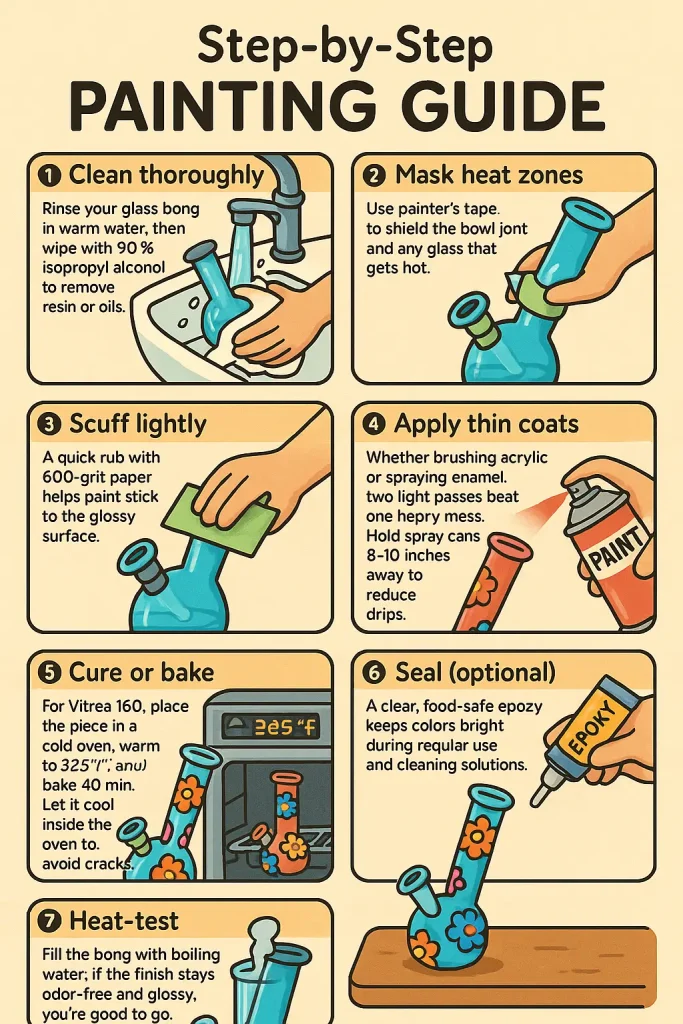
- Clean thoroughly. Rinse your glass bong in warm water, then wipe with 90 % isopropyl alcohol to remove resin or oils.
- Mask heat zones. Use painter’s tape to shield the bowl joint and any glass that gets hot.
- Scuff lightly. A quick rub with 600-grit paper helps paint stick to the glossy surface.
- Apply thin coats. Whether brushing acrylic or spraying enamel, two light passes beat one heavy mess. Hold spray cans 8-10 inches away to reduce drips.
- Cure or bake. For Vitrea 160, place the piece in a cold oven, warm to 325 °F, and bake 40 minutes. Let it cool inside the oven to avoid cracks.
- Seal (optional). A clear, food-safe epoxy keeps colors bright during regular use and cleaning solutions.
- Heat-test. Fill the bong with boiling water; if the finish stays odor-free and glossy, you’re good to go.
By following these steps you’ll get a painted bong that’s both safe and stunning—ready for self-expression and frequent sessions.
Creative Angles & Add-Ons
Want to push the look further? Try UV-reactive outlines for nighttime sessions or add matte silicone grip bands that complement the color scheme and stop slips. Modular bongs let you paint each section separately, keeping high-heat parts free of coatings. Finally, remember the environment: the EPA advises against pouring leftover paint down the drain—take extras to a local hazardous-waste drop-off. That last step protects your lungs and your local waterway, making the project a win all around.
FAQ
Is acrylic paint safe on a glass bong?
Yes—if you keep it on cool zones and seal it later. Standard acrylic paints start to soften around 180 °F, so place designs low on the water chamber and finish with an oven-cured clear sealant rated “food-contact safe” under 21 CFR 175.300
Can I spray paint my bong?
You can use high-temp spray paint designed for engines; it survives 500 °F, but OSHA requires good ventilation and a respirator during use
How do I seal paint so it won’t chip?
After color dries, add a thin coat of food-grade epoxy or bake enamel like Vitrea 160 at 325 °F for 40 minutes—lab tests show it stays glossy after 50 wash cycles
Can I paint the inside?
No. Heat and solvents pull chemicals into the smoke path; OSHA labels interior solvent coatings an inhalation hazard
Maintenance & Cleaning After Painting
A painted bong needs gentler care than bare glass. Rinse daily with warm water; use mild dish soap on the glass surface but avoid soaking painted zones in full-strength isopropyl alcohol—CDC notes 70 % alcohol can roughen coatings on small objects. Dab sticky resin with cotton swabs dipped in a 50/50 iso-and-water mix, then wipe dry. Skip abrasive salt scrubs; they can scratch a glossy finish. Store the piece out of direct sunlight, which can fade many paints and resins. Check for chips every few months; spot-repair with the same brand, let cure, and your artwork will handle frequent use without losing its personal touch.
Eco-Friendly Disposal of Leftover Paint & Solvents
Never pour rinses or solvent leftovers down the sink. The EPA’s Household Hazardous Waste page warns that improper disposal pollutes water and harms sanitation workers.
Instead:
- Let small amounts of water-based paint dry in a cardboard “paint box” lined with newspaper.
- Take sealed cans of oil-based or high-temp enamel to a county HHW drop-off or a PaintCare partner.
- Use the Earth 911 zip-code tool (linked on the same EPA page) to locate nearby recycling days.
Facts to remember: Americans buy about 868 million gallons of paint a year, so even tiny spills add up. Choosing non-toxic, specifically designed glass paints and disposing of leftovers the right way keeps that mess out of landfills.
Conclusion
With the right materials—heat-safe enamel, high-temp spray, or food-grade epoxy—and a little patience, you can create beautiful, intricate designs that stand up to high temperatures and regular use. Clean gently, avoid harsh solvents on painted zones, and follow EPA drop-off rules for any waste. Now you know what you can paint your glass bong with—and why safety rules matter just as much as style. Pick your perfect colors, grab those stencils or free-hand brushes, and let your artistic vision turn a plain piece of glass into a one-of-a-kind statement. Happy painting!