
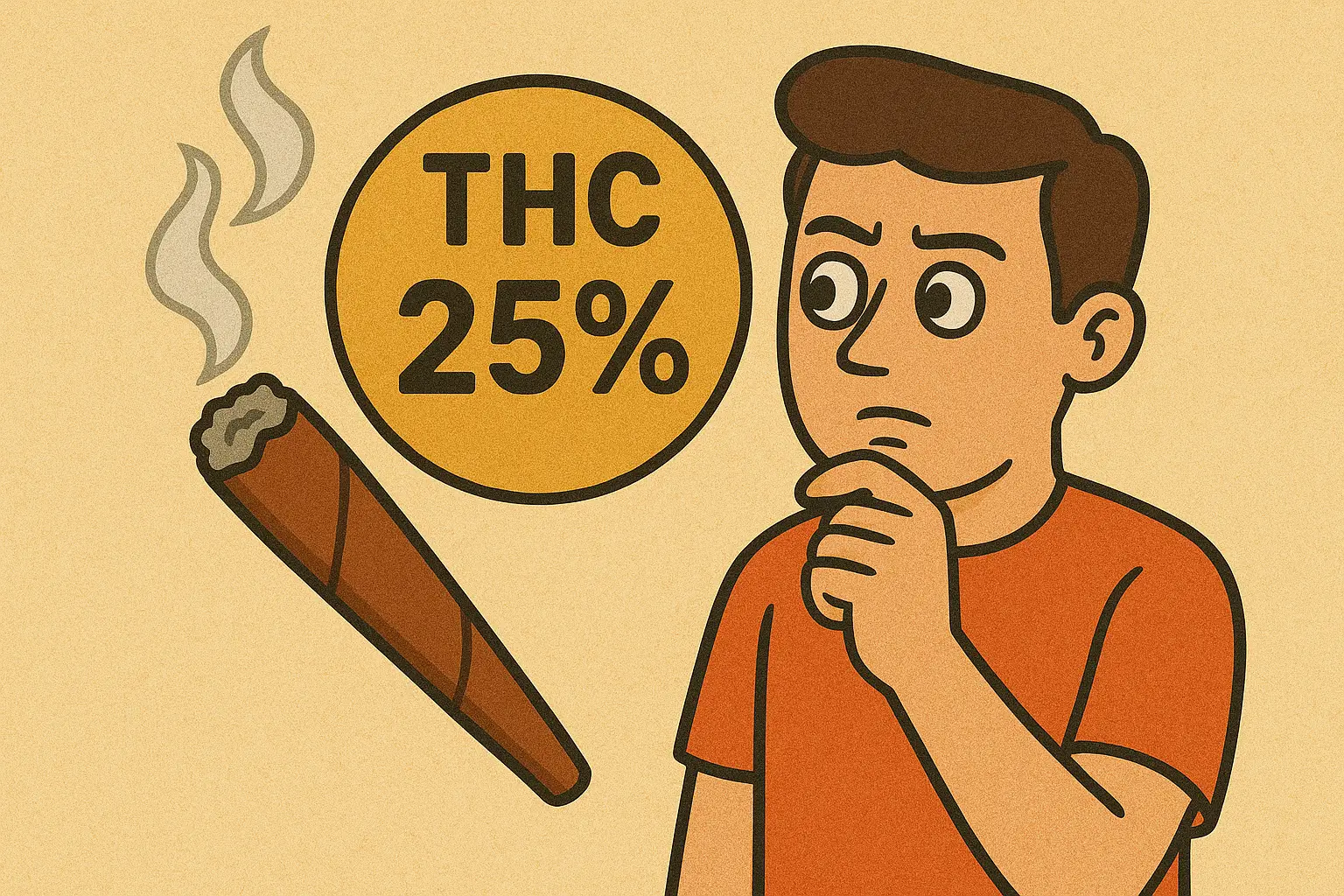
Rolling a blunt is fun, but knowing how much THC you are taking in can keep the fun from turning into a white‑knuckle ride. A blunt is bigger than the average joint, so its THC content can climb fast—often hundreds of milligrams. In this guide we break down simple math for any wrap or cannabis strain, explain a new “Standard Blunt Unit,” and give tips for safer, more enjoyable cannabis experiences. By the end, you’ll be able to eyeball a roll, run quick numbers in your head, and decide whether to smoke half or share with friends.
What Exactly Is a Blunt?
A blunt is ground cannabis flower packed into an emptied cigarillo or tobacco‑leaf wrap. Because the wrap is wide, most people stuff 1–2 grams—two to four times more than a joint, which averages 0.3–0.5 g. Wrap brands like Swisher Sweets or Backwoods burn slower, letting you pull larger clouds and more total THC. Industry surveys show blunts normally carry 15 %–30 % THC flower, the same range legal U.S. dispensaries sell today.
Why THC Counts Matter
Public‑health experts use “standard drinks” to compare beer, wine, and liquor. Cannabis scientists now propose a Standard THC Unit (STU) of 5 mg to track dose across products. Using that idea, we can set 1 Standard Blunt Unit (SBU) as 1 gram of 20 % THC flower, equal to 200 mg THC (40 STUs). That makes it easy to compare a blunt with edibles or vapes and to plan responsible consumption—especially for new users who do better at low doses of 5‑10 mg. –The University of Bath’s research portal
Factors That Change THC in a Blunt
- Flower potency. Legal‑market strains average 16 %–19 % THC, but some reach 30 %. Higher THC percentage means more milligrams per puff.
- Weight of cannabis. Filling a wrap “to the brim” can double the dose; how much cannabis you use is the biggest variable.
- Moisture & grind. Damp buds don’t burn well; a fine, even grind boosts burn and releases more THC.
- Tightness of roll. A tight blunt burns slow and hot, raising smoke time; too loose leaks THC‑rich smoke.
- Wrapper type. Tobacco wraps may combust faster than hemp wraps, slightly lowering THC delivery but adding nicotine.
- Inhalation style. Long, deep drags pull more THC into the lungs than quick sips. These other factors can make your “rough estimate” of mg swing high or low, so always start small and see how your body reacts.
Average THC per Blunt in 2026
Here’s an easy math trick:
Weight (g) × THC % × 1 000 = mg THC
| Blunt Size | Potency | Milligrams of THC | Approx. STUs* |
|---|---|---|---|
| 1 g, 15 % THC | 150 mg | 30 | |
| 1 g, 25 % THC | 250 mg | 50 | |
| 2 g, 20 % THC | 400 mg | 80 | |
| 2 g, 30 % THC | 600 mg | 120 |
*1 STU = 5 mg THC.
DEA lab data show the average THC in seized flower climbed from 4 % in 1995 to about 16 % in 2022, so today’s blunts hit much harder than the ones older smokers remember. (Data source: National Institute on Drug Abuse)
Blunt vs. Joint
Even if a blunt and a joint use the same strain, the blunt’s larger volume holds more plant matter. A joint packed with 0.4 g of 20 % flower contains 80 mg THC; a blunt with 1.2 g of that flower carries 240 mg—triple the dose. However, combustion isn’t 100 % efficient: studies suggest only 20 %–37 % of THC in smoke is absorbed, and blunts may lose a bit more because thicker paper needs longer, hotter burns. That means the actual amount hitting your bloodstream could vary significantly. Still, most users feel a stronger kick from a blunt and may need to smoke half to match the effect of one joint.
Estimate THC in Your Own Blunt
You only need simple math to learn how much THC sits in any roll. Weigh the ground cannabis flower before packing. Then plug numbers into this formula:
milligrams of THC = weight (g) × THC % × 1,000
Example: A blunt holds 1.4 g of bud tested at 18 % THC.
1.4 × 0.18 × 1,000 = 252 mg THC.
Remember, combustion wastes some cannabinoids. Clinical data say the body absorbs roughly 25–35 % of inhaled THC.¹ So your bloodstream may see 63–88 mg, a big jump above a 10 mg edible. Keep a pocket scale handy or buy pre‑weighed eighths (3.5 g) from a licensed dispensary to run accurate calculations.
Related: Bong vs Joint: Which One Fits You?
How Potency Has Risen Over Time
THC potency has climbed fast. The Drug Enforcement Administration reports the average THC content of seized marijuana was 4 % in 1995, 12 % in 2012, and 16 %+ by 2022.² Legal markets push even higher, selling flower that tops 30 % THC. Stronger weed means a blunt today can deliver three to four times the total amount of THC your parents smoked at the same joint size. This shift explains why new users often feel “too high” on strains friends swear are “normal.” Check the label for THC percentage printed by a state‑certified lab so you’re not guessing.
Safe Dosing Tips for High‑THC Blunts
A full blunt can contain 200–500 mg THC, depending on how much cannabis and flower potency. Doses above 20 mg may raise heart rate and anxiety in new users.³ At 100 mg, many people report altered time sense, dry mouth, and trouble focusing. Above 300 mg, even seasoned smokers may feel dizzy or nauseous—especially if the wrap adds nicotine. Combine high THC with alcohol or lack of sleep, and effects vary significantly. Your mental state, meal size, and individual tolerance matter, too. To stay safe, track the mg of THC per session and stop if you feel racing thoughts or a pounding pulse.
Responsible Dosing Tips
- Start low, go slow. Take two puffs, wait 15 minutes. If you feel fine, keep going.
- Share or smoke half. Halving the roll also halves the THC levels, perfect for new users or mellower nights.
- Pick low‑THC strains under 15 % when learning. Save “30 % bangers” for later.
- Hydrate & eat light food first; water and snacks blunt sudden blood‑sugar drops.
- Set a limit. Many consumers aim for 20–30 mg THC per evening—roughly six puffs of an average joint.
- Keep a journal. Note desired effects, strain name, and how many milligrams you think you consumed. Over time you’ll discover the sweet spot for an enjoyable cannabis experience and avoid overdoing it.
FAQs About THC
How many mg of THC are in a hit of a joint?
A single drag on an average joint (0.4 g, 18 % THC) carries about 3–4 mg THC into the lungs after accounting for burn loss and absorption.⁴
Is a 10 mg edible better than a joint?
Different consumption methods give different rides. A 10 mg edible acts slower (30–90 min) and lasts 4–6 hours. A joint hits in seconds but fades in 2 hours. Pick the form that matches your schedule.
How many mg of THC does it take to feel anything?
Most adults feel mild changes at 5–10 mg. Sensitive users may need only 2 mg; long‑time smokers might need 15 mg or more. Start small to see how your body responds.
How much THC is in one smoke (full joint)?
A half‑gram joint containing 20 % THC holds 100 mg THC. With 30 % absorption, about 30 mg may reach your bloodstream—equal to three standard 10 mg edibles.
Conclusion
Modern blunts often pack 200–500 mg THC—far above the dose in one edible.
Use the Standard Blunt Unit (1 g of 20 % flower = 200 mg) for quick math.
Weigh your weed, check the label, and aim for responsible consumption of low doses first.
When in doubt, smoke half, share with friends, and enjoy a smoother ride.