
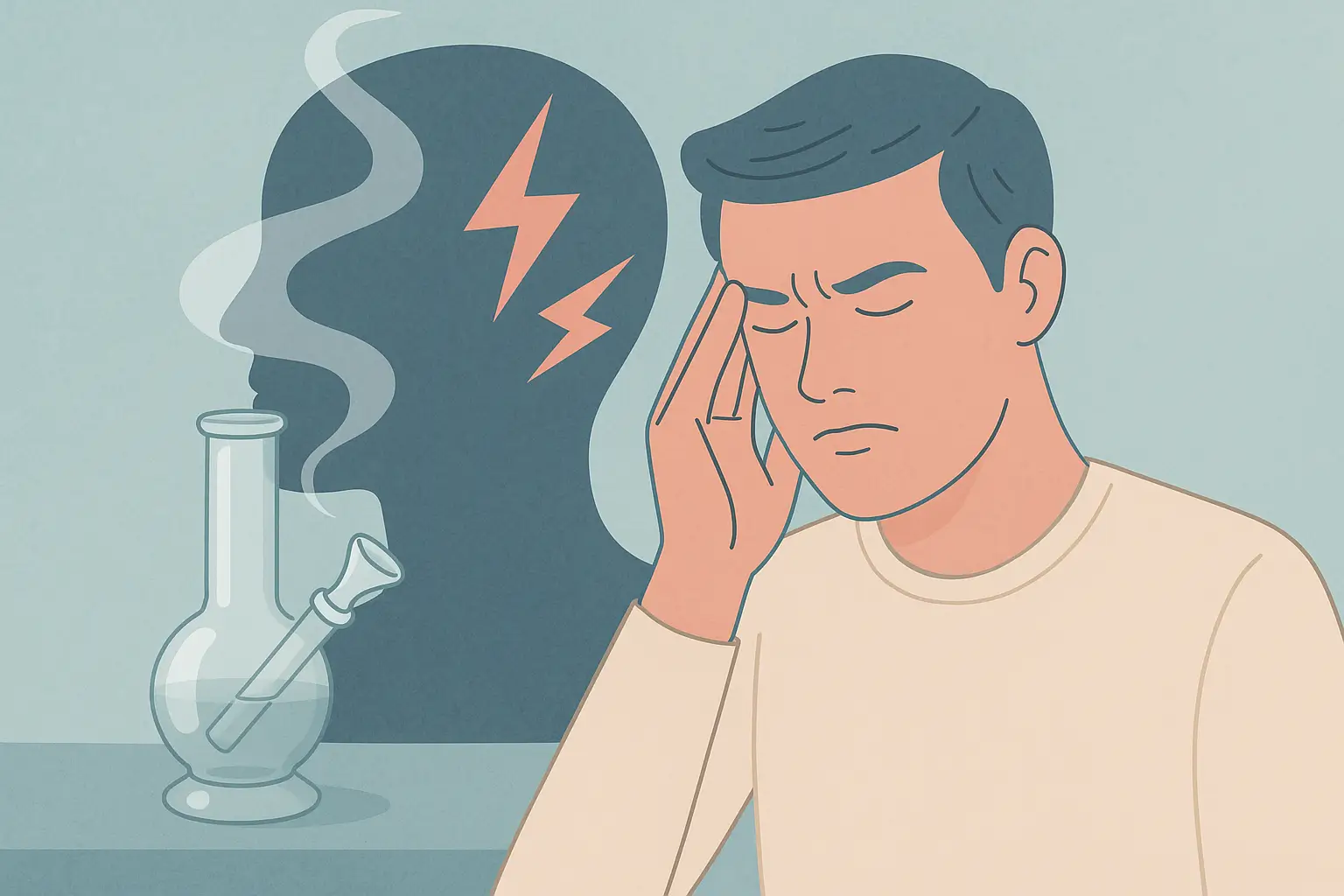
Ever finish a smooth bong hit only to feel a pounding in your temples minutes later? You’re not alone. Search data show thousands of tokers asking, “Why does smoking a bong give me headaches?”
Why Your Bong Session Turns Into a Headache
Because several factors gang up at once:
- Carbon-monoxide (CO) in the smoke steals oxygen from your brain.
- Hot, dry hits pull water from your body, shrinking overall blood volume.
- Big, cool rips make high-THC doses feel smooth, so it’s easy to overshoot and spike heart rate and blood pressure.
- Dirty water breeds mold and bacteria that can irritate sinus passages.
A 60-minute water-pipe session can expose you to 8× more CO than a cigarette—a well-known trigger headache gas.
Fast relief: open a window, sip 8 oz. of water, and rest for five minutes between smaller, cooler hits. If the pain is sudden, “thunderclap,” or comes with confusion or blurred vision, seek immediate medical attention.
How Common Is It?
Recreational cannabis keeps growing. The 2022 National Survey on Drug Use and Health counted 42.3 million Americans who used marijuana in the past month, and nearly 60 % still chose combustion—pipes, joints, or bongs—as their main method.
Head pain shows up often: clinics that track medical-cannabis cards list headaches and migraines among the top three reasons people try weed for relief—yet many report the opposite after strong bong sessions. While national figures on “bong headaches” are scarce, emergency-department data note a steady trickle of CO-related visits tied to water-pipe or hookah use every year.
The Science of Headaches after smoking
Every time plant matter burns, it creates CO. This gas latches onto hemoglobin 200–300× more tightly than oxygen, forming carboxyhemoglobin and starving brain tissue of fresh O₂. Result: pounding, killer headache, dizziness, and—in extreme cases—loss of consciousness.
Researchers have measured CO-blood levels over 10 % in people who spent an hour water-pipe smoking, well beyond the 2 % baseline of non-smokers. Headaches often start once blood hits the 17 % mark.
CO can also narrow arteries (think miniature reversible cerebral vasoconstriction syndrome) and change blood flow patterns, compounding pain. Anyone with existing cardiovascular risks—high blood pressure, clotting issues—faces higher danger. If a thunderclap headache hits seconds after a rip, treat it as a possible medical emergency and call 911. (Source: https://pubmed.ncbi.nlm.nih.gov/28906147/)
Dehydration & Vessel Dilation
Hot smoke plus mouth breathing dries you out fast. Even a 2 % fluid loss shrinks plasma volume and forces blood vessels in the brain to dilate, triggering headaches after smoking.
Pre-session checklist:
- Drink at least 16 oz. of water 30 minutes before lighting up.
- Keep a sports drink handy for sessions longer than 30 minutes—electrolytes help maintain proper blood flow and manage blood pressure spikes.
- Set a timer: sip 8 oz. every 15 minutes of active toking.
Seasoned tokers tired of the “weed hangover” report that simply drinking plenty and using ice cubes in the neck of the bong cuts next-day brain fog and muscle weakness in half. Hydration also reduces dry mouth, another sign of fluid loss. (Source: mayoclinic.org)
Dose & Potency
Bongs cool smoke, masking harshness. That means you may inhale 30 % more THC per hit than from a dry pipe without feeling throat burn. High doses cause blood-pressure swings and can trigger severe and debilitating headache in sensitive users.
Smart-hit strategy:
- Pack 0.25 g or less—enough for 2–3 moderate pulls.
- Wait 5 minutes; assess blood flow sensations (pounding temples, face flush).
- Use a simple notebook or app to log strain, dose, and any post-smoking headache. Over time you’ll spot patterns—certain high-THC or terpene-rich cultivars provoke killer headache pain, while balanced CBD strains do not.
Dirty Water, Mold Spores & Sinus Irritation
A grimy bong is more than an eyesore. Studies have cultured Pseudomonas and other bacteria inside stagnant bong water; one patient even developed a lung infection after inhaling the aerosol. Add mold to the mix and your next rip can deliver spores that inflame sinus tissue, trigger headaches after smoking, and worsen asthma.
Recent medical literature shows that certain cannabis flowers carry fungal toxins, and those toxins can leach into bong water during a long session.
Fix it:
- Empty and rinse after every use.
- Soak glass in warm water plus two tablespoons of baking soda once a week.
- Use fresh, cold water each session; toss if it turns cloudy.
Clean gear keeps unwanted microbes—and the headaches they trigger—out of your respiratory system and blood flow.
Technique Tweaks
Small adjustments can trim the risks that smoking cannabis poses to your blood vessels and lungs:
| Habit | Simple Swap | Why It Helps |
|---|---|---|
| Breath-holding | Exhale after 2 s | Lowers CO buildup that can spike blood pressure. |
| Huge bowls | 0.25 g max | Limits THC overload and medication-overuse headaches. |
| Red-hot flame | Keep lighter tip 1 – 2 cm away | Reduces combustion toxins that trigger headaches. |
| Slouching | Sit upright | Keeps neck arteries open, improving brain blood flow. |
| Poor air flow | Crack a window + use a fan | Cuts indoor CO by 50 % in hookah studies. |
Seasoned tokers tired of the “weed hangover” report fewer killer headache bouts once they follow these tweaks.
7-Step Flowchart
- Ventilate: window + box-fan before the first hit.
- Hydrate: drink water—8 oz every 15 min of active smoking.
- Monitor CO: cheap home detector alarms at 50 ppm.
- Pack Light: quarter-gram bowls, no more.
- Pause & Assess: 5 min between pulls; note any pounding temples.
- Clean Gear: daily rinse; weekly deep clean.
- Switch Strains: if “smoking a bong gives me headaches” each time, try a low-THC/high-CBD flower or a dry-herb vaporizer.
Follow the flowchart and most post-smoking headache complaints drop within a week.
When to See a Doctor
A sudden-onset, “thunderclap” headache that peaks in under 60 seconds is a medical emergency. It may signal reversible cerebral vasoconstriction syndrome, a burst blood vessel, or a clot. Get immediate medical attention if pain comes with:
- Blurred vision, muscle weakness, or severe nausea
- Severely high blood pressure (≥ 180/120 mm Hg)
- Loss of consciousness or confusion
- Stiff neck or fever (possible bacterial meningitis)
Doctors will run a physical exam, assess blood flow with imaging, and treat headaches with intravenous fluids, calcium-channel blockers, or other prescription medications. Waiting can turn a treatable problem into a life-threatening condition.
Safer Consumption Alternatives
If headaches persist, consider ways to enjoy cannabis without burning plant matter:
- Dry-herb vaporizers heat flower below combustion. Lab tests show almost no rise in exhaled CO compared with big spikes after joints or bongs.
- Edibles or tinctures skip the respiratory system altogether—no CO, no airway dryness. Start low and wait two hours to avoid weed hangover or abdominal pain.
- Low-temp dab rigs (≤ 450 °F) produce fewer irritants than torch-red bowls but still carry risks if concentrates contain residual solvents.
Switching methods helps many cannabis users manage blood pressure swings, reduce extreme headaches, and keep kidney and liver function in check.
Conclusion
Once you know the proven triggers—carbon-monoxide overload, dehydration, dirty water, and massive THC hits—you can act fast.