
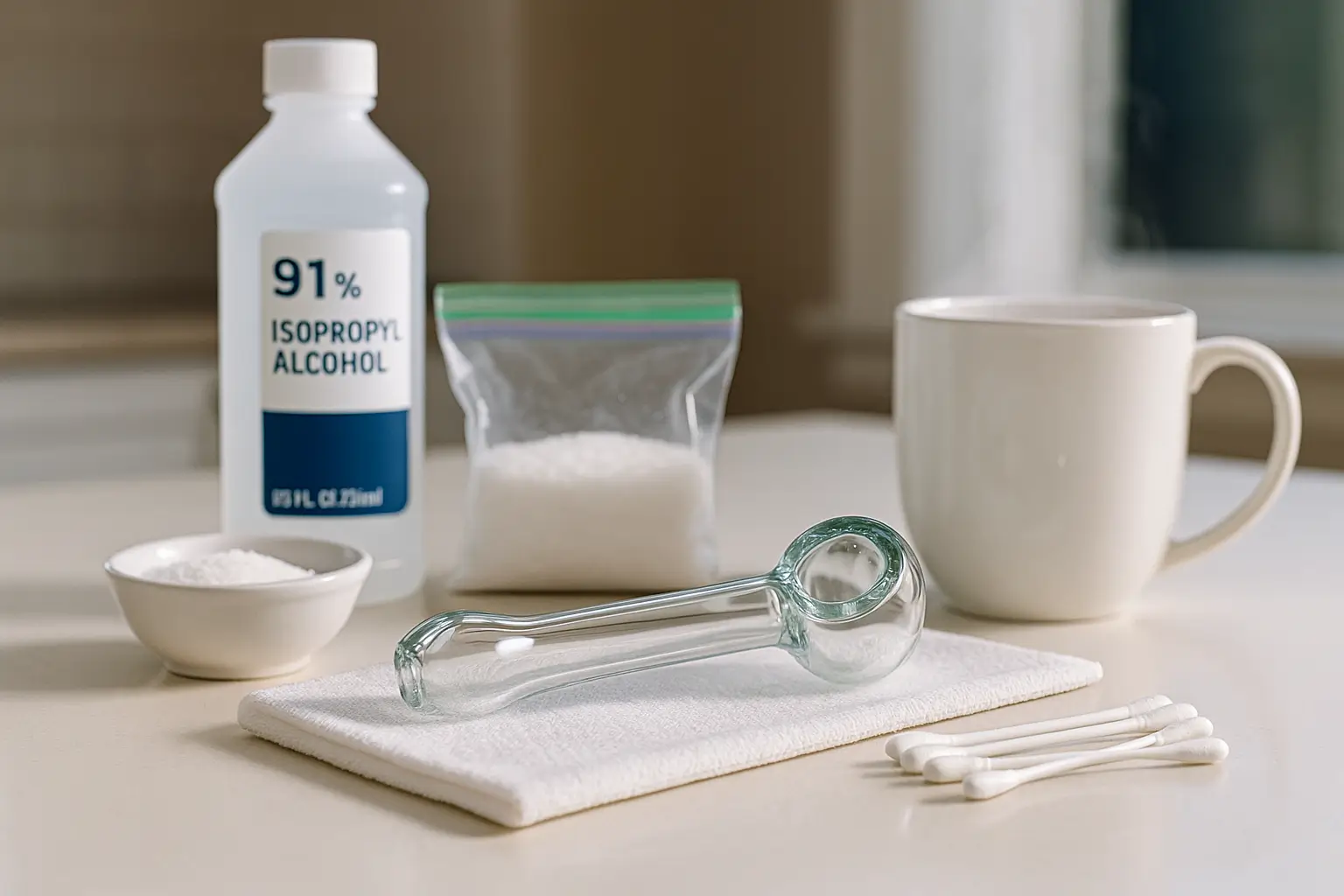
A dirty bowl isn’t just ugly—it can hold over one million bacteria per milliliter of resin, enough to irritate healthy lungs and even worse for anyone with asthma. Fresh glass also tastes better. When sticky tar coats the bowl, THC and terpenes burn unevenly, wasting flower. A five-minute wash after every few sessions protects your health, saves money, and keeps that prized glass pipe looking new—no pricey “420 cleaner” required.
Supplies Checklist
Grab everything before you start so the bowl spends as little time in open air as possible:
| Item | Why It Works |
|---|---|
| 91 %–99 % isopropyl alcohol | Dissolves sticky resin fast; the CDC lists alcohol as an effective disinfectant. |
| Coarse salt (kosher or sea) | Salt acts as a gentle scrub, knocking off loose particles without scratching glass. |
| Zip-top bag or small Tupperware container | Holds the cleaning solution and lets you shake without spills. |
| Cotton swabs, pipe cleaners, or Q-tips | Reach tight corners of a smaller pipe or stone pipe. |
| Nitrile gloves & an old towel | Protect skin and countertops from resin stains. |
| Warm water | Opens resin pores and helps rinse out excess alcohol. |
Optional helpers—baking soda for extra scrubbing power, paper clips to poke clogged holes, and a paper towel to dry the piece—round out a kit you can stash in any drawer.
Two-Minute “Shake-n-Salt” Method
Step 1: Pre-Rinse. Tap out ash and run warm water through the bowl to loosen resin buildup. Avoid hot water yet—sudden heat can crack a cold glass piece.
Step 2: Bag & Mix. Slide the bowl into a plastic bag, add two tablespoons of kosher salt, and pour in enough isopropyl alcohol to submerge it. Seal tightly.
Step 3: Shake Hard. Grip the bag and shake for 30 seconds. Salt acts like tiny scrub brushes while alcohol melts tar. Watch brown clouds peel off the glass pipe—it’s gross but satisfying!
Step 4: Rinse & Inspect. Dump the dirty solution, rinse with hot water, and check for stubborn spots. Most light users find the bowl completely clean after one round.
Pro tip: Cleaning glass this way every two to three sessions keeps resin from hardening, so you rarely need deep cleaning and your pipe regularly stays sparkling clean with almost no smell.
Deep-Clean Rescue in Heavy Resin
Skipped maintenance for weeks? No big deal—here’s how to remove resin that alcohol and salt alone won’t budge.
- Overnight ISO Soak. Fill a plastic container with fresh alcohol, drop in the dirty pipe, and let it soak 6–8 hours. The alcohol seeps into tiny cracks and lifts excess resin without scraping.
- Boiling Method (Metal or Ceramic Only). For a tobacco pipe made of steel or a stone pipe, place it in a small pot, cover with enough water, and bring to a gentle rolling boil for five minutes. Let it cool in the pot; dunking hot pieces into cold water can cause a break.
- Freeze-and-Twist (Silicone Bowls). Pop the piece in your freezer for 30 minutes, then bend it—resin chips off like ice cubes.
Rinse again with warm water and a drop of dish soap to cut any oily film, then dry with a paper towel before loading fresh herb.
Related:
Kill Hidden Germs
Once the glass looks clear, make sure it’s truly germ-free. Pour a fresh splash of isopropyl alcohol into the bowl and let it sit five minutes—the CDC’s environmental cleaning guideline recommends at least a one-minute contact time for alcohol to inactivate most bacteria and viruses.
After soaking, rinse under hot running water for 30 seconds to flush away fumes that could irritate lungs when you inhale smoke. For water pipes shared among friends, wipe the mouthpiece with an alcohol-damp cotton swab between users to cut cross-contamination; the CDC infection-control guideline stresses routine disinfection of saliva-exposed surfaces.
Let the bowl air-dry upside down on a clean towel. A sparkling clean, germ-free pipe delivers smoother pulls, brighter flavor, and fewer cough fits.
Waste Control
Dirty alcohol smells like a skunked bar rag, but tossing it down the sink harms waterways. The EPA says any alcohol solution with flammable content should go to a household hazardous-waste drop-off rather than regular trash.
Neutralize odors: After the final rinse, swish the bowl in warm water mixed with a teaspoon of lemon juice or baking soda. Both break up lingering smell molecules.
Reuse ISO twice: Pour used alcohol through a coffee filter into a dark glass jar. Seal tightly and mark it “Dirty ISO #1.” It still has enough power for one more round of cleaning glass or smaller pipes; reserve fresh alcohol for the ultimate deep cleaning jobs.
Dry and store smart: Slip a silica gel packet into the Tupperware container where you keep smoking accessories. Trapped moisture breeds mold—and keeping your gear dry means the next cleaning session will be quicker, cheaper, and far less of a big deal.
Daily Practices to Prevent Resin Returning
Clean your pipe regularly and you’ll never face crusty, time-sucking deep cleans again. As soon as a bowl is ash-free, run warm water through the glass piece for five seconds. The heat softens tar, and the flow knocks out loose particles. Slide a pipe cleaner or cotton swab through the stem while it’s still damp to grab remaining residue. Once a day, give the bowl a 30-second alcohol-and-salt shake inside a Ziploc bag; this tiny routine is enough to stop excess resin before it hardens.
Every week—more often for heavy smokers—spray the mouthpiece with a 70 % isopropyl alcohol mist and let it sit one minute, then rinse with hot water. The CDC’s home-cleaning guide notes that simple soap or detergent removes most germs when done often. Store your dry bowl in a Tupperware container with a silica-gel pack to keep moisture from feeding bacteria. Five minutes of steady upkeep beats an hour of scraping later.
FAQs
How often should I clean a weed bowl?
Light users can clean every 7–10 sessions; daily users should rinse with hot water after each use and deep clean twice a week. A clean pipe protects lung tissue already stressed by smoke, says the American Lung Association.
Can I skip alcohol and use boiling water?
Boiling water works on metal or stone pipes, but rapid heat changes can crack glass. If you try the boiling method, start with lukewarm water, then bring it to a gentle rolling boil and cool slowly in the same pot to avoid a sudden break.
Is sharing a dirty pipe risky?
Yes. Sharing smoking devices can spread germs, increasing chances of infection. The National Institute on Drug Abuse warns that passing paraphernalia can transmit bacteria and viruses along with smoke.
What if my bowl still smells after cleaning?
Soak for five minutes in warm water with a teaspoon of baking soda, then rinse. Baking soda neutralizes odors that alcohol leaves behind.
Will table salt scratch my glass pipe?
Granular salt acts as a gentle abrasive; it won’t scratch borosilicate glass but avoid rock-salt chunks on thin, cheap glass. For a smaller pipe, switch to Epsom salts for finer grit.
Conclusion
Learning how to clean bowl weed gear isn’t a big deal once you break it into habits: quick rinse, alcohol-and-salt shake, weekly sanitizing, and safe disposal. These steps keep resin buildup low, protect lung health, and make every pull taste fresh. Better still, they cost pennies—most supplies sit in your kitchen right now. Follow the CDC’s basic cleaning rules, lean on the American Lung Association’s health insights, and your glass pipe will stay sparkling clean far longer than any pack of rolling papers. Next time someone asks, “Why does my bowl taste burnt?” you’ll have the fix—and the science—to answer with confidence.